


The Invisible Threats in a Closed Box
On Earth, our planet's vast atmosphere and ecosystems naturally manage the air we breathe. In the confined space of an orbital station, however, every breath an astronaut takes releases carbon dioxide (CO2). If left unchecked, CO2 levels would quickly
become toxic. But that’s not the only problem. The station is filled with equipment made of plastics and electronics that slowly release volatile organic compounds (VOCs) into the air, a process called off-gassing. Even the crew members themselves contribute to air pollution through metabolic processes, releasing ammonia and methane. Without a constant, vigilant system, the air inside this home in the stars would become unbreathable.
Tackling the Carbon Dioxide Problem
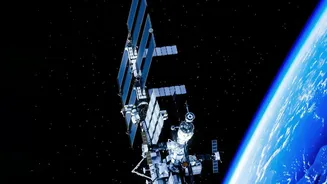
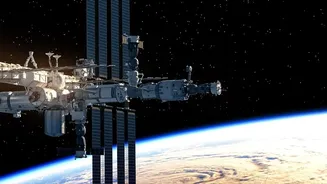
The primary challenge is managing carbon dioxide. The International Space Station (ISS) relies on its Air Revitalization System, a key part of the broader Environmental Control and Life Support System (ECLSS). A central component is the Carbon Dioxide Removal Assembly (CDRA). This ingenious device uses beds of a porous, sponge-like mineral called zeolite. As cabin air is passed through, the zeolite crystals are designed to trap CO2 molecules while letting oxygen and nitrogen pass through. The system operates in a continuous cycle; while one set of zeolite beds is absorbing CO2 from the cabin, another is being heated and exposed to the vacuum of space, which purges the captured CO2 overboard. This regenerates the beds, making them ready to filter the air again.
Creating Oxygen from Water
Removing CO2 is only half the battle; fresh oxygen must be constantly supplied. Instead of relying solely on heavy oxygen tanks from Earth, the station manufactures its own. The Oxygen Generation System (OGS) uses a process called electrolysis to split water molecules (H2O) into their constituent parts: hydrogen and oxygen. The oxygen is released into the cabin atmosphere for the crew to breathe. The hydrogen, rather than being wasted, can be vented into space or used in another clever process. The Sabatier system, for example, can combine this hydrogen with previously captured CO2 to produce water and methane, further closing the loop on resource recycling.
Filtering the Small Stuff
Beyond CO2, a host of other potentially harmful chemicals must be managed. This is the job of the Trace Contaminant Control System (TCCS). This sub-system acts like a powerful, multi-stage filter. First, air passes through beds of activated charcoal, which are excellent at adsorbing a wide range of organic compounds, from acetone to ammonia. For more stubborn contaminants like methane, the air is then sent through a high-temperature catalytic oxidizer. This device essentially burns the unwanted chemicals, breaking them down into less harmful substances like CO2 and water, which can then be managed by the other revitalization systems. Some configurations even include a final filter of lithium hydroxide to scrub any acid gases produced during oxidation.
A Symphony of Systems
The health of the station's atmosphere depends not on a single machine, but on a tightly integrated symphony of systems working in concert. The ECLSS is a marvel of regenerative technology, constantly monitoring and adjusting humidity, temperature, and atmospheric pressure in addition to filtering the air. By recycling water from breath, sweat, and urine to create breathable oxygen, and by scrubbing the air of dozens of chemical contaminants, these systems create a remarkably stable and safe environment. They are what transform a simple metal can into a long-term human habitat in the harshest of environments.