




A Pioneer's Journey to Orbit
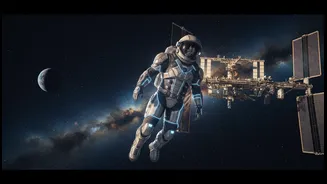
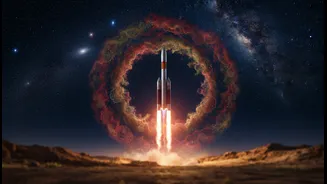
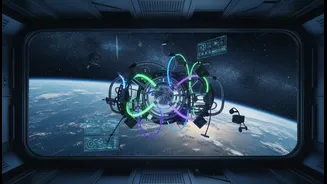
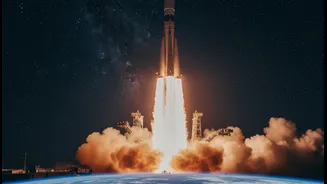
On July 14, 2026, NASA astronaut and U.S. Space Force Colonel Dr. Anil Menon embarked on his first journey into space, launching from the Baikonur Cosmodrome in Kazakhstan. Alongside two Roscosmos cosmonauts, he began an eight-month mission aboard the International
Space Station (ISS). This mission marks a major milestone for Menon, whose parents immigrated to the United States from India and Ukraine. His extensive background as an emergency physician, a military flight surgeon, and the first-ever flight surgeon for SpaceX makes him uniquely qualified for the complex tasks ahead. Before being selected as an astronaut in 2021, Menon had already supported multiple crews on the ISS and helped develop the medical systems for SpaceX's first human spaceflights, including the historic Demo-2 mission.
The Ultimate Laboratory
The ISS serves as a crucial proving ground for deep-space exploration. Living and working in its microgravity environment for an extended period, typically six to eight months, allows scientists to understand and find solutions for the harmful effects of space on the human body. For missions to Mars, which could last years, mitigating these effects is not just a goal, but a necessity. The research conducted by Menon and his crewmates during their stay will directly inform the development of technologies and countermeasures for NASA's Artemis program, which aims to establish a long-term presence on the Moon and prepare for the first human missions to Mars.
Studying the Body in Microgravity
A primary focus of Menon's orbital schedule is studying the physiological toll of long-duration spaceflight. One of the most significant challenges is the deterioration of the musculoskeletal system. Without the constant pull of Earth's gravity, astronauts can lose bone density and up to 20% of their muscle mass in a short time. Menon will be a test subject and an investigator in experiments examining how blood flow, vein structure, and blood composition change in weightlessness. These studies are critical for protecting astronaut health. Additionally, his work includes testing bioprinting of vascular tissue in orbit, which could improve our understanding of the aging process on Earth and lead to new therapies.
Advancing In-Space Medicine
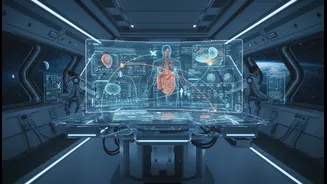
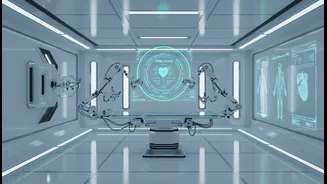
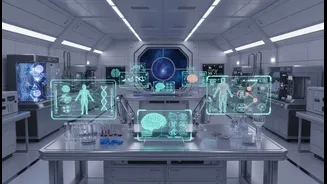
Beyond studying the body, Menon's mission is about creating the tools for future space medicine. A key experiment involves testing a technology to produce intravenous (IV) fluids from the station's drinking water. This capability would be revolutionary for deep-space missions where carrying extensive medical supplies is not feasible. He will also conduct ultrasound investigations using augmented reality (AR) and artificial intelligence (AI). This technology aims to empower astronauts to perform complex medical imaging without real-time guidance from specialists on Earth, a vital step toward medical autonomy on long journeys far from home.
From Medical Research to High-Tech Manufacturing
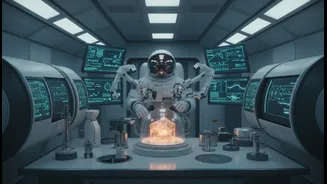
The scope of the experiments extends beyond human biology. Menon will also continue research into refining the production of semiconductor crystals in space. The flawless microgravity environment allows for the creation of higher-quality crystals than is possible on Earth. This research could enable large-scale manufacturing of superior components for high-performance computers, AI systems, and advanced medical devices, demonstrating how space-based research can yield significant technological benefits back on our planet.