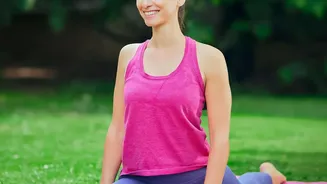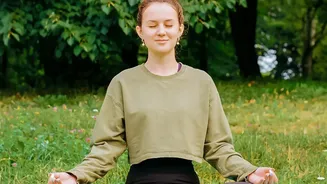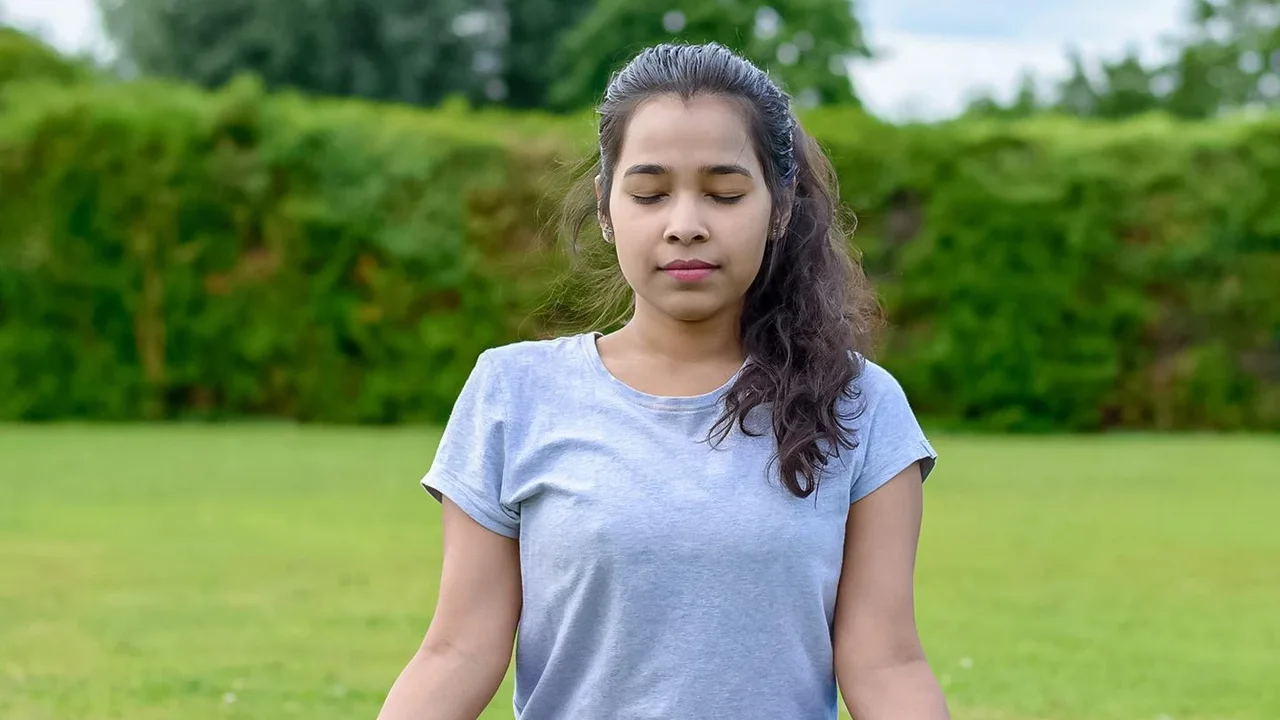


Why Yoga Works for Exam Stress
Yoga is more than just physical exercise; it's a practice that unites the mind and body. During stressful periods, our bodies are flooded with cortisol, the stress hormone. Yoga helps counteract this by activating the parasympathetic nervous system, which
is responsible for the body's 'rest and digest' response. By combining gentle physical postures (asanas) with controlled breathing (pranayama), teens can learn to calm their racing minds, release physical tension, and improve blood flow to the brain. This leads to better concentration, enhanced memory, and a greater sense of emotional control when facing academic pressures.
Balasana (Child's Pose)
This gentle resting pose is one of the most effective for achieving instant calm and self-soothing. Balasana relieves tension in the back, shoulders, and neck—areas where students often hold stress after hours of studying. It encourages deep, restorative breathing, which helps quiet a busy mind and reduce feelings of anxiety.How to do it: Kneel on the floor with your toes together and knees hip-width apart. Exhale and lower your torso between your thighs. Rest your forehead on the floor and let your arms stretch out in front of you or rest alongside your body, palms facing up. Hold for at least 30 seconds, focusing on your breath.
Marjaryasana-Bitilasana (Cat-Cow Stretch)
This dynamic movement is perfect for waking up a stiff spine and releasing tension caused by slouching over books. The Cat-Cow stretch synchronises breath with movement, which helps to centre the mind and calm the nervous system. It's an excellent way to start a study break, as it gently warms up the body and encourages a state of mindful awareness.How to do it: Start on your hands and knees in a tabletop position. As you inhale (Cow), let your belly drop towards the floor and look up, arching your back. As you exhale (Cat), round your spine towards the ceiling, tucking your chin to your chest. Continue flowing between the two poses for 5-10 breaths.
Vrikshasana (Tree Pose)
Exams can leave a teen feeling scatterbrained. Tree Pose is a balancing posture that demands complete focus, making it a powerful tool for improving concentration and mental stability. By training the mind to remain steady and present while balancing on one leg, students can develop the mental discipline needed for long study sessions.How to do it: Stand tall and shift your weight onto your right foot. Place the sole of your left foot on your inner right ankle, calf, or thigh (avoiding the knee). Bring your hands to a prayer position at your heart. Find a fixed point to gaze at to help maintain your balance. Hold for 5-8 breaths, then switch sides.
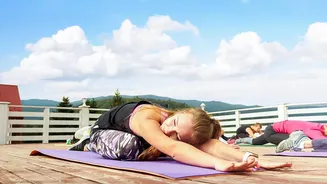
Paschimottanasana (Seated Forward Bend)
A seated forward bend is deeply calming for the nervous system. This pose provides a deep stretch for the entire back of the body, from the heels to the neck. It helps to relieve mild anxiety and fatigue, making it an ideal posture after a long day of revision. It also boosts blood supply to the brain, which can help with relaxation.How to do it: Sit on the floor with your legs extended straight in front of you. You can keep a slight bend in your knees. Inhale and lengthen your spine. As you exhale, hinge at your hips and fold forward, letting your hands rest on your shins, ankles, or feet. Allow your head and neck to relax. Hold for 30-60 seconds.
The Power of Breath: Bhramari Pranayama (Bee Breath)
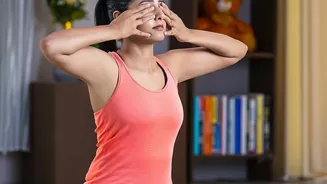
When anxiety is high, breathing exercises can provide immediate relief. Bhramari, or Bee Breath, is particularly effective for calming the mind and soothing the nervous system. The humming sound vibrations have an instantly calming effect, helping to drown out negative thoughts and reduce stress and hypertension, making the mind more focused and receptive.How to do it: Sit in a comfortable position with your back straight. Close your eyes. Gently place your index fingers on the cartilage of your ears. Inhale deeply, and as you exhale, make a low-pitched humming sound, like a bee. Continue for 6-8 rounds and notice the feeling of calm that follows.