





First, Find Your Perfect Viewing Spot
Before you can spot a planet or a meteor, you need the right conditions. The most important factor is a dark sky, far from city lights. Light pollution can wash out all but the brightest objects. For Indian stargazers, this often means a short trip to the countryside
or a visit to a designated dark-sky location. Places like the Rann of Kutch, Coorg, or higher-altitude spots in the Himalayas like Ladakh and Spiti Valley offer pristine skies. Wherever you are, give your eyes at least 20 minutes to adjust to the darkness. Avoid looking at your phone screen, as its bright light will ruin your night vision. Finally, get comfortable. A reclining chair or a blanket on the ground will save your neck from straining as you gaze upwards.
Saturn Reaches Opposition: The Best View of the Year
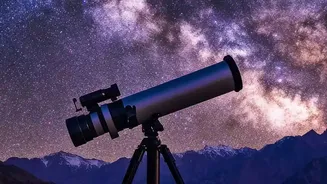
The star of the show in early October is Saturn. On October 4, the ringed planet will be at opposition, an event where Earth passes directly between Saturn and the Sun. This alignment means two things for skywatchers: Saturn will rise around sunset and be visible all night long, and it will be at its closest and brightest for the entire year. To the naked eye, it will appear as a steady, bright, golden point of light. While you won't see the rings without assistance, even a basic backyard telescope will reveal their magnificent structure. Look towards the east after sunset to find it. The nights of October 3, 4, and 5 are your best opportunities to catch this celestial jewel.
Jupiter's Close Encounter with the Moon
Not to be outdone, Jupiter, the king of the planets, offers its own spectacle. On the morning of October 6, the brilliant planet will appear incredibly close to a thin, waning crescent moon in the predawn sky. For observers in India, this will be a striking conjunction, a beautiful pairing of the solar system's largest planet and our own natural satellite. While some parts of the world will see the moon pass in front of Jupiter in an event called an occultation, viewers in India will witness a close approach. Set your alarm for the early morning hours and look towards the eastern sky to see this photogenic event.
Orionid Meteor Shower: A Gift from Halley's Comet
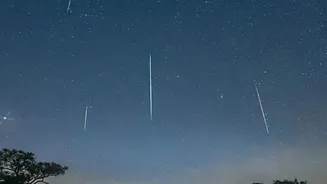
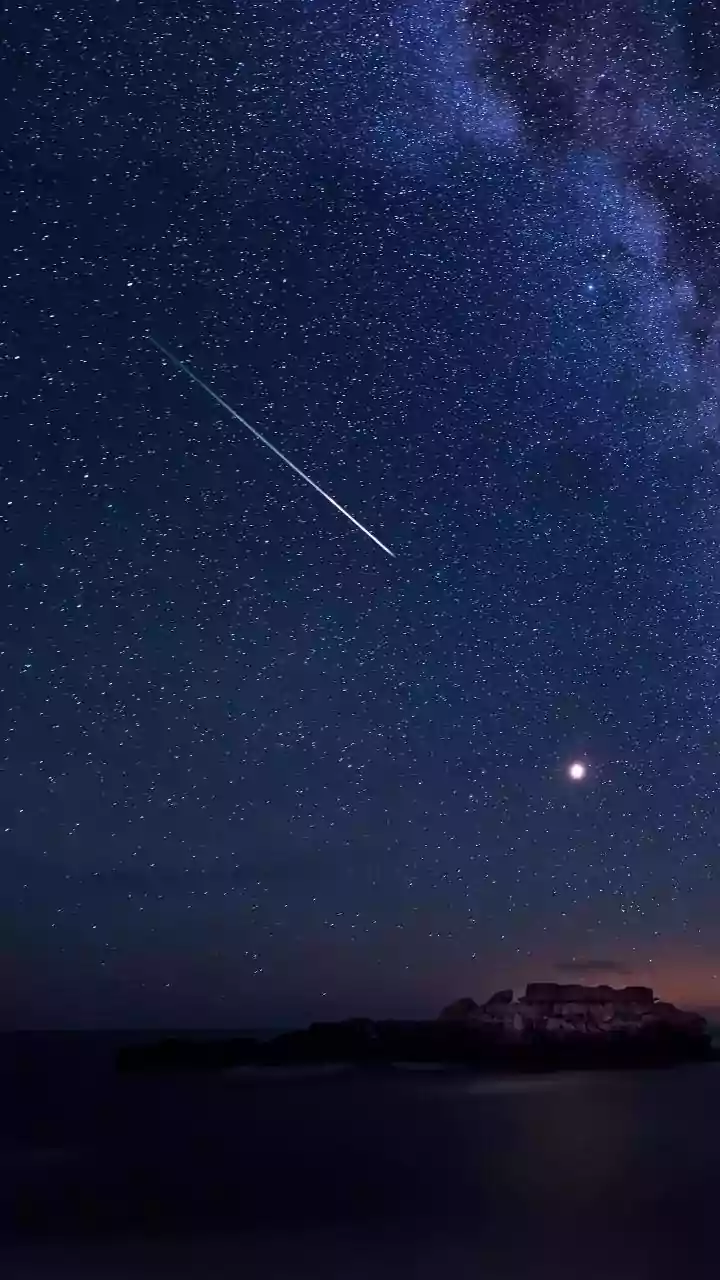
Get ready for some celestial fireworks as the Orionid meteor shower peaks on the night of October 21-22. These meteors are actually tiny fragments of dust and ice left behind by the famous Halley's Comet. When Earth passes through this debris trail, the particles burn up in our atmosphere, creating fast, bright streaks across the sky. At its peak, you might see between 15 and 25 meteors per hour from a dark location. The best time to watch will be in the predawn hours of October 22, after the moon has set, as its light can wash out fainter meteors. You don't need a telescope; just lie back, look up, and be patient. The meteors can appear anywhere in the sky, though they will seem to originate from the constellation Orion.