



What Makes Spiti a Stargazer's Paradise?
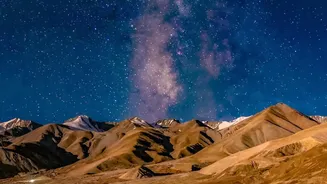
Spiti Valley is a high-altitude cold desert, a unique environment that creates perfect conditions for observing the cosmos. Its remote location means there is virtually no light pollution, allowing stars to shine with incredible brightness. The average
elevation of over 12,500 feet places you above a significant portion of the Earth's atmosphere, reducing distortion. This, combined with the region's dry, arid climate, results in exceptionally clear skies for most of the year, making it a world-class location for astronomy. While India's official Dark Sky Reserve is in Hanle, Ladakh, the conditions in Spiti are comparable, with some sources identifying it as a potential future reserve.
Why Langza is a Celestial Hotspot
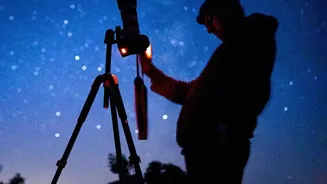
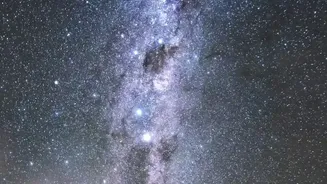
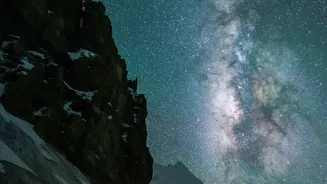
Within Spiti, the village of Langza, situated at an altitude of around 14,500 feet, is a standout location for stargazing. Its isolation ensures pristine, dark skies where the Milky Way is often visible to the naked eye, appearing as a luminous river stretching across the heavens. Astrophotographers flock here for the opportunity to capture stunning images with dramatic foregrounds, such as the iconic, 20-foot-tall golden Buddha statue that overlooks the village. On a clear, moonless night, the view from Langza is an immersive experience, connecting visitors to the vastness of the universe in a profound way.
Planning Your Astro-Tourism Trip
The best time to visit Spiti for stargazing is from May to October, when the weather is milder and the skies are reliably clear. The summer months of July and August are considered peak season for viewing the Milky Way at its brightest. Reaching Langza requires careful planning. The most common route is by road from either Shimla or Manali. Given the high altitude, acclimatisation is crucial to avoid mountain sickness. It is recommended to spend at least two nights in Kaza, the main town in Spiti, before proceeding to higher villages like Langza. Accommodation in Langza primarily consists of local homestays, offering an authentic experience of Spitian hospitality.
Beyond the Night Sky: Exploring Langza
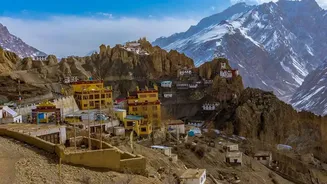
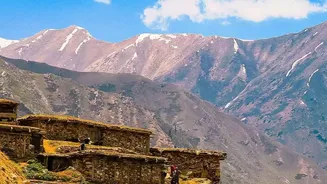
While the nights are for stargazing, Langza's days offer unique attractions. The village is famously known as the 'Fossil Village of India'. Millions of years ago, this region was submerged under the Tethys Ocean, and today, ancient marine fossils like ammonites can be found scattered in the area. The magnificent Buddha statue is not just a photographic subject but a significant spiritual landmark for the local Buddhist community. Exploring the village, interacting with residents, and experiencing life at this high altitude provides a rich cultural context to the stunning natural beauty.
Responsible Tourism and Community
The rise of astro-tourism in Spiti is closely linked with the principle of sustainable travel. The local communities play a vital role, with many families opening their homes to visitors as homestays. Organizations like Ecosphere, a local social enterprise, work to ensure that tourism benefits the community economically while conserving the fragile ecosystem and cultural heritage. As a visitor, choosing homestays and being mindful of the pristine environment are crucial. This includes minimising waste and respecting local customs to help preserve the very darkness and tranquillity that make Spiti an unparalleled destination for connecting with the stars.