



The Unseen Problem on Your Countertop
A damp, used kitchen cloth is an ideal breeding ground for bacteria. Studies have shown that kitchen towels can be heavily contaminated with various microbes. Research has found that a significant percentage of kitchen towels test positive for coliform
bacteria (found in the digestive tracts of humans and animals) and even E. coli. These germs are picked up from hands, raw foods, and surfaces around the kitchen. The moisture and food particles trapped in the cloth's fibres create a perfect environment for these bacteria to multiply, sometimes reaching millions or even billions in a single towel. A cloth that looks clean can still be teeming with microorganisms capable of causing foodborne illnesses.
The Danger of Cross-Contamination
Cross-contamination is one of the most common causes of food poisoning at home, and the kitchen towel is a primary culprit. Imagine wiping up juices from raw chicken and then using the same cloth to dry your hands or wipe down the dining table. This action directly transfers dangerous pathogens like Salmonella or Campylobacter from the raw meat to other surfaces. Studies have demonstrated that these bacteria can survive on cloths, even after a rinse, and then spread throughout the kitchen. This risk isn't just theoretical; it's how germs easily travel from a contaminated source to your plates, cutlery, and ultimately, your food. Using a single cloth for multiple tasks essentially turns it into a vehicle for germs.
A Simple System for Separation
Preventing this germ-fest is surprisingly straightforward. The key is to create a clear and consistent system for separating clean, in-use, and dirty cloths. The most effective approach is to have designated spots for each. Clean cloths should be stored in a dry, protected place like a drawer or cabinet, away from sinks and cooking areas. The cloth you are currently using for a specific task (like drying clean dishes) can hang on a dedicated hook. Once a cloth is used for wiping spills, cleaning counters, or handling anything involving raw food, it should immediately be considered 'dirty' and placed in a separate container to await laundering. This prevents it from being accidentally reused and spreading contamination.
Practical Storage Solutions
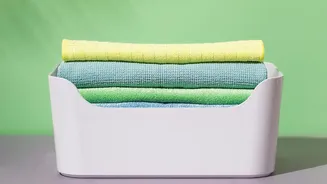
Implementing this system doesn't require a major kitchen overhaul. For dirty cloths, a small, open-topped bin or a breathable laundry bag kept under the sink works perfectly. An open container is preferable as it allows the damp cloths to air out, which can help slow down bacterial growth while they wait to be washed. For the 'in-use' cloth, a simple hook on a cabinet door or the side of your sink keeps it handy and allows it to dry between uses. Some people find a colour-coded system helpful: for instance, blue cloths for drying dishes, green for wiping surfaces, and red for high-risk messes like raw meat. This visual cue makes it easy for everyone in the household to follow the rules and maintain a hygienic kitchen.
Completing the Hygiene Cycle
Proper storage is only one part of the equation. To truly eliminate bacteria, cloths need to be washed correctly and frequently. Most experts recommend changing your kitchen cloths daily, or immediately after they are used to clean up a high-risk spill. When laundering, wash them in a separate load on a hot water cycle (60°C or higher), as the high temperature is crucial for killing germs. Adding bleach or a sanitising laundry product can provide extra disinfecting power. After washing, drying the cloths completely is just as important, either in a hot dryer or in direct sunlight, as any remaining dampness can allow surviving bacteria to regrow.