






What is Self-Healing Concrete?
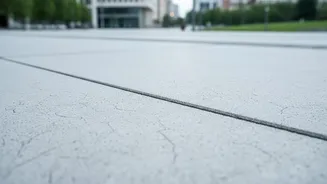
Imagine a road that, when it cracks, simply repairs itself. This isn't science fiction; it's the premise behind self-healing concrete, an innovative material designed to autonomously mend its own fractures. Unlike traditional concrete, which is prone
to cracking under stress and environmental changes, this 'living' concrete has a built-in repair mechanism. The most promising method involves embedding dormant bacteria and their food source within the concrete mix. When a crack forms and water seeps in—a constant during monsoon season—it acts as a trigger, awakening the bacteria from their slumber. This starts a natural biological process that fills the crack, preventing it from growing into a larger, more dangerous pothole. The potential is enormous: structures that last longer, require fewer costly repairs, and are fundamentally more resilient.
The Science of Bacterial Repair
The secret ingredient in this futuristic material is a specific type of microbe, often from the Bacillus genus, such as Bacillus pasteurii. These bacteria are chosen for their ability to produce limestone, or calcium carbonate, through a process called microbiologically induced calcite precipitation (MICP). They are mixed into the concrete as spores, along with a nutrient like calcium lactate, and remain inactive until a crack appears. When water enters the fissure, the spores germinate. The now-active bacteria consume their nutrient food source and, as a byproduct of their metabolic process, secrete calcium carbonate. This substance crystallises and hardens, effectively 'stitching' the crack back together. Research shows this process can effectively seal micro-cracks, typically those up to about 0.8mm to 2.0mm wide, restoring the concrete's integrity and preventing water from reaching and corroding the steel reinforcements within.
A Solution to the Monsoon Menace?
For India, where monsoon rains wreak havoc on urban infrastructure annually, the implications are profound. Potholes are not just an inconvenience; they cause accidents, damage vehicles, and result in massive economic costs for repairs. Self-healing concrete seems perfectly suited to this environment. The very water that causes so much damage becomes the catalyst for repair. By automatically sealing micro-cracks as they form, the technology could prevent the formation of potholes in the first place. This would not only lead to safer and smoother commutes but also dramatically reduce the endless cycle of road maintenance that costs municipal corporations crores each year. Institutes in India, such as IIT Madras, are already researching indigenous bacterial strains that are optimized for local climatic conditions, suggesting a tailored approach for the subcontinent is on the horizon.
The Reality Check: Cost and Scalability
While the promise is immense, an immediate end to all potholes is unlikely. The biggest hurdles are cost and scale. Self-healing concrete is currently estimated to be 10-50% more expensive than traditional concrete, a significant barrier for large-scale infrastructure projects, especially in developing nations. The cost is largely driven by the biological components and the specialised manufacturing process. Furthermore, most research has been conducted in laboratory settings or small-scale trials. Proving the technology's effectiveness and long-term durability in the complex and harsh conditions of a real Indian city street is the next critical step. There are also technical limitations; the bacteria can only heal cracks of a certain size, and wider fissures would still require manual repair.
The Road Ahead for Smarter Infrastructure
Despite the challenges, the trajectory for self-healing concrete is promising. Researchers are actively working to bring down costs, perhaps by using cheaper nutrient sources for the bacteria or by developing more efficient production methods. Pilot projects are already underway in several countries, providing valuable data on real-world performance. In India, a push for more sustainable and resilient infrastructure under initiatives like the Smart Cities Mission could provide the perfect platform for adopting such innovative materials. While we may not see self-healing roads everywhere tomorrow, the technology represents a fundamental shift in construction philosophy—from building structures that degrade to creating ones that endure. It is a long-term investment in sustainability, safety, and a future with fewer jolts on the road.