




A Matter of Speed and Altitude
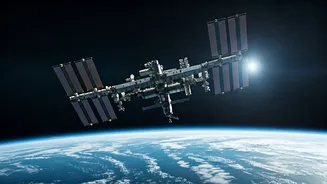
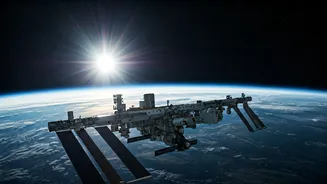
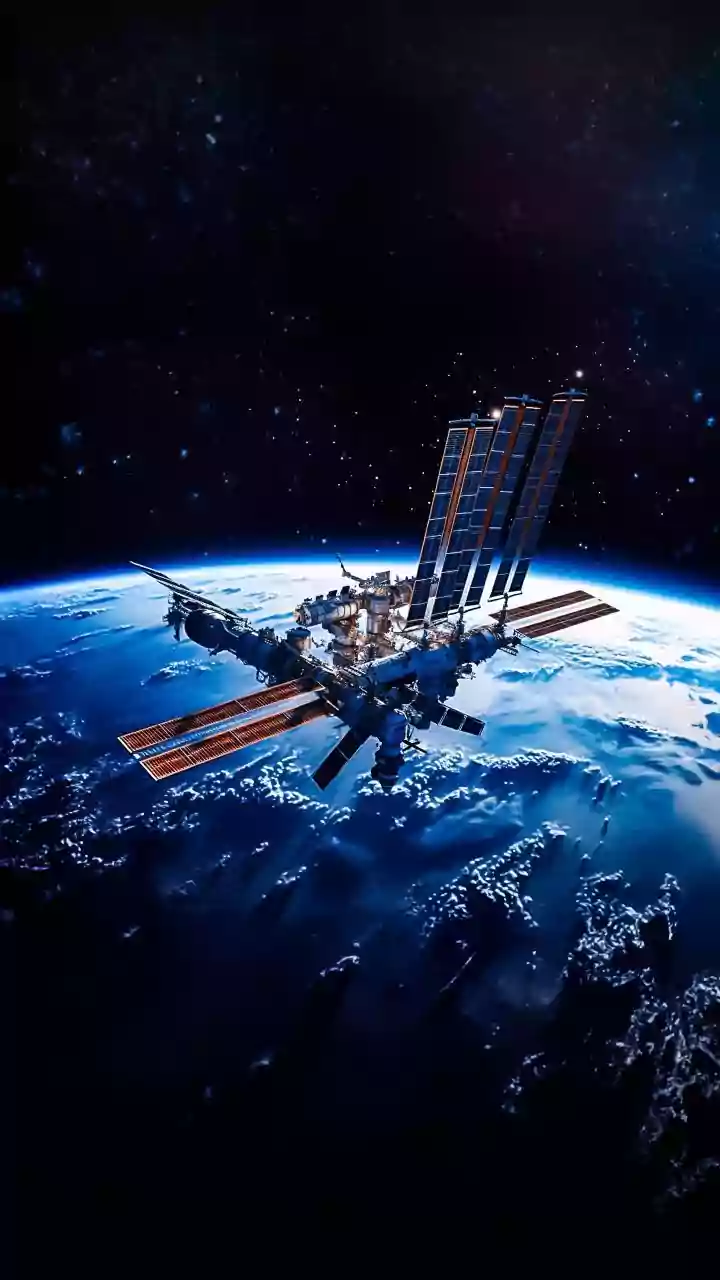
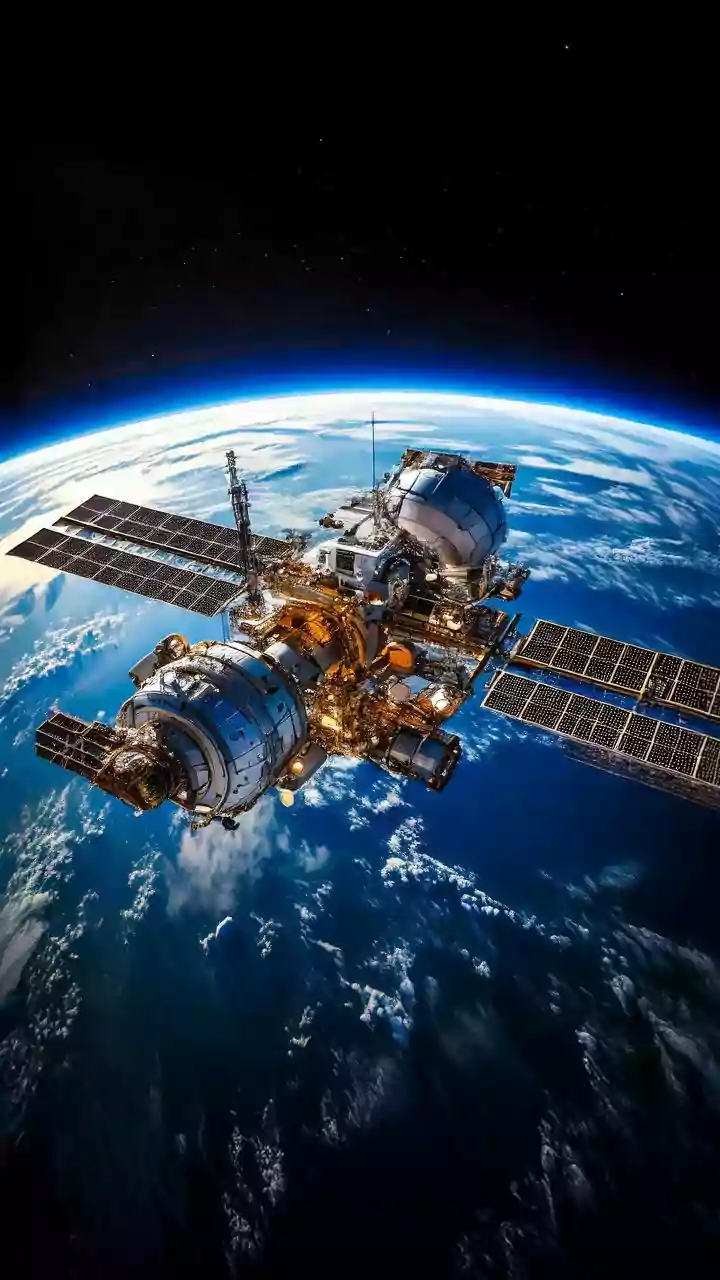
The International Space Station hurtles around our planet at a blistering speed of approximately 28,000 kilometres per hour. That's about 7.7 kilometres every second. At this velocity, the station completes a full orbit of Earth in about 92 to 93 minutes.
This means that instead of one 24-hour day-night cycle, the astronauts on board experience a complete cycle of light and darkness roughly every hour and a half. This rapid journey is a delicate balancing act. The ISS is in a state of continuous free-fall toward Earth, but its immense forward speed means it constantly 'misses' our planet, instead carving a circular path around it. This orbit is maintained at an altitude of about 400 kilometres, placing it in what is known as low Earth orbit. It's this combination of incredible speed and relatively low altitude that makes the phenomenon of multiple sunrises possible.
The 90-Minute Day
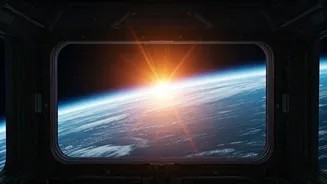
When you divide a 24-hour day (1,440 minutes) by the ISS's orbital period of roughly 92 minutes, you get approximately 15.5 orbits. This translates to 15 or 16 full day-night cycles packed into a single Earth day. For the crew, this means about 45 minutes of daylight followed by 45 minutes of darkness, over and over again. The term 'sunrise' itself takes on a new meaning. On Earth, a sunrise can be a slow, drawn-out event. In orbit, it's a matter of seconds. The line between night and day, known as the terminator, sweeps across the planet below, and the sun appears to leap over the horizon in a brilliant, fleeting flash of colour.
Living on a Different Clock
So how do astronauts cope with a sunrise every 90 minutes? Living with a constantly shifting natural light cycle would be disorienting and disruptive to human biology. Our bodies are governed by a 24-hour internal clock, or circadian rhythm, which is strongly influenced by light. To combat this celestial jet lag, life on the ISS is meticulously scheduled. The station runs on a single, standardized time zone: Coordinated Universal Time (UTC), which is based on Greenwich Mean Time (GMT). This ensures that all astronauts and the five international mission control centres operate on the same 24-hour clock, regardless of where the station is over Earth.
Simulating Night and Day
Daily routines for work, meals, and exercise are rigidly scheduled in five-minute intervals to maintain order. When it's time to sleep, it's not as simple as waiting for it to get dark outside. Astronauts retire to small, personal sleep compartments, often resembling a telephone booth. To simulate night, they pull shutters over the station’s windows or wear eye masks to block out the frequent sunrises. They secure themselves in sleeping bags attached to a wall to prevent floating around in the microgravity environment. Earplugs are also common to muffle the constant hum of the station's machinery. These measures are crucial for ensuring the crew gets the roughly eight hours of scheduled sleep needed to stay healthy and perform complex tasks during their demanding missions.