




A Mission of Immense Ambition
Chandrayaan-4 represents a monumental leap in India's space exploration journey. Unlike its predecessors, its primary goal is to perform a lunar sample return—a feat only achieved by the United States, the former Soviet Union, and China. The mission aims
to collect soil and rock from the Moon's surface, projected to be around 3 kg, and bring it back to Earth for detailed scientific analysis. This is crucial because studying lunar samples in advanced terrestrial labs can unlock secrets about the origin of the Moon, Earth, and our solar system that remote observation cannot. The complexity is immense, requiring multiple spacecraft to perform a perfectly synchronised celestial ballet hundreds of thousands of kilometres from home.
The Five-Module Powerhouse
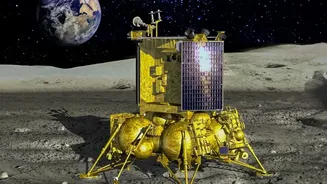
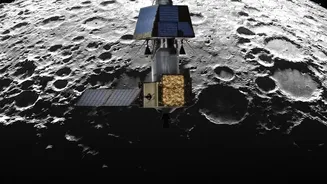
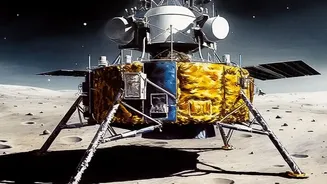
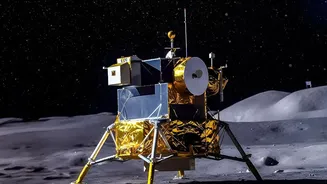
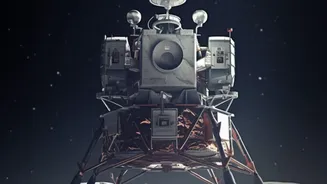
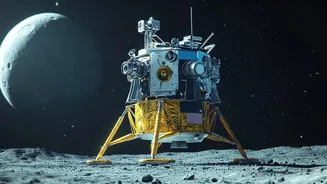
At the heart of Chandrayaan-4's strategy is a sophisticated five-module system. Because these components are too heavy for a single rocket, ISRO plans to use two separate launches to get everything into space. The modules are the Propulsion Module (PM), Descender Module (DM), Ascender Module (AM), Transfer Module (TM), and Re-entry Module (RM). The Propulsion Module's job is to ferry the entire stack towards the Moon. The Descender Module, an evolution of Chandrayaan-3's Vikram lander, is designed for the soft landing. The Ascender is a small rocket that will launch from the Moon's surface with the samples. The Transfer and Re-entry modules work together to bring the precious cargo back to Earth.
Two Launches and an Orbital Dock
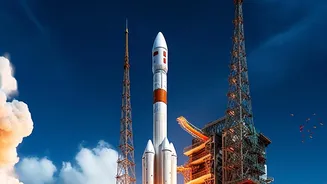
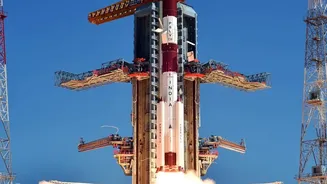
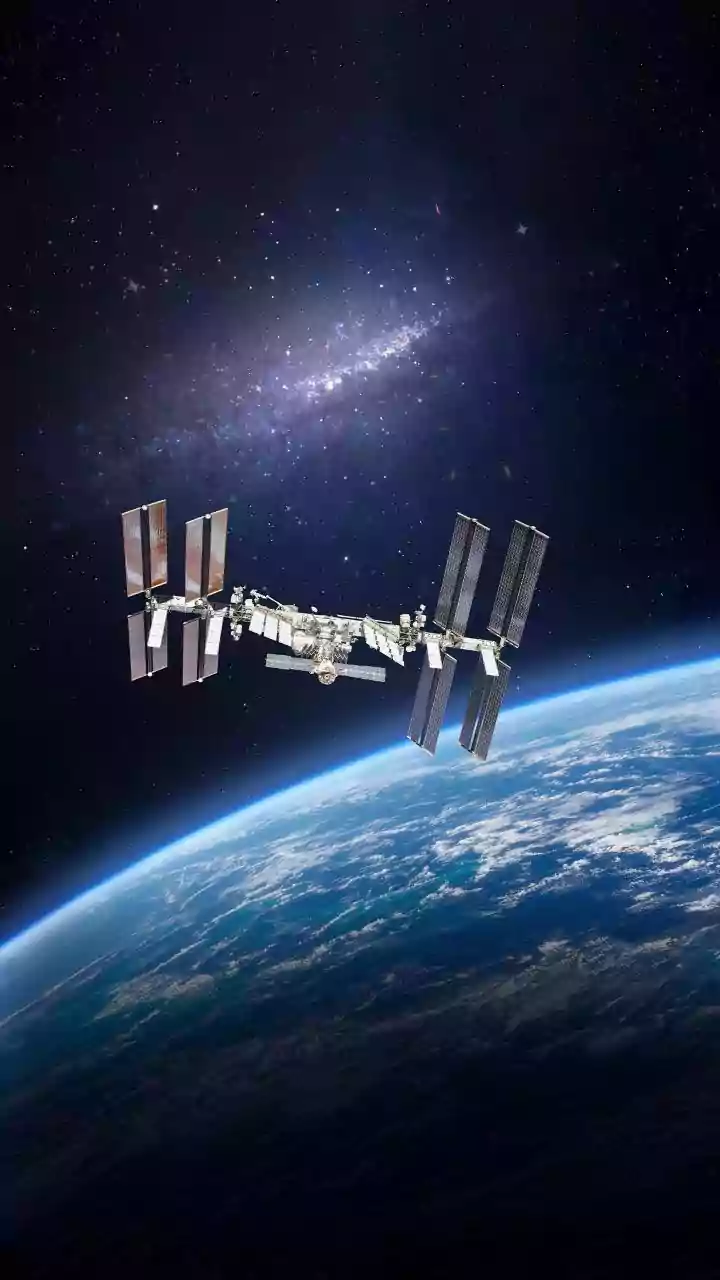
The mission will begin with two separate launches, likely using India's powerful LVM3 rocket. One rocket will carry the Descender and Ascender modules, while the second will carry the Propulsion, Transfer, and Re-entry modules. The first major challenge happens in Earth's orbit, where these two stacks must find each other and perform a robotic docking—a critical manoeuvre that ISRO will be demonstrating on such a complex scale for the first time. Once combined into an integrated stack, the Propulsion Module will fire its engines, pushing the entire spacecraft assembly out of Earth's gravity and towards the Moon.
Landing and Collecting the Lunar Treasure
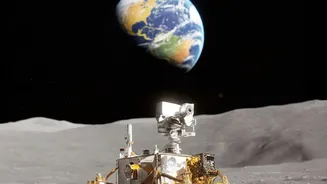
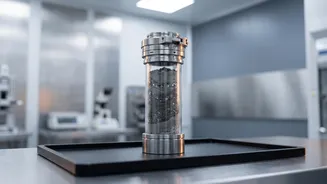
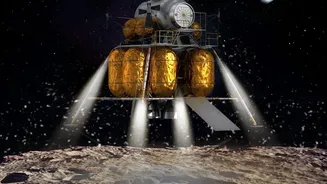
Upon reaching lunar orbit, the combined Descender and Ascender modules will separate from the Transfer and Re-entry modules, which remain in orbit. The Descender will then perform a controlled, powered descent to land softly on the lunar surface, likely near the south polar region. After landing, the real work begins. A robotic arm on the Descender will scoop surface soil, while a drilling mechanism will collect subsurface samples. These samples will be carefully transferred and sealed into containers inside the Ascender Module to protect them from contamination on their long journey home.
The Journey Home
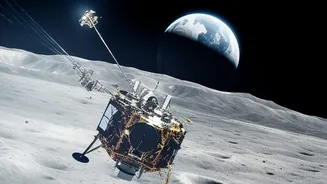
Once the samples are secured, the Ascender Module fires its engine, lifting off from the lunar surface and leaving the Descender behind. It will then navigate back into lunar orbit to rendezvous and dock with the waiting Transfer and Re-entry modules—another difficult, automated manoeuvre. The samples are then transferred from the Ascender to the Re-entry Module. With its job done, the Ascender is discarded. The Transfer Module then fires its engines to break out of lunar orbit and begin the voyage back to Earth. As it approaches our planet, it will orient itself correctly before releasing the Re-entry Module, which is designed to survive a fiery plunge through the atmosphere and land safely, delivering its priceless lunar cargo to scientists in India.