






The Universal Foundation Frustration
Anyone who wears foundation knows the struggle. The lighting in the store is completely different from daylight, leading to a shade that looks perfect under the fluorescent glow but ghastly in the sun. Aggressive sales pressure, the difficulty of figuring
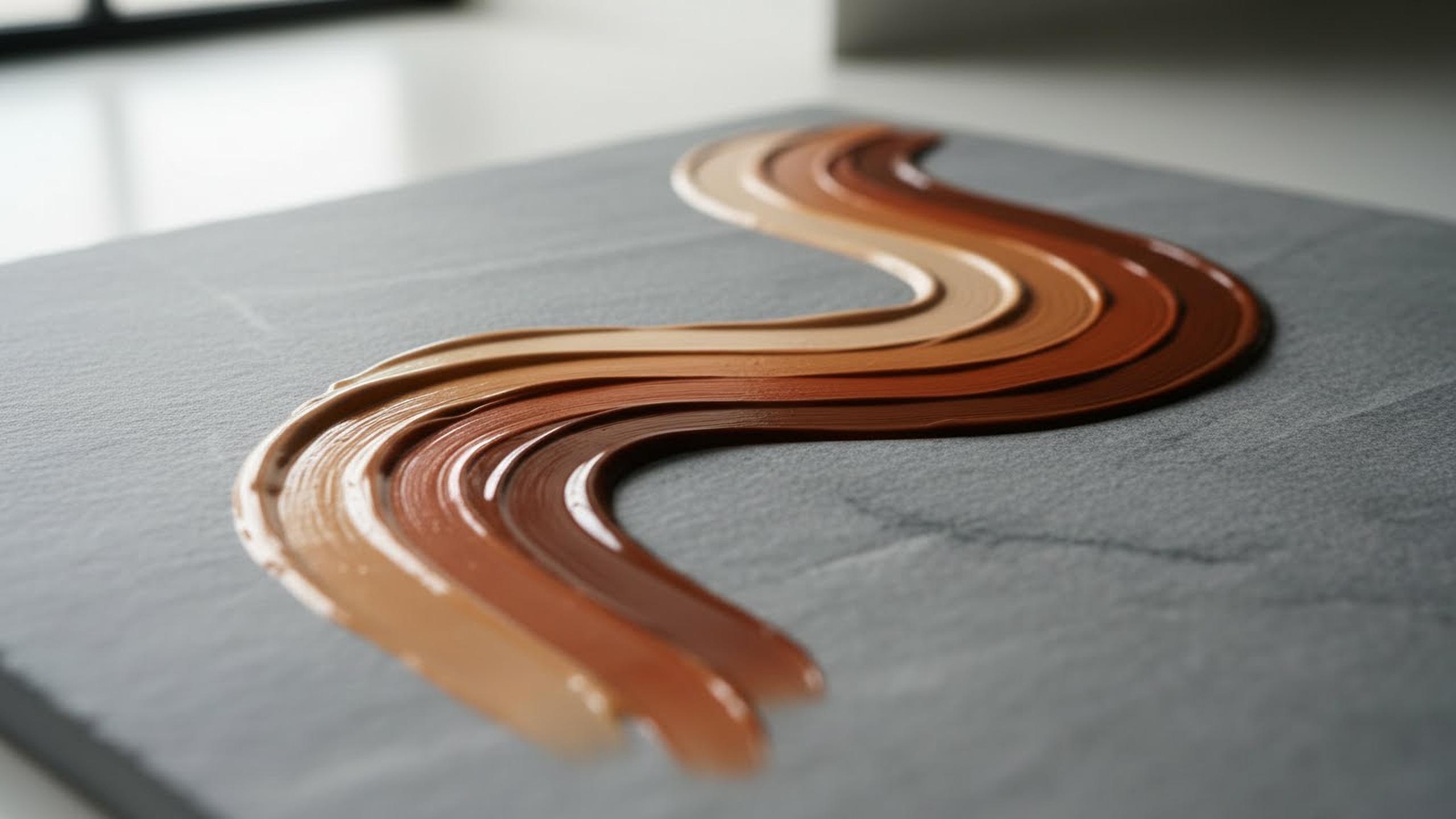
out your skin’s undertones (are you warm, cool, or neutral?), and the way some formulas oxidise and change colour after application all add to the stress. For years, the process has been one of messy trial and error, often resulting in a drawer full of barely-used bottles and a lingering sense of dissatisfaction. It’s a common experience, with some studies showing that around half of all women have trouble finding the right foundation shade online.
How AI Finds Your Shade
Artificial intelligence offers a high-tech solution to this age-old problem. Instead of relying on guesswork, AI-powered tools use sophisticated algorithms to analyse your skin and recommend a product. There are two main approaches. The first, and most precise, involves computer vision technology. You use your phone’s camera to take a selfie or scan your face in real-time. The AI analyses the pixels in the image to determine your exact skin tone and undertone, then cross-references that data with a brand’s entire product catalogue to find the best matches. The second approach is a highly advanced quiz, like the one popularised by Il Makiage. These quizzes go beyond simple questions, using machine learning to process your answers about your skin type, concerns, and preferences to predict your ideal shade.
The Tools at Your Fingertips
This technology is no longer a futuristic concept; it's available now from many major beauty players. Sephora has been a pioneer in this space with its in-store Color IQ service, which uses a handheld device to scan your skin and assign a unique shade number. Many brands have also integrated AI shade finders directly into their websites and apps. Companies like Perfect Corp and ModiFace partner with global brands like MAC and L'Oréal to offer virtual try-on and shade-matching experiences. Other platforms like Findation and Match My Makeup allow you to input a foundation shade you already use to find equivalents across hundreds of different brands. Some newer tools are even using the Monk Skin Tone Scale, a more inclusive 10-point scale developed to better represent a wider diversity of human skin tones.
Tips for Getting an Accurate Match
While impressive, AI tools are only as good as the information you give them. To get the most accurate results from a photo-based analysis, preparation is key. Always take your photo in bright, even, natural daylight, as artificial lighting can skew the colours. Make sure you are not wearing any makeup, as the AI needs to see your bare skin. Frame your face clearly and avoid any harsh shadows. When taking an AI-powered quiz, be honest about your skin concerns and habits. The goal is to find a product that works for your real skin, not the skin you wish you had. Remember to use these recommendations as a highly educated starting point, not a final verdict.
Is It a Perfect Science Yet?
It's important to have realistic expectations. AI shade matching is a massive leap forward, but it is not yet foolproof. The quality of your phone's camera and the lighting conditions can still impact the result. Some algorithms are better than others at detecting the subtle differences in undertones, particularly for very fair or very deep skin tones. Furthermore, an AI can't tell you how a foundation will feel on your skin or how it will wear throughout the day. For that reason, it’s always a good idea to get a sample of the recommended shade to try at home before committing to a full-size bottle. This allows you to see how it performs in your own environment and how it changes, if at all, after a few hours of wear.