



Art on the Menu
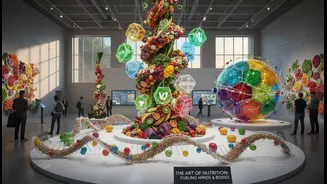
At the Science Gallery Bengaluru, a year-long exhibition titled 'Calorie' is reframing the conversation around food. Running from mid-2025 to mid-2026, it moves beyond pamphlets and charts. Instead, it uses a series of interactive artworks and installations
to explore everything from the politics of agriculture to the science of what we eat. The goal isn't just to present facts, but to create a space where visitors can physically engage with the complex systems that bring food to our plates. It’s an invitation to question, touch, and play with concepts that are often confined to dense text or abstract numbers.
Seeing Is Believing, Touching Is Understanding
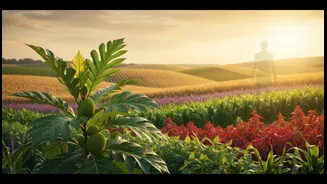
The power of the exhibition lies in its hands-on nature. One installation, 'Ragi.net', features ragi seedlings sprouting from a bed of discarded e-waste like keyboards and computer mice, offering a tactile commentary on urbanisation and food sources. Another exhibit includes an interactive game where visitors can try to create their own strain of rice, making them consider factors like climate change and scarcity. Other displays are even more direct, from a multisensory installation about stomachs to a collection of different clays and soils that are consumed by communities around the world. By turning abstract data into tangible experiences, these exhibits make the consequences of our food choices feel immediate and personal.
The Science Behind the Experience
This approach is deeply rooted in educational science. The theory of 'embodied cognition' suggests that our thinking is not confined to our brains but is shaped by our physical bodies and interactions with the environment. When we use our hands to build something, play a game, or walk through a physical space, we create stronger, more durable memories. Traditional nutrition education often fails because it treats people as passive recipients of information. Experiential learning, by contrast, activates our senses and engages us in the process, making it more likely that we will not only understand a concept but also apply it in our daily lives. Studies consistently show that hands-on activities, whether in a garden or a kitchen, improve nutrition knowledge and promote healthier habits.
A Timely Intervention for India
The need for innovative nutrition education in India is urgent. The nation faces a 'dual burden' of malnutrition, with persistent undernutrition and micronutrient deficiencies existing alongside a rapid rise in obesity and related non-communicable diseases like diabetes and hypertension. Experts argue that simply knowing facts is not enough; nutrition literacy involves the skills and confidence to apply that knowledge. Initiatives like the 'Calorie' exhibition are critical because they help bridge this gap between knowing and doing. They provide a model for how public health information can be delivered in a way that is not only accessible and culturally relevant but also genuinely memorable and empowering for people of all ages.