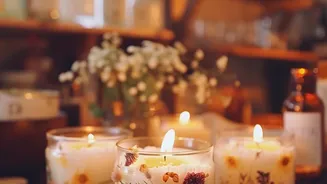






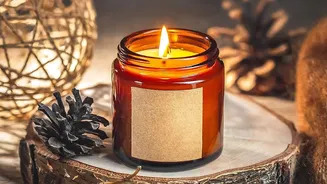
The magic of a homemade scented candle lies in its glow and fragrance, but the secret to a perfect creation is all in the prep work. Nailing the setup before you even think about melting wax is the key to a beautiful, even burn.
Gather Your Essential Supplies
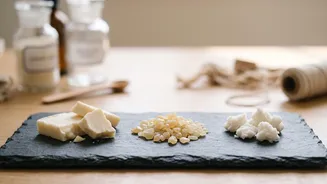
Before you begin, a well-organized
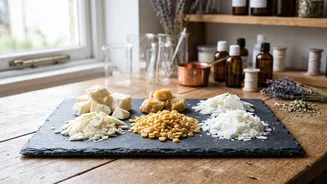
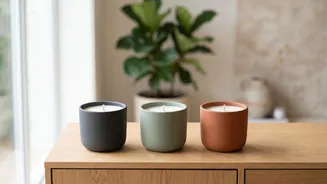
workspace will make the process smooth and enjoyable. You don’t need a professional studio, just a clean, flat surface and your core materials. The non-negotiables are your wax, wicks, and containers. For beginners, soy wax is a popular and forgiving choice as it burns cleanly and is easy to work with. Your containers must be heat-safe; glass jars, tins, and glazed ceramic vessels are ideal choices. Avoid materials like wood or unsealed terracotta, as they can be flammable or porous. Finally, select your wicks. The wick's size is determined by the diameter of your container, so check the supplier's recommendations to ensure an even burn and prevent issues like tunnelling.
Prepare Jars and Workspace
A clean container is crucial for a flawless candle. Before starting, wipe the inside of your jars with rubbing alcohol on a paper towel. This simple step removes any dust, oils, or residue that could interfere with the wick’s adhesion or the final look of your candle. While not essential for all waxes, some experts recommend pre-heating your glass jars slightly. You can use a heat gun or place them in a warm oven (around 120-160°F or 50-70°C) while your wax melts. This reduces the temperature difference when you pour the hot wax, which can help prevent cracks and promote better adhesion to the glass. Always handle warm jars with an oven mitt.
Calculate Your Wax and Fragrance
Measuring your materials by weight, not volume, is the most accurate way to create consistent candles. A digital kitchen scale is an indispensable tool here. To figure out how much wax you need, a simple method is to place your empty container on the scale, tare it to zero, and fill it with water to your desired wax level. Note the weight of the water. Since wax is less dense than water, you'll multiply the water weight by a density factor (for soy wax, a common factor is 0.86) to get the total weight of wax and fragrance oil needed. For fragrance, a typical 'fragrance load' is between 6% and 10% of the wax weight. To calculate, multiply your total wax weight by your desired percentage (e.g., 100g of wax x 0.08 for an 8% load equals 8g of fragrance oil).
Secure the Wick
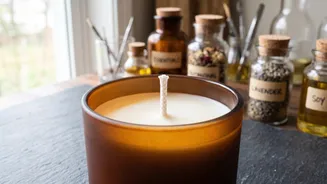
Properly securing the wick is one of the most critical steps before pouring. An off-centre wick will cause the candle to burn unevenly. Start by attaching the metal tab at the bottom of your wick to the centre of the jar's base. The easiest and most reliable way to do this is with a wick sticker, which is a small, double-sided adhesive dot designed for this purpose. Press it down firmly to ensure a strong grip. Using a drop of hot glue is another option. Once the base is secure, you need to keep the top of the wick straight and centred. A wick bar, which is a small tool that sits across the jar's rim with a slot for the wick, is perfect for this. If you don’t have one, a clothespin, two chopsticks, or a pen laid across the top of the jar can work just as well to hold the wick taut and in place.