






The Chemical Breakdown
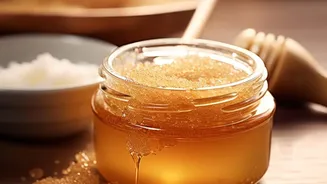
At a molecular level, both honey and sugar are, unsurprisingly, made of sugars. But the type and arrangement are key. Table sugar is pure sucrose, a molecule where one glucose unit and one fructose unit are bonded together. Before your body can use it,
it has to break that bond. Honey, on the other hand, is a collection of separate sugar molecules, primarily fructose (about 38%) and glucose (about 31%), with the rest being water, other complex sugars, and trace amounts of other compounds. Because these sugars are already separated, your body digests them differently.
Interpreting Sweetness
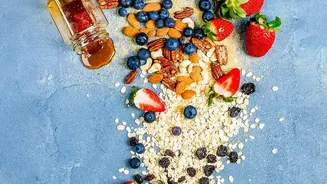
Not all sugars taste equally sweet. Fructose is noticeably sweeter than both glucose and sucrose. Since honey has a higher proportion of free fructose, it generally tastes sweeter than an equivalent amount of table sugar. This is why many people find they can use less honey to achieve the same level of sweetness in their tea or on their oatmeal, which can be a small way to manage overall sugar intake. The complex mix of over 25 different carbohydrates in honey also creates a more layered and deeper flavour profile compared to the straightforward sweetness of sugar.
The Nutritional Divide
This is where the 'healthier' debate gets interesting. Table sugar offers what are often called 'empty calories'—it provides energy but has no vitamins, minerals, or antioxidants. Honey, particularly raw and less-processed varieties, does contain trace amounts of B vitamins, minerals like potassium and iron, and beneficial enzymes and antioxidants like flavonoids. While these amounts are generally too small to be considered a significant source of nutrients, they represent a clear difference from refined sugar. For this reason, many view honey as the nutritionally superior, if still sugary, choice.
Impact on Blood Sugar
The glycemic index (GI) measures how quickly a food raises blood sugar levels. Pure glucose is the benchmark at 100. Table sugar (sucrose) has a GI of around 65. Honey typically has a lower GI, ranging from about 45 to 64 depending on the variety, with an average often cited around 58. This means honey raises blood sugar a bit more slowly than sugar does. The difference is moderate, not massive, and both are still high-sugar foods that should be consumed with care, especially by individuals managing diabetes.
When Cooking and Baking
You can't always swap honey and sugar one-for-one in the kitchen. Because honey is sweeter, a good rule of thumb is to use about three-quarters of a cup of honey for every cup of sugar. Since honey also contains water (about 17-20%), you'll need to reduce the other liquids in a recipe by about a quarter cup for every cup of honey used. Honey is also more acidic than sugar, so adding a tiny pinch of baking soda can help balance it and ensure proper rising in baked goods. Finally, honey caramelizes and browns faster than sugar, so it's wise to reduce your oven temperature by about 15°C (or 25°F) to prevent your creations from burning.