




The Pole-to-Peninsula Connection
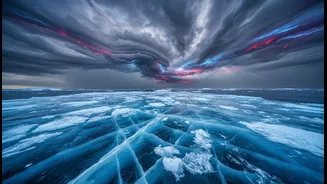
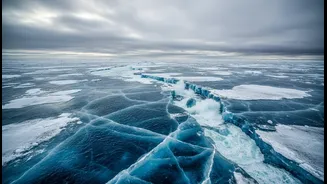
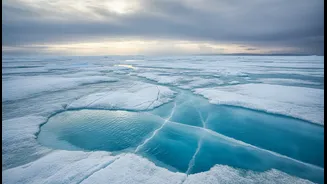
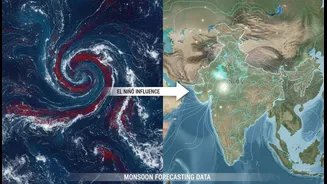
The chaotic Indian monsoon, the lifeblood for billions, is increasingly being influenced by the rapidly warming Arctic. Scientific studies now confirm a strong link between melting sea ice in the polar region and the behaviour of our seasonal rains. Researchers
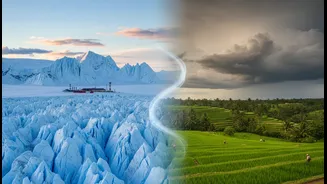
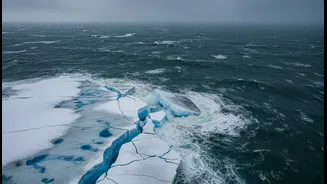
from India's National Centre for Polar and Ocean Research (NCPOR) have found that warm periods in the Arctic are historically linked to more intense rainfall over the subcontinent. More recent data, analysed from 1979 to 2022, shows that reduced Arctic sea ice in June and July has a profound influence on the later phase of the monsoon in August and September. This phenomenon is not just about the volume of rain; it's also about its location. The melting ice is causing a noticeable westward shift in late-season monsoon rainfall, leading to increased precipitation over western and northwestern India. This happens because a warmer Arctic, having lost its reflective ice cover, alters large-scale atmospheric circulation patterns, like Rossby waves and the jet stream, which steer weather systems globally.
Beyond the Monsoon to the Third Pole
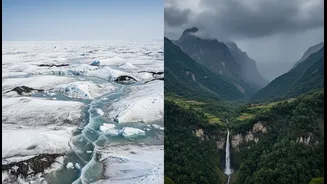
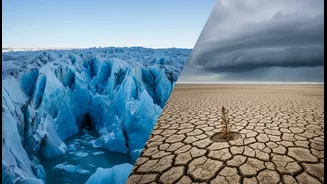
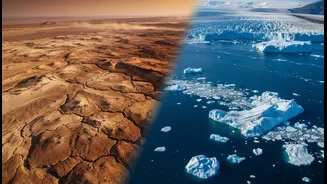
The influence of polar dynamics extends beyond the monsoon. Changes in the jet stream, influenced by Arctic warming, can contribute to extreme weather events worldwide, and India is no exception. This makes understanding polar science critical for predicting not just rain, but also severe heatwaves and cold snaps. Closer to home, the Himalayas—often called the 'Third Pole'—are facing their own crisis. The glaciers in this region are retreating at an alarming rate, with some estimates as high as 15 meters per year. This has immediate and devastating consequences. Initially, it can lead to a surge in meltwater, causing catastrophic events like Glacial Lake Outburst Floods (GLOFs), which threaten downstream communities. In the long term, the disappearance of these glaciers jeopardises the water supply for nearly 800 million people in the Indus, Ganga, and Brahmaputra river basins, who depend on this meltwater during the dry seasons. This threatens everything from drinking water to agriculture and hydropower.
India's Scientific Foothold
India is not a passive observer in this field. The country has a robust and growing polar research program, managed by the National Centre for Polar and Ocean Research (NCPOR). It maintains permanent research stations in Antarctica (Maitri and Bharati) and the Arctic (Himadri, established in 2008). Indian scientists are actively monitoring sea ice, weather patterns, and ocean currents to gather critical data. This research is specifically aimed at understanding the link between polar changes and the Indian monsoon system. Furthermore, specialised forecasting models like the Polar Weather Research and Forecasting (Polar-WRF) model are being used and improved to provide accurate short-range forecasts for operations at these remote stations. This demonstrates a high level of institutional capability and a clear recognition within the scientific community that polar research is vital for national interests.
The Glaring Communication Gap
Despite this advanced scientific work, a significant gap remains between the research lab and public discourse. When was the last time a mainstream weather report mentioned the state of Arctic sea ice while discussing the monsoon's arrival? The insights from NCPOR and other institutes are crucial for policy-making in agriculture, disaster management, and water resources. Yet, the public conversation around Indian weather remains largely localised, disconnected from the global climate drivers that scientists now know are critical. The westward shift of the monsoon, for instance, has massive implications for crop planning and water infrastructure, but the 'why' behind this shift—rooted in polar science—is rarely part of the explanation offered to the public or farmers. To build a truly climate-resilient nation, this knowledge cannot remain confined to scientific journals and specialised agencies. It needs to become part of our everyday weather vocabulary.