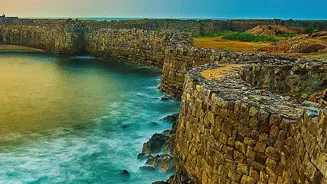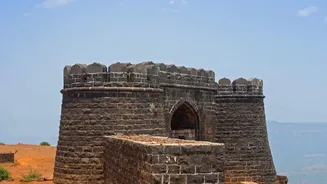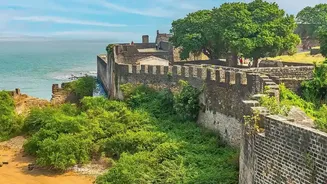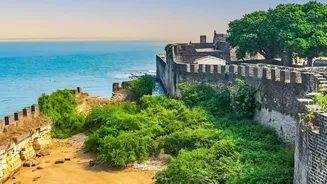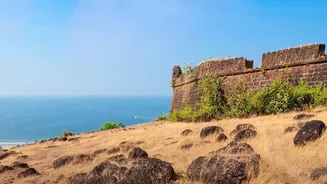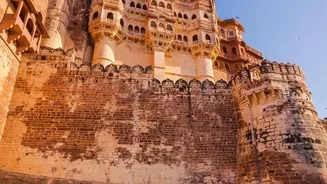





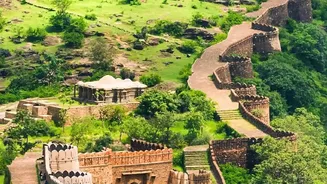
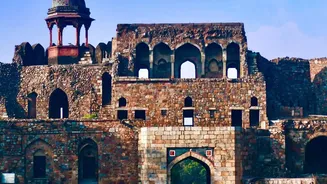
Along the Konkan coast, where the Arabian Sea meets the shores of Maharashtra, stands a fortress that has defied time, tide, and empires. This is the story of Murud-Janjira, an unconquered bastion and a marvel of medieval engineering.
An Island of Defiance
Murud-Janjira is
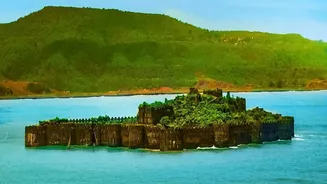
not just a fort; it is a declaration of power carved in stone. Situated on an oval-shaped rock off the coast of the fishing village of Murud, its name is derived from the Arabic word 'jazeera', meaning island. Built in the 17th century by the Siddis of Abyssinian descent, Janjira earned a reputation that few fortresses can claim: it was never conquered. For centuries, it stood as a symbol of Siddi sovereignty, repelling attacks from the mighty Marathas, the Portuguese, and the British. Its formidable presence was so absolute that even the great Chhatrapati Shivaji Maharaj could not breach its walls, despite multiple attempts. The fort’s enduring legacy is a direct result of its brilliant and ruthless design, which seamlessly blends into the surrounding seascape, making it an almost mythical structure on the horizon.
The Architecture of Deception
The primary genius of Janjira’s design lies in its strategic deception. The main entrance to the fort is a masterpiece of concealment. Invisible from the shore and hidden between two towering bastions, the gate only reveals itself when a boat is within a few feet of it. This feature was a critical defensive advantage, as enemy ships would often sail past, unable to locate the point of entry, leaving them exposed to cannon fire from the fort’s ramparts. The gate itself is an imposing structure, adorned with a sculpture depicting six elephants trapped by a single tiger-like beast, a powerful symbol of Siddi valour and dominance. This blend of artistic expression and tactical cunning is a recurring theme throughout the fort’s construction, turning every wall and gateway into a psychological weapon.
Walls Built to Endure
The resilience of Murud-Janjira is owed to its unique construction materials and formidable structure. The imposing walls, rising 40 feet above the high tide mark, were built with a special mortar of lead, sand, and jaggery, which has helped the structure withstand the corrosive sea winds and relentless waves for over 350 years. The fort is fortified with 19 rounded bastions, each serving as a platform for the massive cannons that once protected the island. Many of these cannons are still present today, including the three legendary cannons: 'Kalalbangdi', 'Chavri', and 'Landa Kasam', each a testament to the fort's military might. These bastions provided a 360-degree field of fire, ensuring that no angle of approach was left undefended. The sheer strength of its fortifications made any direct assault a near-suicidal mission.
A Self-Sufficient World
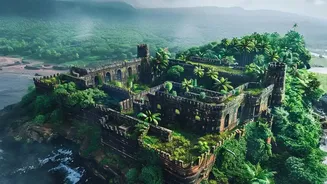
Perhaps the most astonishing feat of engineering at Janjira is its ability to sustain life. Despite being surrounded by the saline waters of the Arabian Sea, the fort contains two large freshwater lakes within its walls. These natural springs provided a reliable source of drinking water, allowing the fort's inhabitants to withstand long sieges without fear of running out of this essential resource. The fort was designed as a self-contained township. Inside its sprawling 22ndndnd acre complex were palaces for the nobility, quarters for officers and soldiers, a mosque for worship, and markets for trade. It was a microcosm of the Siddi kingdom, fully functional and prepared for isolation. This self_sufficiency was the final piece of the puzzle that made Janjira truly impregnable, allowing its defenders to outlast any attacker.