




Embrace the Stillness
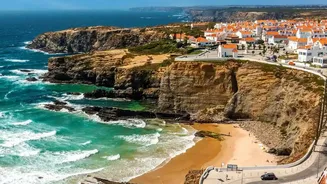
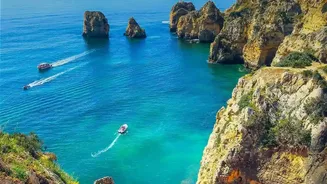
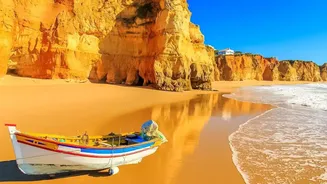
While many photographers chase storms and dramatic waves, calm conditions offer a different kind of magic. When the Atlantic turns to glass, the Algarve’s golden cliffs and intricate sea stacks are perfectly mirrored in the water. This is your opportunity
to capture images with a deep sense of peace and symmetry. The soft, diffused light of early morning on a still day is particularly special, creating a tranquil atmosphere that is hard to replicate. Instead of action, your photos can tell a story of serenity, focusing on the subtle interplay of light, water, and rock. This approach is ideal for creating minimalist compositions where reflections become the main subject, offering a more abstract and artistic take on the iconic coastline.
Prime Locations for Calm Day Shots
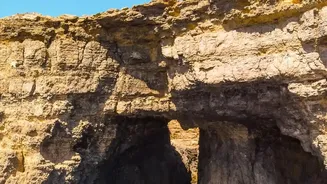
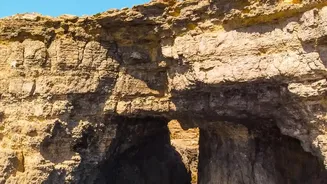
Certain spots along the Algarve coast are particularly rewarding when the sea is calm. Ponta da Piedade, near Lagos, is a must-visit. Its labyrinth of grottos, arches, and sea pillars becomes a hall of mirrors on a still day, best explored by a morning boat or kayak trip when the water is most placid. Further east, Praia da Marinha, consistently ranked among Europe's most beautiful beaches, offers breathtaking views from its clifftop trails. At sunrise, the low light illuminates the double sea arch known as the 'Heart of the Algarve'. For a unique perspective, visit the world-famous Benagil Cave. On calm days, guided kayaks can enter the cave, allowing you to photograph the iconic 'eye' in the ceiling from a stable, water-level position. Since swimming to the cave is no longer permitted and boat tours offer limited time, a kayak provides the best photographic opportunity.
Essential Gear and Camera Settings
To make the most of calm conditions, a few key pieces of gear are essential. A sturdy tripod is non-negotiable for stability, especially when working with slow shutter speeds to smooth the water's surface. A polarising filter is another invaluable tool; it cuts glare from the water, revealing submerged rocks and enhancing the richness of the colours. To achieve that silky, ethereal look on the water, you'll want to use a long exposure. Start with your camera in manual mode, set the ISO to its lowest native setting (like 100 or 200) to minimise noise, and select a narrow aperture, such as f/11 to f/16, to ensure everything from the foreground to the background is sharp. To use a slow shutter speed (from 2 to 30 seconds or more) in daylight, a Neutral Density (ND) filter is crucial. This filter acts like sunglasses for your lens, reducing the amount of light and allowing you to keep the shutter open for longer without overexposing the shot.
Composing Your Tranquil Scene
Composition is key to conveying a sense of calm. Look for leading lines within the cliff formations to guide the viewer's eye through the frame. Use the rule of thirds to place the horizon and key elements like a sea stack or arch off-centre for a more balanced and dynamic image. On calm days, reflections are your strongest compositional element. Position yourself to capture a perfect mirror image of the cliffs, or use a low angle to make the water feel vast and immersive. Don't be afraid to embrace negative space. A wide expanse of smooth water or clear sky can help isolate your subject and create a powerful sense of solitude and peace. The 'golden hour'—the first hour after sunrise and the last hour before sunset—provides the softest, warmest light, making the Algarve's signature golden cliffs glow intensely. Arriving early in the morning also means you’ll share these magnificent views with fewer people.