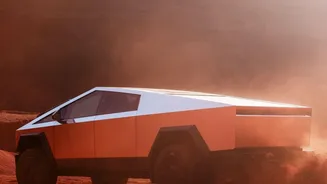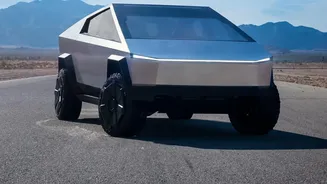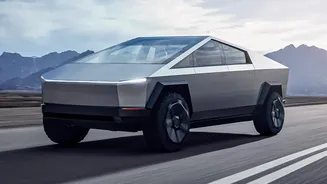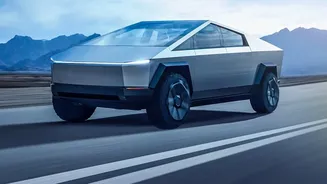







The saga of the Tesla Cybertruck has taken another sharp turn. Elon Musk has adjusted the vehicle's production timeline to summer 2027, but this isn't a simple delay. It's a complex final chapter for one of the most polarizing vehicles ever designed.
An Extension, Not a Delay
To clarify what might be a confusing picture, Tesla is not delaying the start of Cybertruck production; deliveries first began in late 2023. Instead, this latest news is a slight extension of the vehicle's planned demise. In early November 2026, Elon Musk first announced that Tesla would wind down Cybertruck production around the middle of 2027. The decision was driven by a strategic pivot to prioritize manufacturing capacity for the upcoming 'Cybercab' robotaxi. However, following backlash from fans and reservation holders, Musk announced on November 11 that production would be extended through the end of summer 2027 to fulfill more of the outstanding order backlog.
A History of Unmet Expectations
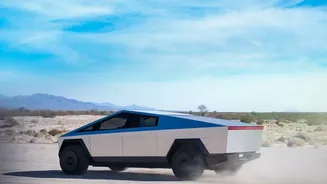
The Cybertruck's journey has been defined by bold promises and challenging realities from the very beginning. Unveiled in 2019 with a theatrical, and now infamous, demonstration that left its 'armour glass' windows cracked, the truck immediately captured global attention. However, its radical stainless-steel exoskeleton design proved immensely difficult to manufacture at scale. Musk himself admitted in 2023 that Tesla had 'buried itself' with the manufacturing complexity. The original 2021 launch target was missed, slipping to 2022 and then finally to late 2023. Even after production started, sales never reached the ambitious targets of 250,000 units annually. Sales peaked at just under 39,000 in 2024 before falling to around 20,000 in 2025 and continuing to decline.
Making Way for the Cybercab
The primary reason for sunsetting the Cybertruck is Tesla's shifting focus toward what it sees as its next major growth driver: autonomous vehicles. The company is reallocating factory space, resources, and personnel at its Giga Texas facility to ramp up production of the Cybercab. This two-seat, fully autonomous vehicle, which has no steering wheel or pedals, is the cornerstone of Tesla's planned robotaxi network. From a business perspective, the company has decided that the opportunity cost of struggling with the complex and relatively low-volume Cybertruck outweighs its benefits, especially when compared to the massive potential of the Cybercab.
A Sentimental Decision
While the business case for the Cybercab is clear, the decision to grant the Cybertruck a few more months of life appears to be driven by less tangible factors. Musk acknowledged the extension was a response to the order backlog and fan outcry, even calling it a sentimental move. 'This is not the smartest move from a profit-maximizing standpoint btw, but there must be some room in this world for sentimentality or what's the point?' he posted on X, formerly Twitter. This brief reprieve aims to satisfy a portion of the loyal customers who placed deposits years ago, but it also highlights the difficult balance Tesla faces between its futuristic ambitions and managing the expectations of its passionate customer base.
What It Means for Buyers and the Market
For those still holding out hope for a Cybertruck, the extension offers a slim but real chance. However, uncertainty remains. Tesla has already discontinued the lower priced All Wheel Drive versions leaving only the top tier Cyberbeast available for new orders at a significantly higher price point. Musk has noted that many deposits will still need to be refunded as the company cannot possibly fulfill all orders before the line is dismantled. The Cybertrucks turbulent life cycle also serves as a cautionary tale for the broader electric pickup market which has struggled with high costs and functionality trade offs leading several automakers to rethink their large EV truck strategies.