







What Are These 'Travel Corridor' Tests?
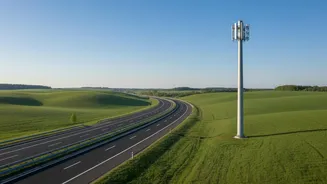
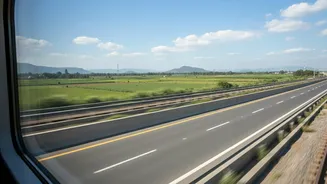
In 2026, TRAI has begun conducting a series of 'Independent Drive Tests' (IDTs) specifically aimed at measuring the quality of mobile networks on the move. Unlike stationary speed tests, these assessments are designed to capture the real-world experience
of a typical traveller. Using advanced software and multiple handsets running on all major networks—including Jio, Airtel, Vi, and BSNL—TRAI's agencies are travelling along key highways and railway routes to measure performance. The goal is to assess key parameters like data download and upload speeds, call drop rates, and general network coverage exactly as a consumer would experience them. These findings are then published to inform the public and, more importantly, to encourage service providers to improve their networks where they fall short.
A Report Card for India's Major Routes
The initial results from these travel corridor assessments paint a detailed, if varied, picture of connectivity in India. For instance, on the Ahmedabad to Gandhidham rail route, tests conducted in June 2026 showed significant differences in performance. Reliance Jio's 5G network clocked an impressive average download speed of 134.73 Mbps. In contrast, Airtel offered around 64.47 Mbps, Vi managed 23.44 Mbps, and BSNL lagged with 18.52 Mbps on its older network infrastructure. Similar tests were carried out on highways and tourist routes in Jammu & Kashmir, including the Srinagar to Pahalgam and Srinagar to Gulmarg highways, providing a granular look at network quality in diverse terrains. These tests don't just measure speed; they also track call drop rates, which on the Gujarat rail route were nearly non-existent for Airtel, Jio, and Vi, but higher for BSNL.
Why Your Signal Disappears on the Go
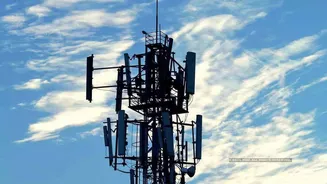
The inconsistent performance measured by TRAI highlights the unique challenges of providing mobile service to users in transit. Your phone is constantly jumping from one cell tower to the next in a process called a 'handover'. In a perfect scenario, this is seamless. However, on highways and railways that pass through rural areas, there can be significant gaps between towers, leading to 'dark spots' with no signal at all. Furthermore, a train full of hundreds of passengers all trying to use their phones at the same time can overload the capacity of a nearby cell tower, causing speeds to plummet for everyone. This congestion is a common issue in any densely populated environment, from a train carriage to a crowded city square. TRAI's tests are crucial because they quantify these gaps and performance dips, moving them from anecdotal complaints to official data points.
What This Means for You and Your Provider
For consumers, these reports are a powerful tool. They offer the first official, unbiased look at how different telecom operators perform along specific, popular travel routes. If you are a frequent traveller between two cities, you can now make a more informed decision about which network is likely to give you the most stable connection. This public benchmarking puts pressure on service providers to act. When TRAI releases a report showing that one network's call drop rate is significantly higher or its data speeds are consistently lower on a major highway, it creates a powerful incentive for that company to invest in improvements. The findings are shared directly with the telecom service providers, who are expected to take necessary corrective action to address the identified network deficiencies.
The Road Ahead for On-the-Go Connectivity
TRAI's corridor assessments are part of a broader push towards greater transparency and improved Quality of Service (QoS). By regularly testing and publishing results from different routes across the country, the regulator is building a comprehensive map of India's digital infrastructure strengths and weaknesses. This initiative complements other consumer-focused tools like the revamped 'TRAI MyCall' app, which allows users to report their own voice call experiences in real-time. The data-driven approach means that in the future, discussions about network quality won't just be about peak speeds in cities, but also about the reliability and consistency of service that keeps India connected while on the move.