





The Challenge of Tracking Phantoms
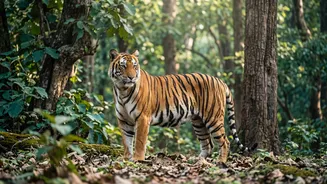
Tigers are masters of camouflage and stealth, preferring to move through dense forests largely unseen. This makes studying them, particularly individuals released into a new environment, incredibly difficult. After pioneering reintroduction programs began
in reserves like Sariska and Panna to bring tigers back from local extinction, scientists needed a reliable, non-invasive way to see if these majestic predators were adapting, establishing territories, and, crucially, surviving. Early methods of tracking, like using pugmarks (footprints), were often inaccurate for population estimates. Scientists needed eyes in the forest, 24/7, without disturbing the very animals they were trying to save.
Enter the Automated Eye
A camera trap is essentially a rugged, weatherproof digital camera linked to a motion sensor. When an animal passes in front of the camera, its body heat and movement trigger the infrared sensor, which in turn tells the camera to take a photo or a short video. These devices can be strapped to trees or posts and left for weeks or months, silently documenting everything that passes by. For tiger monitoring, cameras are often set up in pairs on opposite sides of a trail. This allows researchers to capture images of both flanks of the animal as it walks by, a critical detail for the next step in the process.
A Tiger's Unique Fingerprint
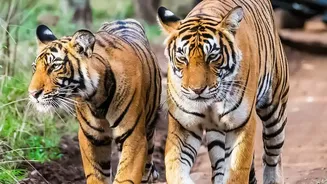
The secret to accurately counting tigers lies in their coats. Much like a human fingerprint, the stripe pattern on every tiger is completely unique. No two tigers, not even on their own left and right sides, are the same. By capturing clear photos of a tiger's flanks, scientists gain a unique identifier for that individual. This breakthrough transformed tiger census efforts, moving from rough guesswork to a reliable, scientific method of identifying specific animals. This allows a researcher in Panna to know for certain if they are looking at the same tiger that was photographed a month earlier, or an entirely new one.
From Photos to Population Data
After weeks in the field, researchers retrieve the memory cards, often containing thousands of images. The painstaking work of analysis begins. Scientists sift through the photos, identifying each individual tiger based on its unique stripes. This is where modern technology provides a huge boost. Specialised software can help automate the process, using pattern-recognition algorithms to compare a new image against a database of known tigers. By noting which tigers were 'captured' by which cameras and how many times, scientists use a statistical method called capture-recapture to estimate the total population size in an area. This is the core methodology used in India's national tiger census, a massive undertaking coordinated by the National Tiger Conservation Authority (NTCA) and the Wildlife Institute of India (WII).
More Than Just a Headcount
The data gleaned from camera traps goes far beyond just numbers. For reintroduced tigers, these images provide vital confirmation of their success. A photo of a tigress with cubs is a sign of a breeding, thriving population. The images help scientists map out individual territories, understand movement patterns, and observe social interactions. They can also monitor the health of the tiger's prey base, as deer, gaur, and other animals are also captured on camera. This complete picture of the ecosystem helps managers make informed decisions, whether it's strengthening anti-poaching patrols in a specific area or assessing the health of the forest habitat itself.