




The Billion-Dollar Problem Above Our Heads
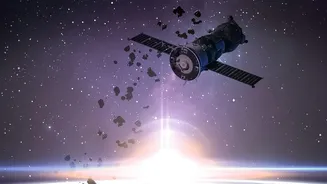
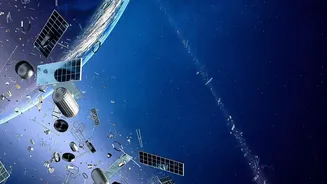
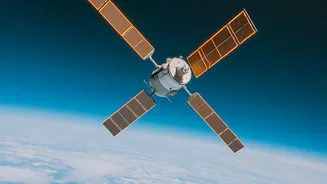
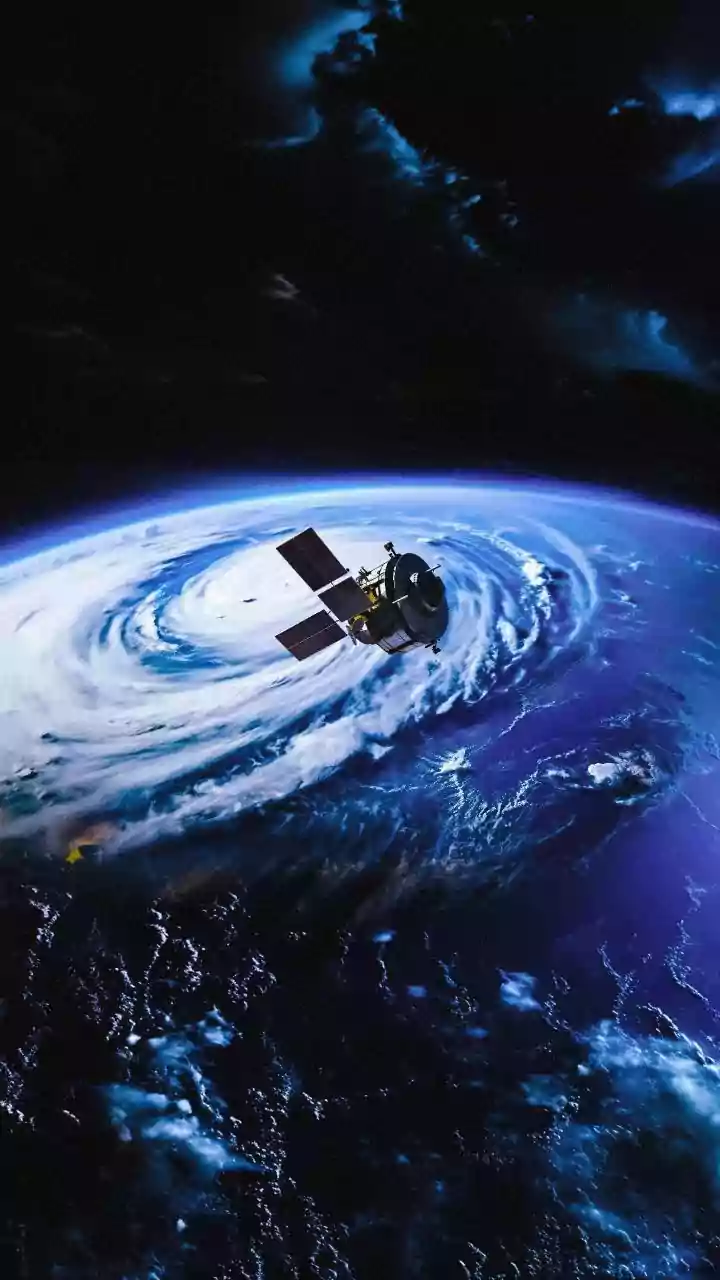
Space debris, or space junk, refers to any piece of machinery or debris left by humans in space. It can be a dead satellite, a spent rocket stage, or even a fleck of paint. There are over 36,000 tracked objects larger than 10 centimeters orbiting Earth,
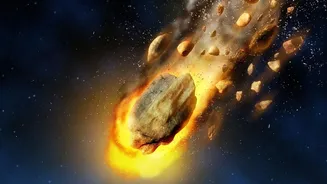
and millions of smaller, untrackable pieces. Travelling at speeds up to 28,000 km/h, even a small object can strike a functioning satellite or spacecraft with devastating force. This poses a direct threat to the communications, navigation, and Earth observation satellites we rely on daily. The worst-case scenario is a chain reaction called the Kessler Syndrome, where collisions create more debris, leading to more collisions, potentially rendering entire orbits unusable.
Introducing the Cosmic Cleanup Crew
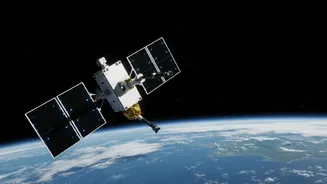
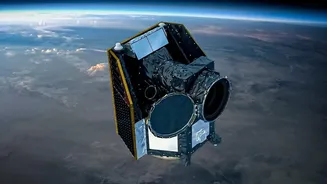
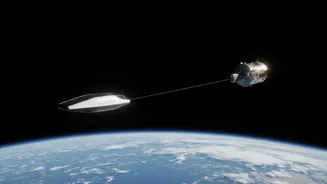
To solve this, space agencies and private companies are developing Active Debris Removal (ADR) systems. One of the most promising concepts is a two-part system that combines magnetic capture with an electrodynamic tether. Think of it as a robotic arm that grabs a dead satellite, attached to a long, propellant-less rope that drags it down. Companies like Japan's Astroscale and Switzerland's ClearSpace are pioneering these technologies, aiming to create commercially viable services for orbital cleanup. The idea is to attach a standardized docking plate to all new satellites, making future capture much easier.
Part 1: The Magnetic Grapple
The first challenge is latching onto a dead satellite, which is often tumbling uncontrollably. A physical grab could damage the target or the capture vehicle. Magnetic grappling offers a non-contact solution. One method involves a servicer spacecraft equipped with powerful electromagnets. By rotating its magnetic field, it induces electrical eddy currents within the metallic body of the target debris. These currents create an opposing magnetic field, allowing the servicer to gently synchronize its rotation with the tumbling object without touching it. Once stabilized, it can move in and secure the object, either with a magnetic lock or a robotic arm, for the next phase of the mission.
Part 2: The Electrodynamic Tether 'Drag'
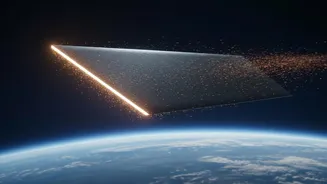
Once the junk is captured, it needs to be moved. Traditional rockets would require huge amounts of propellant, making multi-target missions impractical. This is where the electrodynamic tether (EDT) comes in. An EDT is a long, highly conductive wire, often several kilometers long, that is unspooled from the capture satellite. As this tether moves through Earth's magnetic field, it naturally generates a voltage along its length, just like a generator. This process allows the tether to interact with the charged particles in the ionosphere, creating an electrical circuit with the plasma in space.
Generating Force Without Fuel
The flow of current along the tether, interacting with Earth's magnetic field, produces a physical force known as the Lorentz force. By controlling the direction of this current, the system can generate a persistent, gentle thrust. To de-orbit a satellite, the system is configured to produce a drag force that opposes the satellite's orbital motion. This continuous braking action slows the captured satellite down, causing its orbit to gradually decay. No propellant is needed; the system converts orbital energy directly into electrical energy and then into a drag force. This allows a single cleanup satellite to potentially de-orbit multiple pieces of debris on a single mission.
The Road to a Cleaner Orbit
While the technology is incredibly promising, it's still in its early stages. Missions have successfully demonstrated the principles of both magnetic capture and electrodynamic tethers, but integrating them into a reliable, cost-effective service is the next major hurdle. Projects like the European Space Agency's ClearSpace-1 mission, planned for the coming years, aim to be among the first to capture and remove a real piece of debris. The success of these pioneering missions will be crucial in proving the business case for a commercial space cleanup industry and ensuring that low Earth orbit remains a safe and usable resource for generations to come.