



The Monsoon’s Fleeting Bounty
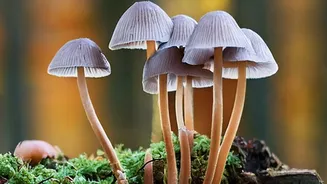
The Indian monsoon triggers a spectacular, brief natural event deep within regional forests and coastal belts. The combination of humidity and rain creates the perfect ecosystem for wild fungi to thrive, many of which cannot be commercially cultivated.
For generations, tribal and indigenous communities have held the knowledge of foraging for these delicacies, which often sprout for just a few days following heavy thunderstorms. This ancient practice, once a source of local sustenance and tradition, has now captured the imagination of India's top chefs, who are increasingly turning to foragers to source these hyperlocal ingredients. This trend is about more than just novel flavours; it's a reconnection with India's immense biodiversity and culinary roots.
The Star of the Season: Termite Mushrooms
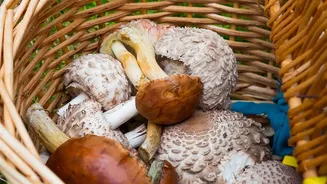
Among the most celebrated monsoon fungi are the Termitomyces, or termite mushrooms. Known as 'Roen Olmi' in Goa and 'Alambi' in parts of Karnataka and Maharashtra, these mushrooms grow exclusively on or near active termite mounds. The termites cultivate the fungus underground, and the monsoon rains trigger them to fruit, pushing through the soil almost overnight. Harvesting them is a time-sensitive tradition, as they perish quickly. Prized for their profoundly meaty texture and earthy flavour, these mushrooms have long been a local delicacy, traditionally simmered into fiery coconut-based curries like the famous Goan Xacuti. Today, chefs are showcasing Olmi in everything from a simple chilli-fry to a rich, comforting tonak (curry).
The Prized Himalayan Morel
While termite mushrooms rule the coasts, the high-altitude forests of the Himalayas offer their own elusive prize: the Gucchi, or morel mushroom. With their distinctive, honeycomb-like caps, Gucchi are among the world's most expensive mushrooms, with prices for dried varieties ranging from ₹25,000 to ₹40,000 per kilogram. Their high cost is due to the fact that they cannot be commercially farmed and must be painstakingly foraged from the wild after the snow melts or during wet months. Villagers spend months collecting, drying, and bringing them to market. Renowned for their deep, savoury, and nutty flavour, Gucchi are a true luxury ingredient, most famously used in the decadent Gucchi Pulao, where their unique taste can shine.
A Celebration of Regional Diversity
Beyond Olmi and Gucchi, the monsoon brings forth a stunning variety of other regional mushrooms. In Jharkhand and Chhattisgarh, tribal communities forage for Rugra or Boda, a spherical mushroom found near Sal trees that has a chewy, meat-like texture when cooked in spicy curries. Along the Kanara coast, the appropriately named 'Gud Gud Alambe' (thunder mushrooms) are believed to sprout in response to lightning and thunder. In the forests of West Bengal, locals await a variety of 'Chhatu', including the prized Putka and Moudal Chhatu, each with its own unique flavour profile linked to the Sal forests they grow in. This diversity highlights the deep connection between local ecosystems and culinary traditions, with each mushroom telling a story of its specific region.
From Forest Floor to Fine Dining
This renewed interest in wild mushrooms is part of a larger farm-to-table movement gaining momentum across India. Chefs like Vanika Choudhary of Mumbai's Noon and Radhika Khandelwal of Fig & Maple are at the forefront, building menus that champion foraged and indigenous ingredients. They are creating innovative dishes that introduce urban diners to flavours that have been part of rural and tribal kitchens for centuries. This isn't just about putting a rare ingredient on a plate; it involves building sustainable relationships with foraging communities and acknowledging their generational knowledge. By doing so, they are preserving culinary heritage and sparking important conversations about biodiversity and food traditions in a modern India.