



The Return of a Seasonal Favourite
Passion fruit is native to South America but has found a welcoming home in India, thriving in regions like the Western Ghats, the Nilgiris, and parts of the North East. In India, there are two main fruiting seasons, one from August to December and another
from March to May. This means that right now is a prime time to find this aromatic fruit at its freshest and most affordable. The most common varieties are the smaller, sweeter purple passion fruit (Passiflora edulis) and the larger, tarter yellow variety (Passiflora edulis var. flavicarpa). A popular hybrid called 'Kaveri', developed in Karnataka by crossing the two, is also widely cultivated for its high yield and balanced flavour. The name 'passion fruit' doesn't refer to romance, but was given by missionaries who saw symbols of the 'Passion of Christ' in its unique flower.
A Nutritional Powerhouse for Pennies
Don't let its small size fool you; passion fruit is packed with essential nutrients. It is an excellent source of dietary fibre, with a single fruit providing a significant amount of your daily needs. This fibre aids digestion, promotes gut health, and can help you feel fuller for longer, assisting in weight management. The fruit is also rich in antioxidants, particularly Vitamin C, Vitamin A, and various polyphenols. Vitamin C is crucial for a strong immune system, while Vitamin A supports good vision and skin health. Studies have even found that passion fruit contains more polyphenols—plant compounds with anti-inflammatory benefits—than other popular tropical fruits like mango, banana, and pineapple. Its low glycemic index makes it a suitable choice for managing blood sugar levels.
Good for Your Heart and Your Wallet
Embracing seasonal produce is one of the easiest ways to eat well on a budget, and passion fruit is a perfect example. When fruits are in season, they are more abundant, which naturally drives down prices in local mandis and vegetable shops. While prices vary by city and quality, recent market data shows wholesale prices can be as reasonable as ₹80 per kilogram. Beyond its affordability, passion fruit is exceptionally good for heart health. It is rich in potassium, a mineral that helps relax blood vessels and manage blood pressure, and low in sodium. The high fibre content, especially when you consume the seeds, can help reduce cholesterol levels, further lowering the risk of cardiovascular issues.
How to Pick and Store the Perfect Fruit
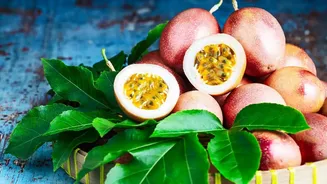
Choosing a ripe passion fruit is counter-intuitive. Unlike many other fruits, you should look for one that has wrinkled, shrivelled skin—this is a sign that the pulp inside is mature and sweet. A smooth-skinned fruit is likely underripe and will be very tart. The fruit should also feel heavy for its size, which indicates it's full of juicy pulp. Avoid any with green spots, bruises, or signs of mould. If you buy smooth-skinned fruit, you can leave it on your kitchen counter for a few days, and it will continue to ripen and wrinkle. Once fully ripe, passion fruit can be stored in the refrigerator for up to a week to maintain its freshness.
Simple and Delicious Ways to Enjoy
The easiest way to eat passion fruit is to simply cut it in half and scoop out the gelatinous pulp with a spoon. The crunchy black seeds are entirely edible and add a pleasant texture. For those who prefer a smooth consistency, the pulp can be pressed through a sieve to create a vibrant, flavourful juice. This juice is a fantastic base for mocktails, smoothies, or simply mixed with sparkling water. The pulp is also a classic topping for pavlova, cheesecake, and yoghurt, adding a tart contrast to creamy desserts. You can stir it into salad dressings for a tropical twist or even use it to create marinades for fish and chicken.