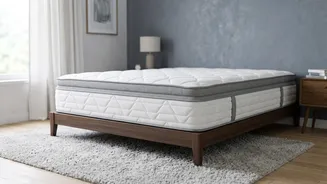





Choosing a new spring mattress can feel overwhelming. But the secret isn't finding a single 'best' bed—it's about matching the mattress's support system and comfort layers to your unique needs, sleeping style, and personal preferences.
Understanding the Spring Support Core
At the heart of
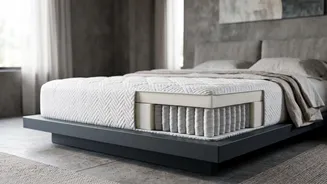
every spring mattress is its support core, made of steel coils. This system provides the foundational support that keeps your spine aligned. Two main factors determine its performance: coil gauge and coil count. Coil gauge is the thickness of the wire used for the springs. The scale is inverse, meaning a lower number indicates a thicker, firmer wire, while a higher number means a thinner, more flexible wire. For example, a 12-gauge coil is very firm and durable, whereas a 15-gauge coil will feel softer. Coil count is simply the number of springs in the mattress. While a higher count can mean more targeted support, it isn't the only measure of quality. A mattress with 600 thick-gauge coils might be more durable than one with 1000 thin-gauge coils. The ideal choice balances both factors.
Innerspring vs. Pocket Coils
Not all spring systems are built the same. Traditional innerspring (or Bonnell coil) mattresses feature interconnected coils that move as a single unit. This creates a responsive, bouncy feel and is often found in more budget-friendly models. However, because the springs are connected, movement on one side of the bed is easily transferred to the other, which can disturb a sleeping partner. Pocket coil mattresses, on the other hand, feature hundreds of individual coils, each wrapped in its own fabric pocket. This allows each spring to move independently, conforming more closely to your body's shape and drastically reducing motion transfer. This targeted support makes pocket coil mattresses an excellent choice for couples and those who want more personalized pressure relief.
Matching Firmness to Your Sleep Style
Firmness describes the initial feel of the mattress surface, and the right level for you depends heavily on your primary sleeping position and body weight. Side sleepers generally need a softer to medium-firm mattress (a 4-6 on a 10-point scale) that can cushion the shoulders and hips, preventing pressure point pain. Back sleepers typically do best with a medium-firm mattress (5-7) that supports the natural curve of the spine without letting the hips sink too deeply. Stomach sleepers require the firmest support (6-8) to keep their hips elevated and prevent the lower back from arching uncomfortably. Your body weight also plays a crucial role; lighter individuals may need a softer mattress to feel its contouring benefits, while heavier individuals often require a firmer mattress for adequate support.
Decoding the Comfort Layers
The layers of material on top of the springs are called comfort layers, and they determine the mattress's ultimate feel. These layers can be made from various materials, including polyurethane foam, memory foam, or natural fibres like latex or wool. Memory foam contours closely to your body, offering excellent pressure relief, but can sometimes trap heat. Latex provides a more responsive, bouncy feel and is naturally breathable, making it a good option for hot sleepers. Some mattresses also feature a 'transition layer' of medium_density foam, which acts as a buffer between the soft comfort layer and the firm support core, preventing you from sinking too deeply. The thickness and quality of these layers are just as important as the spring system itself in creating a comfortable and supportive bed.
Key Features to Compare Before Buying
Beyond the core components, a few other features are worth considering. Edge support refers to the sturdiness of the mattress's perimeter. Good edge support prevents the sides from collapsing when you sit on them and increases the usable sleeping surface. This is often achieved with a foam encasement or thicker coils around the border. Motion isolation is crucial for couples. As mentioned, pocket coil systems excel at this, as they absorb movement rather than transferring it across the bed. Finally, consider breathability. The open structure of spring systems allows for good airflow, making them cooler than many all_foam mattresses. However, the comfort layers on top can affect temperature regulation, so look for breathable materials if you tend to sleep hot.