



An Engine of Nostalgia
The core appeal of India’s heritage railways, like the Darjeeling Himalayan Railway, the Nilgiri Mountain Railway, and the Kalka-Shimla Railway, is their ability to evoke a powerful sense of nostalgia. These are not merely modes of transport but rolling
museums, time capsules that offer an escape from the frantic pace of modern life. The slow journey, often taking several hours to cover a short distance, is the entire point. It encourages passengers to disconnect, to gaze out at the panoramic views of tea gardens, dense forests, and plunging valleys, and to connect with a simpler, more romanticised past. The rhythmic chugging, the hiss of steam, and the shrill whistle are a sensory soundtrack to a bygone era, originally established during the British Raj to connect hill stations used as summer capitals.
Designing an Authentic Experience
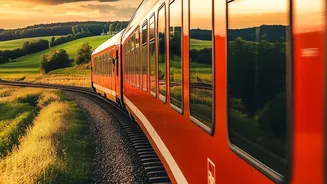
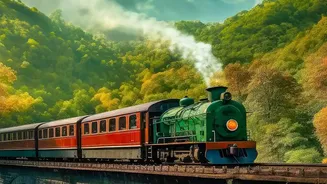
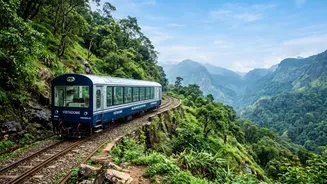
The popularity of these trains is no accident; it is the result of a deliberate focus on retro aesthetics. This begins with the locomotives themselves, with some routes still using vintage steam engines for at least part of the journey, billowing smoke and steam just as they have for over a century. The carriages, often referred to as 'toy trains' due to their narrow-gauge tracks, feature designs that amplify the vintage feel. The Nilgiri Mountain Railway, for instance, uses beautiful blue and cream wooden carriages, with first-class compartments featuring cushioned seating. Stations along these routes often retain their colonial-era architecture, complete with old-fashioned signage and manual signaling systems, further immersing travellers in the experience. From the station master's office to the waiting rooms, every element is curated to feel like a step back in time.
An Engineering Marvel Becomes a Tourist Draw
Originally built as astonishing feats of engineering, these railways are now celebrated for that very history. The Kalka-Shimla Railway, a UNESCO World Heritage site, traverses 864 bridges and 102 tunnels on its 96-kilometre journey. Similarly, the Nilgiri line, Asia's steepest, uses a unique rack and pinion system to climb the sharp gradients. These engineering marvels, which once solved the practical problem of ascending steep mountains, are now central to the tourist narrative. Guides and information boards at stations proudly detail the history of the construction, celebrating the ingenuity required to lay tracks through such treacherous terrain. This transformation of historical function into a key part of the visitor experience is crucial to the railways' heritage identity.
The Social Media Steam Boost
In the 21st century, this carefully preserved retro aesthetic has found a powerful new engine of popularity: social media. The visual appeal of a vintage steam train against a backdrop of the majestic Himalayas or lush Nilgiri hills is undeniable. Travel bloggers and tourists fill platforms like Instagram with images of steam billowing against misty mountains, hands waving from carriage windows, and the charming, postcard-perfect stations. These journeys are incredibly photogenic, from the famous Batasia Loop on the Darjeeling line to the multi-arched bridges of the Kalka-Shimla route. This constant stream of visually appealing content acts as a powerful marketing tool, introducing the old-world charm of these trains to a new, younger audience and ensuring these heritage lines continue to be a bucket-list travel experience.