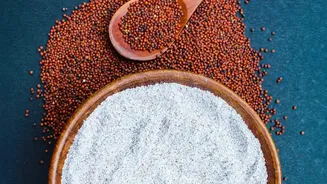








An Ancient Drink Rediscovered
Ambali, also known as ragi ambali or ragi java, is a traditional fermented porridge-like drink originating from South India, particularly Karnataka. For generations, it has been a staple for farmers and rural communities, valued for its cooling properties
and ability to provide sustained energy. It's made from a few simple ingredients: finger millet (ragi) flour is cooked, often with a bit of broken rice, and then left to ferment overnight. This natural fermentation process gives it a characteristically tangy flavour. Traditionally, it's served savoury, mixed with buttermilk, salt, and perhaps finely chopped onions and herbs. Once considered a modest, functional food, its re-emergence in trendy cafes marks a significant cultural and culinary shift.
A Nutritional Powerhouse
The primary driver behind ambali's modern revival is its impressive health profile. Finger millet itself is a nutritional powerhouse, naturally gluten-free and packed with essential nutrients. It boasts the highest calcium content among all cereals, making it excellent for bone health. Ragi is also a rich source of dietary fibre, iron, and amino acids. The fermentation process elevates these benefits even further. It creates natural probiotics, the beneficial bacteria that are crucial for a healthy gut microbiome, improved digestion, and stronger immunity. Fermentation also reduces so-called 'anti-nutrients' like phytic acid, which allows the body to absorb more of the minerals like iron and zinc present in the millet.
The Gut Health and Wellness Wave
Ambali's comeback is perfectly timed with a global and national surge in consumer interest in wellness, particularly gut health. Urban Indian consumers are increasingly seeking out functional foods and beverages—products that offer health benefits beyond basic nutrition. There's a growing movement away from sugary, processed drinks towards natural, clean-label alternatives. As a naturally fermented, probiotic-rich beverage, ambali fits this demand perfectly. It delivers the gut-friendly benefits that consumers might otherwise seek from kombucha or kefir, but with a uniquely Indian identity. Its cooling properties also make it a sought-after natural hydrator, especially during India's hot summer months.
From Farmhouse to Cafe Menu
The journey of ambali from a farmer's morning meal to a premium cafe offering reflects a broader trend of reclaiming and celebrating indigenous Indian food traditions. For a long time, traditional foods were often perceived as old-fashioned. Now, there is a growing sense of pride in India's culinary heritage. For modern wellness cafes, serving ambali is a way to offer something authentic, local, and rooted in 'ancient wisdom'. It tells a story of tradition, sustainability, and a connection to the land. This narrative appeals to a new generation of consumers who are not just buying a product, but an experience and an expression of their values.
More Than Just a Trend
The resurgence of ambali and other traditional beverages like sattu and kokum sharbat is more than a fleeting trend; it signifies a deeper shift in the Indian food landscape. It supports farmers who cultivate indigenous grains like millets, which are often more resilient and sustainable crops. By placing these drinks in a premium context, cafes are helping to change perceptions and create new market opportunities for traditional products. This revival is a testament to the fact that sometimes, the most innovative health solutions are the ones that have been part of our culture for centuries, just waiting to be rediscovered by a new generation.