





What is the STRIDE Initiative?
On July 8, 2026, NASA unveiled the seven companies selected for its Science Transport and Robotic Innovation for Deployment and Exploration (STRIDE) initiative. This program is a key part of NASA's new long-term plan for Mars exploration. Instead of focusing
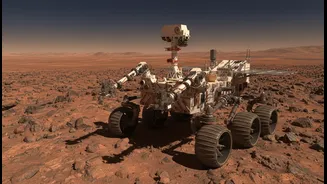
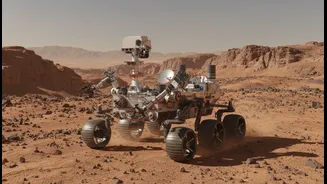
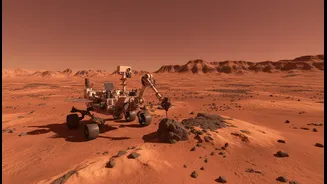
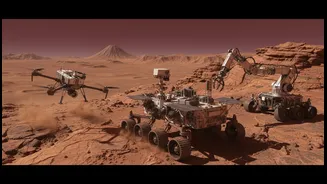
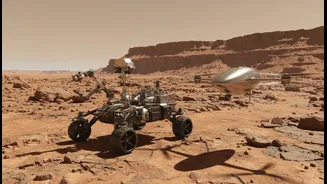
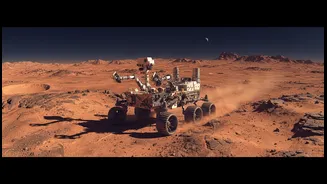
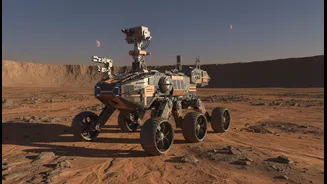
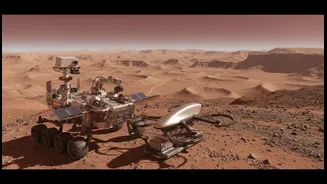
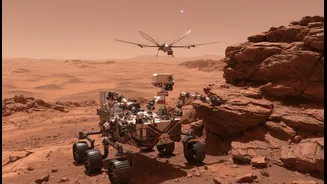
solely on large, multi-billion-dollar rovers like Curiosity and Perseverance, STRIDE aims to foster the development of a wider range of smaller, more agile, and potentially more specialized robotic systems. With a total potential value of around $17 million, these initial contracts are for design studies and early-stage concepts for both ground and aerial vehicles that can carry scientific instruments. The goal is to create platforms capable of accessing challenging terrain and scientifically valuable regions that are currently out of reach.
A Strategic Shift to Agility and Partnership
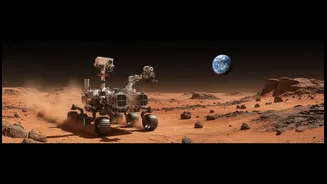
For decades, NASA's Mars program was defined by its flagship rovers—magnificent but costly one-of-a-kind machines. The STRIDE awards signal a major strategic evolution. This new approach emphasizes a move toward more frequent, lower-cost missions and a deeper reliance on public-private partnerships. By funding a diverse portfolio of commercial concepts, NASA is effectively outsourcing innovation. This allows the agency to explore multiple mobility solutions at once, from advanced rovers to aerial drones, without placing all its bets on a single design. This model is intended to accelerate technology development, increase the cadence of missions, and build a sustainable commercial ecosystem for planetary exploration, learning lessons from past rover challenges like mobility in sand and reliance on solar power.
Meet the Seven Innovators
The seven companies selected represent a mix of established aerospace players and specialized robotics firms, highlighting NASA's goal of broadening participation. The awardees are AeroVironment, Astrobotic, Venturi Astrolab, Ground Control Robotics, Honeybee Robotics, Intuitive Machines, and MEI Technologies (which now operates as Aegis Aerospace). AeroVironment is known for its aerial systems, including the history-making Ingenuity helicopter that flew on Mars. Companies like Astrobotic, Honeybee Robotics, and Intuitive Machines have deep experience in lunar landers and space robotics. Others, like Venturi Astrolab and Ground Control Robotics, are focused on developing new paradigms for planetary mobility. Work under the contracts is expected to begin in the fall of 2026.
Why This Matters for the Future of Mars
These new mobility platforms are crucial for the next phases of Mars science. The ultimate goal is to answer profound questions, such as whether life ever existed on the planet. Future missions will require robots that can travel farther and explore more diverse and rugged environments than ever before. This could involve fleets of collaborating robots, aerial scouts that identify paths for ground vehicles, or specialized systems designed to descend into craters or explore caves. The technologies developed under STRIDE could directly support high-priority objectives, including the ambitious Mars Sample Return campaign, which aims to bring Martian rocks and soil back to Earth. By enabling access to previously inaccessible sites, these next-generation robots will open up new frontiers for scientific discovery.