


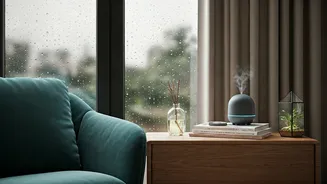


Control Humidity at the Source
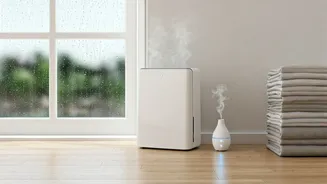
The primary culprit behind a dreary monsoon living room is excess humidity. High moisture in the air leads to that sticky feeling, encourages mould growth, and creates a damp smell that clings to everything. An electric dehumidifier is a highly effective
tool for pulling moisture from the air, but there are also excellent natural and low-cost methods. [8, 10] Placing bowls of rock salt, baking soda, or activated charcoal in inconspicuous corners can work wonders in absorbing excess moisture. [13, 21, 23] These natural desiccants quietly trap water from the air, helping to keep the room feeling drier and preventing the conditions that lead to musty odours. [21] If you have an air conditioner, running it on 'Dry Mode' can also significantly reduce humidity without over-cooling the room. [13]
Promote Smart Ventilation
While it seems counterintuitive to open windows during the monsoon, strategic ventilation is crucial. [11] When it's not actively raining, open windows on opposite sides of the room to create cross-ventilation, which pushes stale, moist air out and brings fresh air in. [15] This simple act, even for just 15-20 minutes a day, can dramatically improve air quality. [13] Make sure to also run exhaust fans, especially after a spell of heavy rain, to help expel humid air that has been trapped inside. [12] Good airflow is one of your strongest defences against the build-up of dampness and the growth of mould. [7, 22]
Care for Your Furniture and Upholstery
Wooden and upholstered furniture are particularly vulnerable during the monsoon. Wood can swell and warp from absorbing moisture, while fabrics can trap dampness and develop mildew. [14, 16] A simple but vital step is to shift your furniture, keeping it at least six inches away from walls, which often retain moisture. [11, 14] Regularly wipe down all wooden surfaces with a clean, dry microfibre cloth to remove any surface moisture. [4] Avoid using damp cloths for cleaning during this season. [16] For an extra layer of protection, consider applying a coat of wax or polish to wooden furniture before the monsoon begins, creating a barrier against humidity. [11, 14]
Banish Musty Odours Naturally
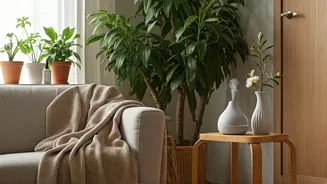
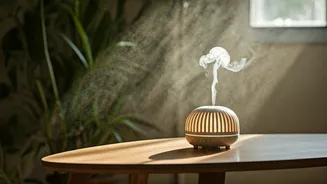
Instead of masking damp smells with artificial air fresheners, which can add to indoor pollution, focus on eliminating them. [9, 13] Camphor is a traditional and effective remedy; lighting a few pieces can help neutralise odours and also deters insects. [24] Placing small bags of dried neem leaves in corners or closets can also prevent mustiness due to their antifungal properties. [19, 20] Using an essential oil diffuser with scents like lemongrass, eucalyptus, or tea tree oil not only makes the room smell pleasant but many of these oils also have antibacterial and antifungal properties. [2, 15] A bowl of white vinegar left in the room can also absorb strong odours. [24]
Rethink Your Rugs and Curtains
Thick carpets and heavy curtains are magnets for moisture, dust, and musty smells during the rainy season. [15] It's a wise move to roll up and store away any thick wool or synthetic rugs until the season passes. [15] If you have wooden flooring, be extra vigilant about keeping it dry. [5] Opt for lightweight, quick-drying curtains that allow for better air circulation and let in more natural light on overcast days. Washable covers for sofas and cushions are also a great idea, as they can be cleaned regularly to prevent them from smelling damp. [11]
Brighten Up the Space
The grey, overcast skies of the monsoon can make any room feel dark and gloomy. Combat this by maximising light, both natural and artificial. As mentioned, using lighter curtains can make a significant difference. On the rare sunny days, be sure to open all windows and curtains to let sunlight stream in, as it's a natural disinfectant that helps kill mould spores and dry out any lingering dampness. [15, 17] Strategically placing mirrors can also help reflect light around the room, making it feel brighter and more spacious. Consider swapping out heavy, dark-coloured decor for lighter, brighter accents to lift the overall mood of the living room.