




A Landmark Moment for Green Mobility
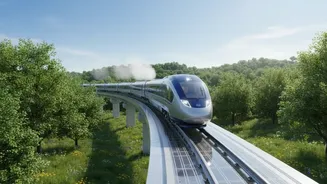
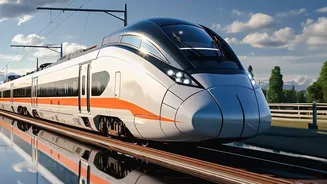
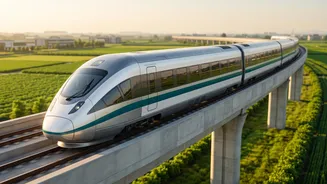
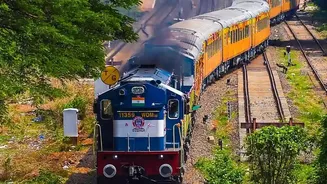
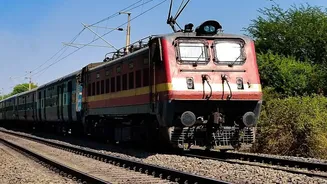
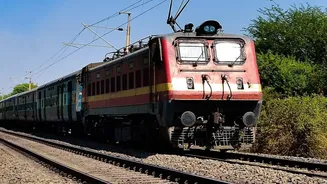
In a significant push for sustainable transport, India has commenced operations of its first hydrogen-powered train on the 89-kilometre Sonipat-Jind section in Haryana. Flagged off in July 2026, this pilot project represents a pivotal moment in the nation's
journey to decarbonise its vast railway network. The train is a retrofitted Diesel Electric Multiple Unit (DEMU) that now runs on clean energy, marking a transition from fossil fuels to advanced, zero-emission technology. Developed indigenously, this initiative places India among a select group of nations, including Germany and China, that are actively testing hydrogen mobility on their rail networks. The successful trials, which have have seen the train achieve speeds of up to 120 kmph, are a testament to India's growing technological capabilities in the green energy sector.
How Do Hydrogen Trains Work?
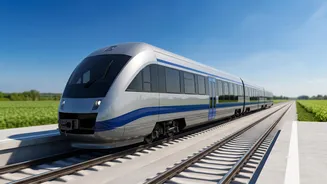
Imagine a train that runs on water and emits only water vapour. That is the essential promise of hydrogen fuel cell technology. Instead of a diesel engine or drawing power from overhead electrical lines, these trains generate their own electricity on board. The process involves a chemical reaction between hydrogen, stored in tanks on the train, and oxygen taken from the air. This reaction within a fuel cell produces electricity to power the motors, with heat and water as the only by-products. Any surplus electricity generated is stored in batteries, which provide extra power during acceleration. This closed-loop system is a stark contrast to diesel locomotives, which are a major source of carbon emissions and air pollutants.
The 'Hydrogen for Heritage' Vision
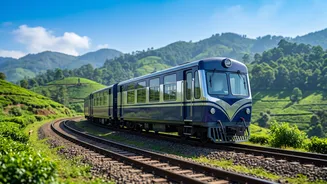
The Sonipat-Jind pilot is the first step in a much grander plan known as the 'Hydrogen for Heritage' initiative. Announced by the Ministry of Railways, this programme aims to deploy 35 hydrogen-powered trains on various heritage and hill routes across the country. These scenic lines, often passing through ecologically sensitive areas, are difficult to electrify. By replacing the old diesel engines on these routes, Indian Railways can preserve their historical charm while transforming them into symbols of modern, sustainable tourism. The estimated cost is around ₹80 crores per train, with an additional ₹70 crores for the ground infrastructure on each route, showcasing a significant investment in a green future.
Economic and Environmental Impact
The shift to hydrogen power is driven by clear economic and environmental goals. Indian Railways has set an ambitious target to become a 'Net Zero Carbon Emitter' by 2030, a full four decades ahead of the national goal for 2070. While the initial costs of hydrogen technology are high, the long-term savings are substantial. Retrofitting a single diesel train to run on hydrogen is projected to save over ₹2 crore annually in fuel costs and significantly reduce carbon emissions. As the technology matures and the production of green hydrogen scales up, these costs are expected to decrease, making it an increasingly viable alternative to diesel on non-electrified parts of the network.
Challenges and the Road Ahead
Despite the successful trials, the journey to a hydrogen-powered rail network is not without its challenges. The current low passenger numbers on the Sonipat-Jind route have prompted officials to consider extending the service to Delhi to improve its utilisation. Furthermore, the cost of producing 'green' hydrogen (made using renewable energy) and establishing a widespread refuelling infrastructure remains a significant hurdle. The train currently can only be refuelled at a dedicated facility in Jind, which limits its operational range. However, these initial trials are providing invaluable data and operational experience. Experts are closely monitoring the project to ensure passenger safety and iron out technical issues, paving the way for a gradual and considered expansion across the network.