








Why Enforcement Feels So Random
One of the most frustrating parts of flying is the seeming inconsistency of carry-on rules. A bag that sailed through on your last flight might suddenly be flagged as oversized. This isn't just your imagination. Enforcement often depends on several factors
that are invisible to passengers. A primary reason is how full the flight is. When airlines anticipate every seat will be taken, they know overhead bin space will be at a premium, prompting gate agents to be much stricter. Conversely, on a half-empty plane, agents are less likely to scrutinize bag sizes. The specific aircraft also plays a role. Different planes have differently sized overhead bins, and a bag that fits on a larger international jet may not fit on a smaller domestic aircraft. Sometimes, a crackdown is the result of a new internal directive from the airline to reduce boarding delays caused by passengers struggling to find space for their bags. Finally, there's the human element; some gate agents are simply more diligent about enforcement than others.
Know the Rules Before You Pack
The best defence is a good offence, which means knowing the rules for your specific airline. While policies can vary, the standard for most domestic Indian carriers like IndiGo and SpiceJet is one cabin bag and one personal item. For Economy class, the main cabin bag is typically limited to 7 kg. Full-service carriers like Vistara and Air India may offer a slightly higher weight limit of 7-8 kg in Economy and up to 12 kg in Business or First Class. The dimensions are also crucial. A common size limit is 55cm x 35cm x 25cm. Your personal item—such as a small handbag or a laptop bag—must be small enough to fit under the seat in front of you and typically has its own weight limit of around 3 kg. Indian aviation authorities have moved towards a stricter 'one bag' interpretation, meaning your personal item should ideally be consolidated if possible, especially on full flights. Always check the airline's website before you fly, as rules can and do change.
What Makes a Bag a Target?
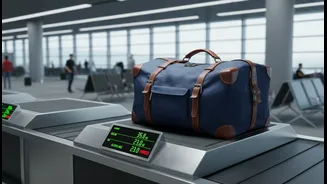
Gate agents don't have time to check every single bag, so they often rely on visual cues to spot potential offenders. A bag that is visibly overstuffed, with bulging zippers and pockets, is an immediate red flag. If you struggle to lift your bag or it looks heavy, you’re more likely to be asked to place it in the sizer. Another trigger is having too many items. Trying to board with a rolling suitcase, a large backpack, and a shopping bag is a sure way to attract unwanted attention. The 'one cabin bag plus one personal item' rule is being more strictly enforced, and items like neck pillows or jackets are expected to be worn or packed inside one of your two allotted bags, not carried separately. Passengers in later boarding groups are also scrutinized more heavily because agents know bin space is running out and want to proactively check bags that might not fit.
How to Avoid a Gate-Check Disaster
A few simple strategies can help you avoid the stress and cost of having your bag checked at the gate. First, pack light and weigh your bag at home. If you're close to the limit, consider wearing your heaviest clothing items, like a jacket or boots, on the plane. Second, choose your luggage wisely. Soft-sided bags or backpacks are often a safer bet than hard-shell cases, as they have more give and can be squeezed into tight spaces more easily. Third, check in online to bypass any potential bag checks at the counter and board as soon as your group is called to secure overhead space early. Finally, be polite and discreet. Don’t draw attention to yourself or your luggage. If you have multiple items, try to consolidate them before you approach the gate. A little preparation goes a long way in ensuring your bag makes it onboard with you.