






Wisdom From the Abode of Clouds
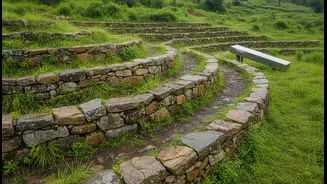
Meghalaya, one of the wettest places on Earth, seems an unlikely candidate for water scarcity. Yet, the state faces a peculiar challenge: a massive volume of rainfall that rapidly runs off its steep, hilly terrain, leaving little for the dry seasons.
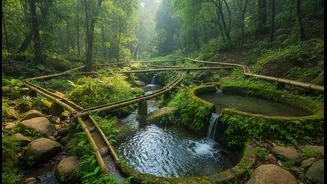
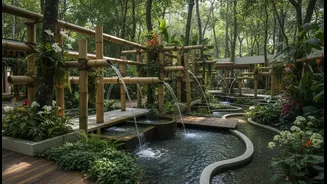
To counter this, indigenous Khasi and Jaintia communities developed ingenious water management systems over centuries. The most celebrated is the 200-year-old bamboo drip irrigation system. This gravity-fed network uses a series of bamboo channels to tap into uphill streams, transporting water over hundreds of metres with minimal leakage. The system is so precise that it can reduce a flow of nearly 20 litres per minute at the source to just 20-80 drops per minute at the plant's roots, making it perfect for the region's topography where conventional channels are impractical. This is not just irrigation; it's a masterclass in hydro-engineering using local, biodegradable materials to work in harmony with the landscape.
The Urban Concrete Jungle's Thirst
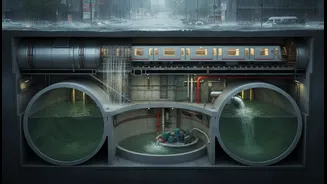
Contrast this with the situation in India's burgeoning urban centres. High-rise residential and commercial buildings are monuments to modernity, but they are also incredibly thirsty. Their water supply is often precarious, relying on over-stressed municipal grids and depleting groundwater resources. Traditional construction, with its vast impermeable surfaces of concrete and asphalt, exacerbates the problem. Rainwater, instead of being a resource to be harvested, becomes a challenge to be drained away, often leading to urban flooding. For decades, the dominant architectural approach has been to build against nature, piping in water from distant sources and discharging wastewater, creating a cycle of dependency and environmental strain. The challenge for today's architects is to reverse this, creating buildings that function more like the ecosystems they displace.
Blueprints of Integration
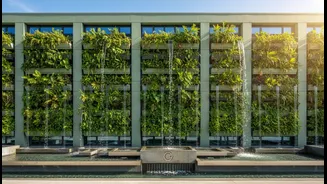
While you won't see bamboo pipes running up the side of a Mumbai skyscraper, the core principles of Meghalaya's framework are being integrated into modern buildings. The inspiration lies not in literal replication but in translating the philosophy. The bamboo system's reliance on gravity is mirrored in modern gravity-fed water systems within buildings, which use pressure-reducing valves to minimise wastage in high-rises. The principle of capturing water at its source is the very definition of the rooftop rainwater harvesting systems now mandated in many new constructions. These systems collect rainwater from rooftops and terraces, channelling it through pipes—the modern equivalent of bamboo—into storage tanks or recharge wells. The goal is the same: to capture every drop and reduce dependency on external sources. This approach transforms the building from a passive consumer into an active participant in its own water cycle.
Tradition Inspiring Today's Solutions
This shift in thinking is visible in India's leading sustainable buildings. The ITC Green Centre in Gurgaon and Suzlon One Earth in Pune are celebrated for their water-positive designs, incorporating extensive rainwater harvesting and 100% water recycling. They prove that commercial viability and ecological responsibility can coexist. The ethos is even being applied at a systemic level. In a significant recent move, the Meghalaya government announced a project to equip 400 schools in the Garo Hills with modern rooftop rainwater harvesting systems. While these systems use filters and storage tanks instead of hollowed bamboo, the project is a direct application of the age-old regional wisdom: capture the rain where it falls. This initiative demonstrates a commitment to making water conservation a foundational part of community infrastructure, directly inspired by the challenges and traditional solutions of the region.
A Future Built on Hybrid Models
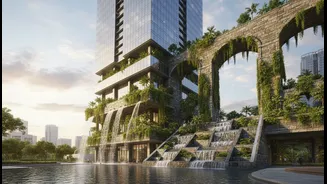
The most exciting future lies in a hybrid approach that marries traditional knowledge with modern technology. The genius of Meghalaya's systems wasn't just their physical structure, but their community-based management. Studies highlight how traditional village councils, or dorbar shnongs, remain effective water managers in Shillong, even amidst urban pressures. The future of urban water security could involve creating 'smart' buildings that not only harvest rainwater but also recycle greywater, use sensor-based fixtures to prevent leaks, and create a closed-loop system. This technological efficiency, when combined with a community-led conservation ethos borrowed from traditional frameworks, creates a powerful model for resilience. Architects are even looking at concepts like 'living architecture', inspired by Meghalaya's living root bridges, to imagine buildings that are integrated with nature, strengthening over time and contributing positively to their environment.