



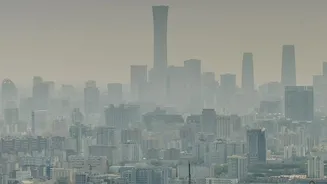
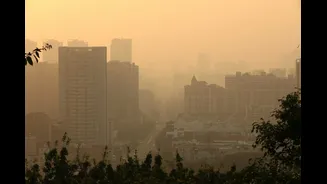
When a thick blanket of smog descends, our first instinct is to shut the doors and windows. But is that enough? Protecting your home's air involves two key strategies: filtering and ventilating. They sound similar but do very different jobs.
The Role of Air Filtration: Cleaning What's Inside
Air filtration
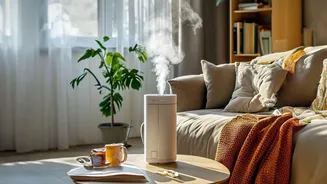
is the process of cleaning the air that is already inside your home. Think of it as a cleaning service for the air in a room. This is typically done using a portable air purifier. These devices work by pulling in ambient air, passing it through a series of filters, and releasing cleaner air back into the room. The most important component for tackling smog is the HEPA (High-Efficiency Particulate Air) filter. Smog is largely composed of tiny, harmful particles known as PM2.5, which are so small they can penetrate deep into your lungs and even enter your bloodstream. A true HEPA filter is designed to capture at least 99.97% of airborne particles as small as 0.3 microns, making it highly effective against PM2.5, dust, pollen, and mould spores. Many purifiers also include an activated carbon filter, which helps remove gases, odours, and volatile organic compounds (VOCs) that HEPA filters can't trap. The primary goal of filtration is to remove pollutants from a contained space, creating a safe breathing environment. For it to work best, doors and windows must be kept closed.
Understanding Ventilation: Bringing Fresh Air In
Ventilation is the process of exchanging stale indoor air with fresh outdoor air. Its main purpose is not to clean the air but to dilute and remove pollutants that build up inside, such as carbon dioxide (from breathing), moisture, and chemicals from cooking or cleaning products. Ventilation is crucial for preventing air from becoming stagnant and for maintaining healthy oxygen levels. It can be achieved naturally by opening windows and doors, or mechanically through exhaust fans (like in kitchens and bathrooms) and more complex HVAC systems. However, during a severe smog event, natural ventilation is a bad idea. Opening a window will invite a flood of harmful outdoor pollutants into your home, making your indoor air quality as bad, or even worse, than the air outside. This is the fundamental drawback of ventilation in a polluted environment: it brings the outside in, for better or for worse.
Filtration vs. Ventilation: Which is Right for Smog?
When the air outside is thick with smog, the answer is clear: filtration is your priority. Your primary goal is to remove the dangerous particles that have already entered your home and to prevent more from getting in. This means sealing your home as tightly as possible and running a high-quality air purifier with a HEPA filter. Ventilation, in its basic form of opening windows, works against this goal. So, in a head-to-head comparison during a high-pollution day, filtration is the defensive shield that cleans your indoor sanctuary, while simple ventilation is like opening the gates to the enemy. An air purifier cleans the air in a closed loop, while ventilation replaces it. An purifier removes particles but not CO2; ventilation removes CO2 but brings in particles.
The Best Strategy: A Hybrid and Smart Approach
While filtration is the star player during a smog episode, ventilation can't be ignored completely, as a perfectly sealed home will eventually build up CO2 and other indoor pollutants. The ideal solution is a smart, hybrid approach. For most homes, this means relying heavily on air purifiers to keep the indoor air clean while keeping the house sealed. Run the purifier continuously, especially in the rooms where you spend the most time, like bedrooms. If you must ventilate to reduce stuffiness or CO2 levels, do so strategically. Check the local Air Quality Index (AQI) and try to air out your home for brief periods only when outdoor pollution levels dip, if at all. More advanced (and expensive) solutions include mechanical ventilation systems with their own builtin highefficiency filters, often called Energy Recovery Ventilators (ERVs). These systems bring in 'fresh' air from outside but clean it before it enters your home, providing the best of both worlds, but they are not a common feature in most households. For the average person, the rule is simple: seal your home, and filter the air inside.