
Speed and Duration
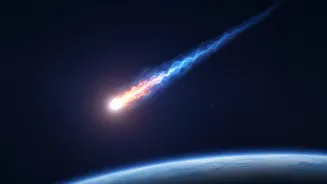
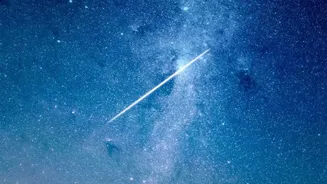
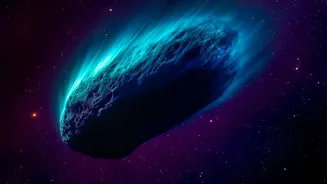
One of the most significant clues is how fast the object is moving. Natural meteoroids enter Earth's atmosphere at incredible speeds, ranging from 11 to 72 kilometers per second. This immense velocity means they burn up very quickly, often in just a few
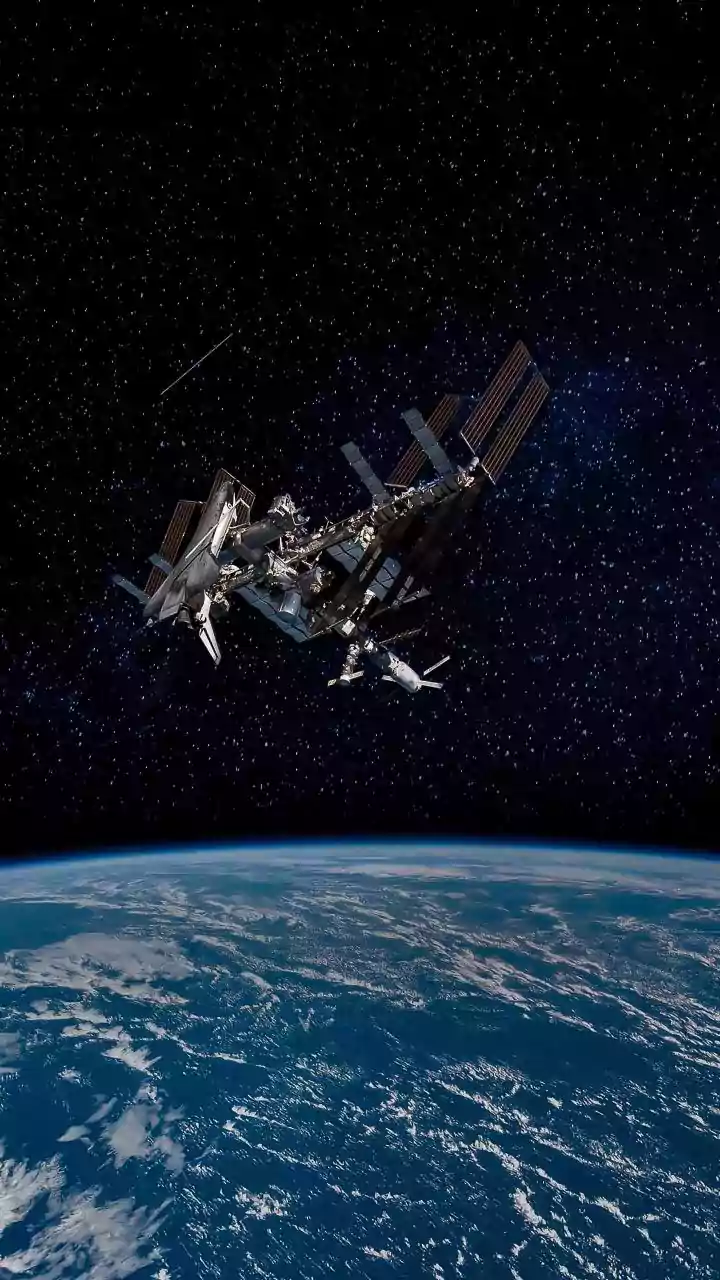
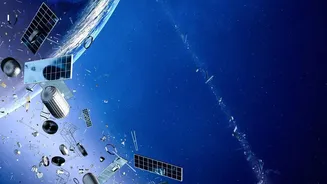
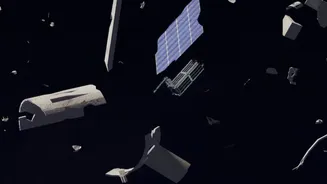
seconds. If you see a flash that's gone almost as soon as you noticed it, you've likely seen a meteor. In contrast, human-made space debris, such as a defunct satellite or a discarded rocket stage, orbits the Earth at a much slower speed, typically around 7 to 8 kilometers per second. Because of its lower speed and shallower entry angle, space junk takes much longer to travel across the sky, sometimes lasting from 20 seconds to over a minute. If you have enough time to point it out to someone or grab your phone, it's probably debris.
Trajectory and Angle
The path an object takes across the sky is another critical differentiator. Meteoroids are traveling around the sun, and Earth essentially runs into them. This means they can appear to come from any direction and often enter the atmosphere at a steep angle, descending rapidly. On the other hand, space debris is already in orbit around our planet. Its reentry path is typically much shallower, appearing to move almost horizontally across the sky, parallel to the ground. Most satellites orbit from west to east to take advantage of Earth's rotation, so debris often follows this path, whereas meteors can come from anywhere.
Chemical Composition and Color
The colors produced as an object burns up provide a wealth of information about its composition. Scientists use a technique called spectroscopy to break down the light into a spectrum, revealing the chemical elements within. Meteors are made of rock and metal, and their elements burn with distinct colors: sodium creates an orange-yellow glow, iron appears yellow, magnesium burns blue-green, and calcium emits a violet hue. Atmospheric nitrogen and oxygen can also glow red during the process. Human-made debris is composed of manufactured materials like aluminum alloys, titanium, and other composites. While these also burn with specific colors, the combination is different from the natural elements found in meteoroids, helping experts to identify them.
Tracking and Orbital Analysis
Beyond visual cues, scientists rely on sophisticated tracking systems to determine an object's origin. Global networks of radar and optical telescopes, like the U.S. Space Surveillance Network, constantly monitor objects in orbit. These systems can calculate an object's trajectory with high precision. If the data shows an object was in a stable Earth orbit before its descent, it is confirmed as human-made debris. If its path traces back to an origin in the asteroid belt or the trail of a comet, it's identified as a meteoroid. Organizations like NASA's Center for Near-Earth Object Studies (CNEOS) maintain vast databases, continually updating orbital paths to predict and analyze these events.
Appearance and Breakup
Finally, the way an object disintegrates can offer clues. A reentering piece of space junk might be seen tumbling, causing it to flash or flicker with some regularity as its different surfaces catch the light. It may also break into a tight cluster of fragments that all travel in the same direction at the same speed. Meteors, especially larger ones known as bolides, can be exceptionally bright and may appear to explode in a terminal flash. While both can leave glowing trails, the slow, multi-fragment procession is a stronger signature of artificial debris burning up on its long, shallow dive back to Earth.