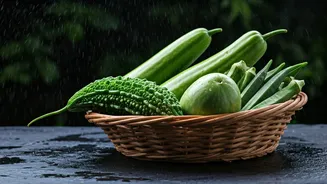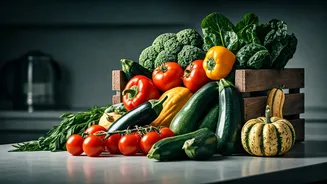









Why Your Diet Needs a Monsoon Makeover
As the skies open up, our digestive system tends to slow down. According to Ayurveda, the monsoon season can aggravate the 'vata' and 'pitta' doshas, leading to issues like bloating, indigestion, and acidity. The damp weather can also make us more susceptible
to infections. This makes it crucial to shift our focus towards foods that are light, warm, and easy on the gut. Heavy, oily, and raw foods can be difficult to process, whereas cooked, seasonal vegetables provide essential nutrients without burdening our system. Eating right during this season isn't about restriction; it's about aligning our diet with our body's needs to maintain energy, boost immunity, and feel our best while enjoying the rain.
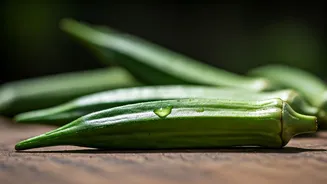
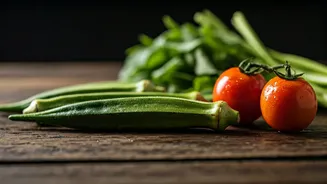
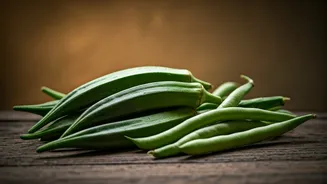
The Power of Bhindi (Okra)
Often a polarising vegetable due to its texture, bhindi, or okra, is a nutritional powerhouse perfectly suited for the monsoon. It is incredibly rich in soluble fibre, which aids digestion and helps maintain a healthy gut—a cornerstone of immunity. This fibre also helps in stabilising blood sugar levels. Furthermore, bhindi is an excellent source of Vitamin C, a powerful antioxidant that strengthens the immune system against common colds and infections prevalent during this time. Its low-calorie, high-nutrient profile makes it a guilt-free addition to any meal. The mucilage that some find off-putting is actually beneficial, as it soothes the digestive tract and helps with bowel regularity, countering the digestive sluggishness of the season.
Tips for the Perfect Monsoon Bhindi
The key to delicious bhindi is managing its characteristic sliminess. The first rule is to wash and pat it completely dry before you start chopping. Any moisture will activate the mucilage. Opting for high-heat cooking methods like stir-frying, deep-frying, or air-frying helps create a wonderfully crispy texture. A classic 'Kurkuri Bhindi' (crispy fried okra) is a healthier alternative to packaged snacks. For a comforting meal, a simple 'Bhindi Masala' or 'Bhindi Do Pyaza', cooked with onions and light spices, pairs beautifully with rotis or dal-rice. Another great tip is to add a souring agent like tamarind, lemon juice, or amchoor (dry mango powder) towards the end of cooking, which helps cut through any residual stickiness and brightens the flavour.
The Goodness of Green Beans
Green beans, including French beans, string beans, and cluster beans (gavar), are another monsoon champion. They are packed with essential vitamins like K, A, and C, and are a great source of dietary fibre and antioxidants. Vitamin K is vital for bone health, while Vitamin C and other antioxidants help fortify your body's defences. Beans are light on the stomach and provide sustained energy without feeling heavy. Their satisfying crunch, even when cooked, adds a wonderful texture to meals. Cluster beans, in particular, are valued in traditional Indian diets for their ability to help regulate blood sugar. Incorporating a variety of beans into your monsoon diet ensures you get a broad spectrum of nutrients to keep you active and healthy.
Making Beans a Monsoon Staple
Beans are incredibly versatile and can be prepared in countless simple ways. A South Indian-style 'Poriyal' with grated coconut, mustard seeds, and curry leaves is a quick, flavourful, and light side dish. In North India, a simple 'Beans Aloo ki Sabzi' is a household favourite, offering comfort and nourishment. For a modern twist, you can blanch them and toss them into a warm salad with a light vinaigrette. They also work wonderfully in clear soups and broths, which are especially soothing during the monsoon. Simply stir-frying them with garlic, a pinch of salt, and pepper is a fantastic way to enjoy their natural flavour while retaining maximum nutrients. The goal is to cook them until tender-crisp, not mushy.