




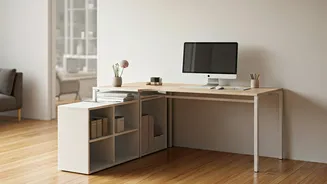


The Rise of the Wall-Mounted Desk
The era of work-from-home has collided with the reality of urban living, where space is the ultimate luxury. For those in studio apartments, paying guest accommodations, or compact bedrooms, carving out a dedicated workspace can feel impossible. Enter
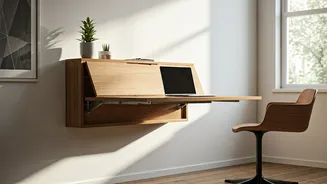
the wall drop desk, also known as a fold-down or floating desk. This ingenious piece of furniture is a minimalist’s dream. It’s a sturdy, functional work surface when you need it and a discreet, space-saving fixture when you don’t. By mounting directly onto a wall, it frees up valuable floor area that a traditional desk would consume, making your room feel larger and less cluttered.
More Than Just a Desk
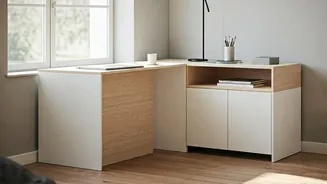
The primary benefit is obvious: it saves space. When your workday is done, you can simply fold the desk up against the wall, instantly reclaiming your room for relaxation or other activities. This creates a powerful mental separation between work and life, a boundary that often blurs in small living quarters. A closed desk signals the end of the workday. But its utility goes further. Many models come with built-in storage—shelves, cubbies, or small cabinets—that provide a home for your stationery, laptop, and notebooks. This keeps your work essentials organised and out of sight, contributing to a tidy, serene environment that is crucial for both productivity and peace of mind.
Finding Your Perfect Match
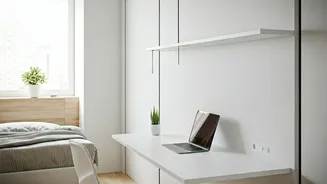
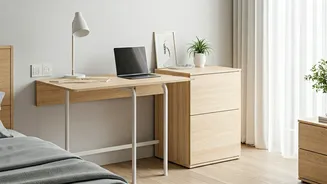
Wall drop desks are not a one-size-fits-all solution. They come in various styles to suit different needs and aesthetics. The simplest is the 'fold-down' surface—a single panel that hinges down to become a desk. For those needing more organisation, 'cabinet-style' desks fold up to look like a sleek wall cabinet, often containing shelves. Then there are 'floating desks with shelves', which feature a fixed desktop with open shelving above or below it, offering permanent storage and display space. The choice depends on your needs: do you want everything hidden away, or do you prefer having your work items easily accessible? Consider how much surface area you require for your laptop, a monitor, or writing space.
Material and Durability Matters
When choosing your desk, pay close attention to the material. Solid wood options like sheesham or mango wood are incredibly durable and offer a premium, timeless look, but they come at a higher price point. Engineered wood, such as MDF (Medium-Density Fibreboard) or high-quality plywood with a laminate or veneer finish, is a more budget-friendly and popular choice in the Indian market. These materials are lighter and available in a wide range of finishes, from clean white to realistic wood grains. Regardless of the material, check the desk’s weight capacity. A sturdy desk should comfortably hold at least 15-20 kgs to support a laptop, books, and the pressure of you leaning on it.
Installation: DIY or Call a Professional?
This is the most critical step. A poorly installed wall desk is a hazard. The security of the desk depends entirely on how well it's anchored to the wall. If you’re mounting it on a solid brick or concrete wall, a few sturdy anchor bolts installed correctly should do the trick. However, if you have hollow drywall or plasterboard walls, you absolutely must locate the wooden or metal studs behind the wall to screw into. Attaching a heavy desk to drywall alone will cause it to rip out. If you are not confident in your ability to find studs or use a drill, it is always safer and wiser to hire a professional carpenter. The small cost of professional installation is worth the peace of mind knowing your workspace is secure.