



Why Speed Is Your Worst Enemy
The single most important adjustment to make when driving in the rain is to slow down. [25] Wet roads dramatically increase your vehicle's stopping distance. [26] More critically, speed is a primary factor in hydroplaning—a terrifying situation where
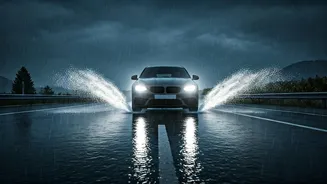
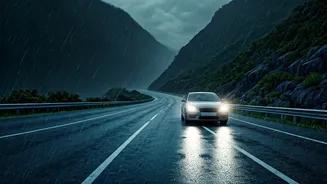
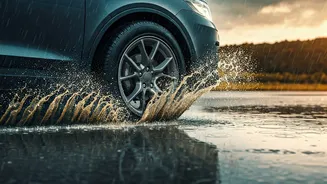
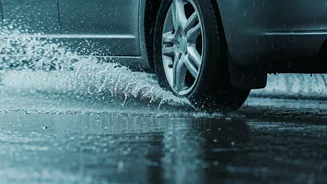
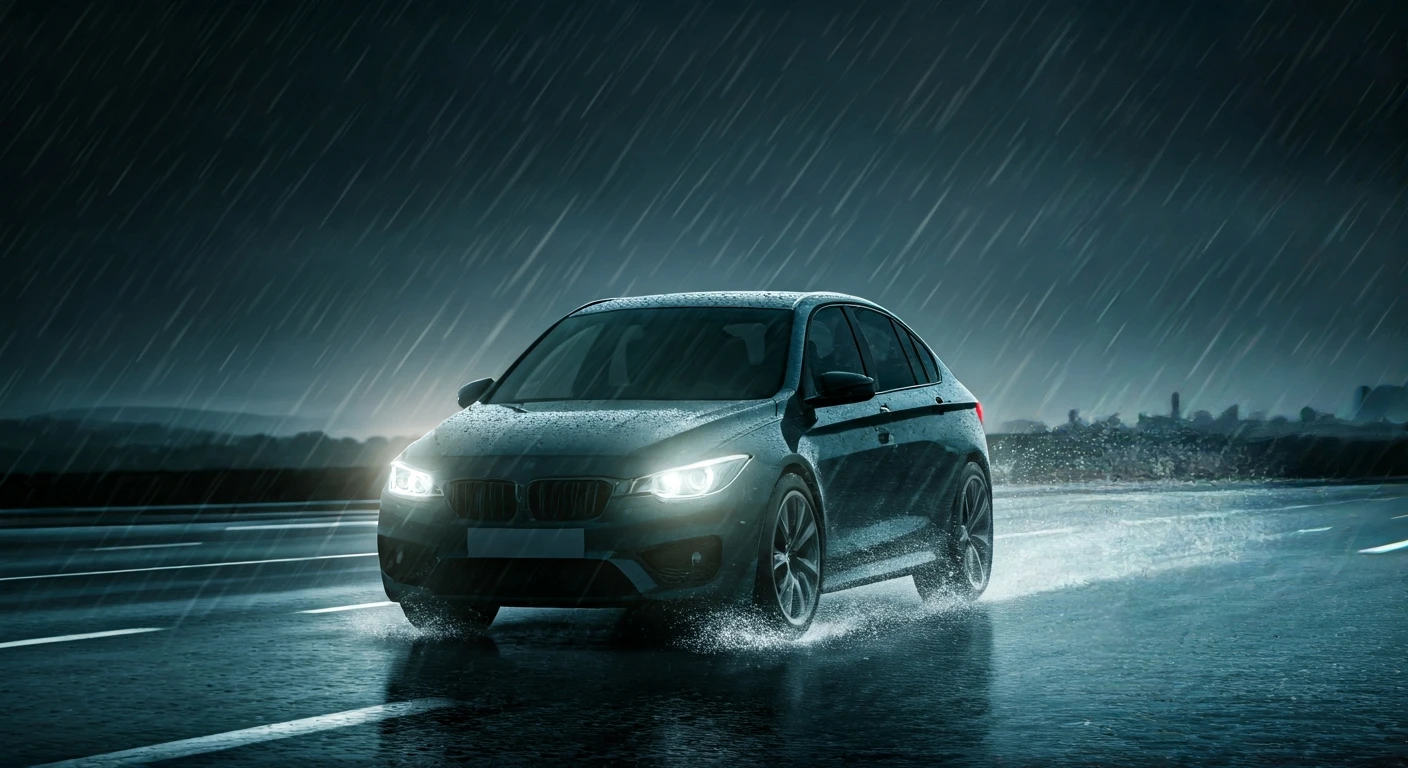
a layer of water builds up between your tyres and the road. [2, 7] This causes your tyres to lose traction, resulting in a loss of steering, braking, and power control. [4, 7] It can happen at speeds as low as 55 km/h if the water is deep enough and your tyres are worn. [2, 5] The first 10 minutes of a light rain can be particularly treacherous as the water mixes with oil and dust on the road, creating an exceptionally slick surface. [2] Reducing your speed gives your tyres a better chance to channel water away and stay in contact with the asphalt. [5]
The Unseen Dangers in Waterlogged Streets
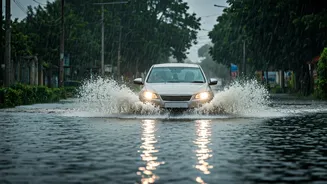
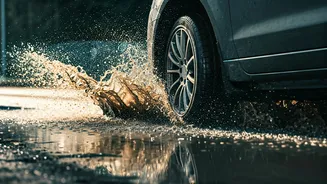
In many Indian cities, heavy rain means waterlogging. These seemingly harmless puddles can hide a multitude of dangers. [27] A stretch of water might conceal deep potholes that can damage your suspension, burst a tyre, or worse, cause you to lose control of your vehicle. [23, 27] There's also the grave risk of open manholes, washed-away sections of road, or submerged debris. [9] It's impossible to judge the depth of murky water, and it takes surprisingly little to cause big problems. As little as 15 cm of water can cause most cars to lose control and stall, while 30 cm can be enough to float a small vehicle, effectively turning it into an uncontrollable boat. [11, 13] If you cannot see the road surface or gauge the depth, the only safe option is to turn around and find an alternate route. [11, 21]
Mastering Visibility: Seeing and Being Seen
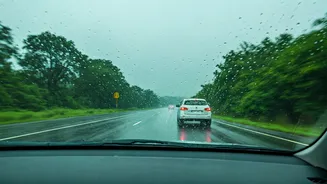
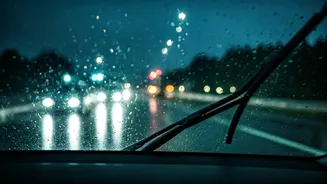
Heavy rain severely reduces visibility for everyone on the road. [15] It's crucial to turn on your low-beam headlights, even during the day. [6, 25] This isn't just about helping you see; it's about making sure other drivers, cyclists, and pedestrians can see you. [6, 9] Ensure your windshield wipers are in good condition and replace them if they leave streaks. [27] Use your car's defogger to keep the inside of your windows from fogging up, which is a common issue due to the high humidity. [6] Also, be mindful that the spray from larger vehicles like buses and trucks can momentarily blind you. [27] Increase your following distance to at least double what you would normally keep, giving yourself more time and space to react. [26, 27]
The Peril of a Stalled Engine
Driving through deep water is a gamble with your car's engine. If water is sucked into your engine's air intake, it can lead to 'hydrostatic lock'—a catastrophic failure that can destroy the engine. It only takes a small amount of water, roughly the quantity held in an egg cup, to cause this expensive damage. [18] As a rule of thumb, if the water is higher than the bottom of your car doors, it's too deep to cross. [13] If you must drive through a waterlogged patch, do so slowly and steadily in a low gear to keep the engine revs high, which helps prevent water from entering the exhaust pipe. [21, 26] Never restart an engine that has stalled in water; this can cause even more damage. It's safer to abandon the vehicle and move to higher ground. [11, 21]
Extra Caution for Pedestrians and Two-Wheelers
Rainy conditions are especially hazardous for the most vulnerable people on our roads. Pedestrians face slippery pavements and reduced visibility. [12, 15] Wearing bright, reflective clothing and using non-slip footwear is essential for safety. [14, 22] For two-wheeler riders, the risks are magnified. The road is more slippery, braking distances are longer, and they are more exposed to the elements and to spray from other vehicles. [10] Drivers of cars and larger vehicles must be extra considerate. Give two-wheelers and pedestrians ample space, and never splash through puddles near them. [10, 18] In areas with severe waterlogging, there's also the hidden danger of electrocution from submerged, damaged electrical lines. [19]