



A Day in Just 90 Minutes
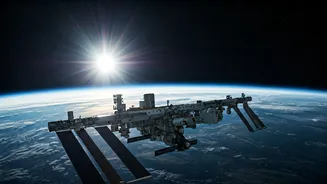
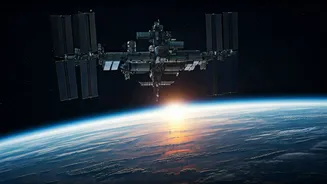
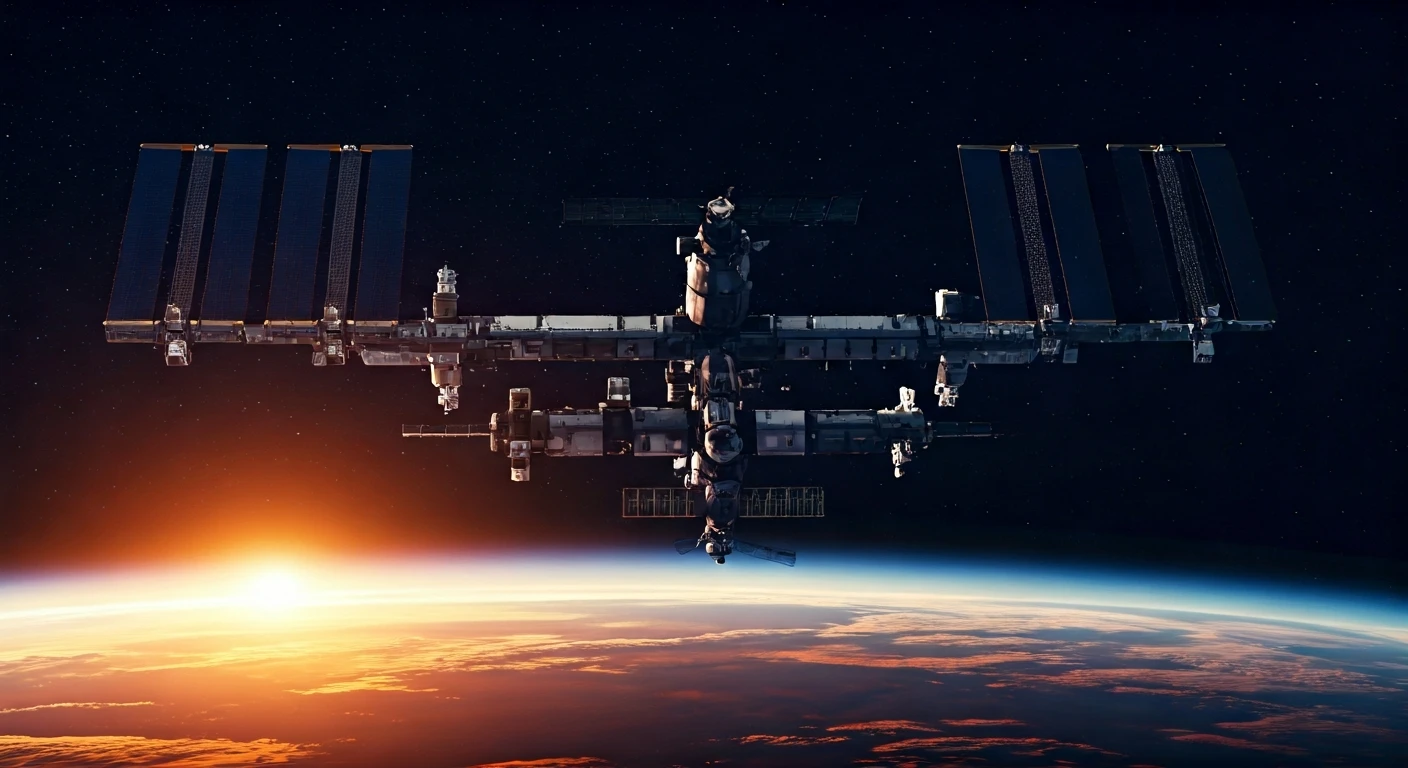
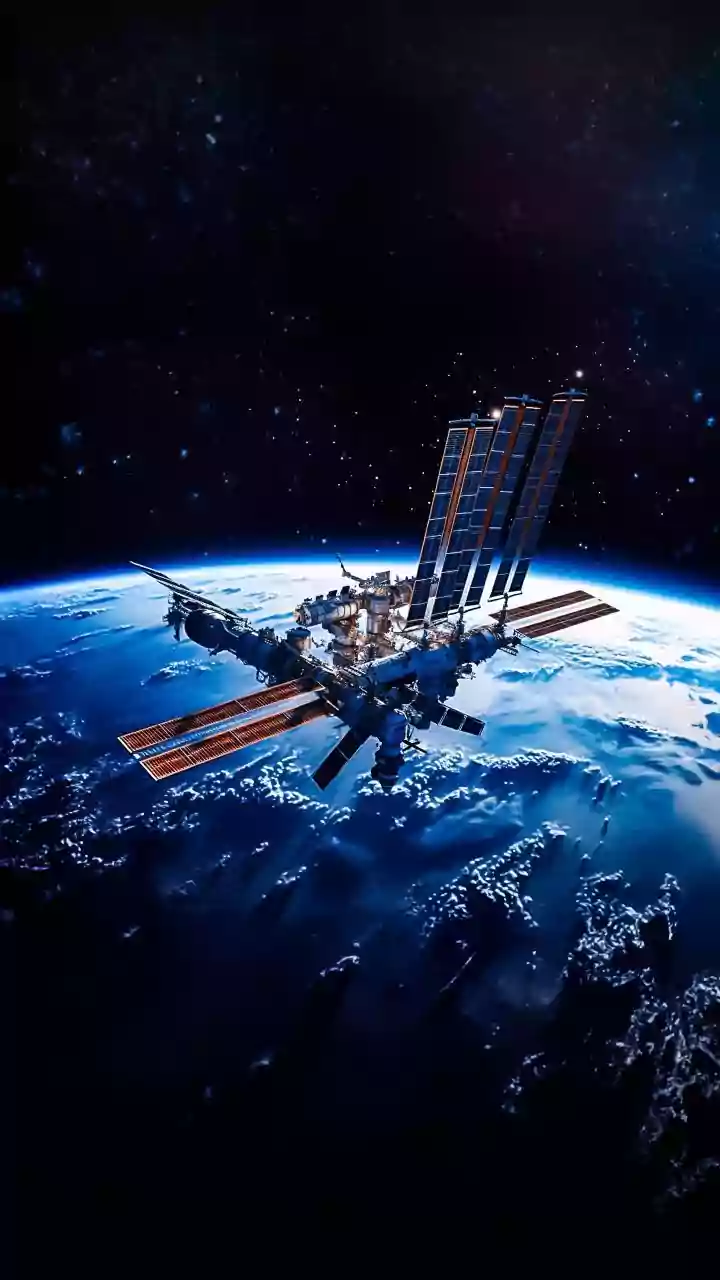
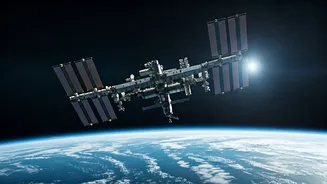
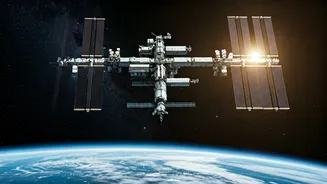
The fundamental reason for this bizarre daily rhythm is the sheer speed of the International Space Station (ISS). It hurtles through low-Earth orbit at a staggering 28,000 kilometres per hour. At that velocity, it completes a full circle around our planet
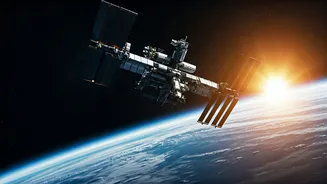
in about 90 to 93 minutes. This means that for the crew on board, a new 'day'—one complete orbit featuring a period of light and a period of darkness—is only an hour and a half long. This rapid journey means the station and its inhabitants are constantly passing in and out of Earth's shadow, creating the effect of a sunrise or sunset roughly every 45 minutes.
The Physics of Constant Freefall
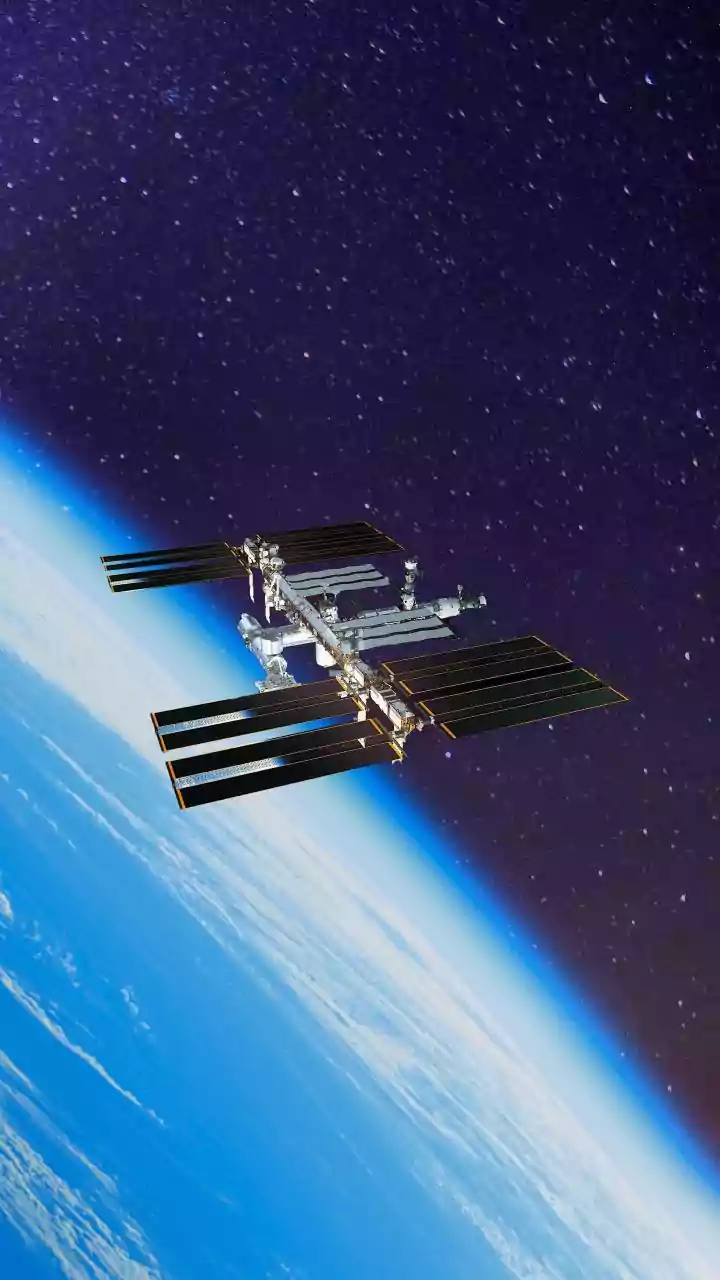
The ISS exists in a delicate balance between its immense forward momentum and the constant pull of Earth's gravity. It's essentially in a continuous state of freefall, but it's moving so fast horizontally that it constantly 'misses' the planet. Its path curves around the Earth at the same rate the Earth's surface curves away below it. The station orbits at an altitude of about 400 kilometres, which is high enough to avoid the thickest parts of the atmosphere but low enough to be subject to its gravitational pull. This specific combination of speed and altitude is precisely what locks it into this high-frequency orbital cycle, making it a permanent resident of the line that separates day and night on Earth.
Life With a Global Timekeeper
So, if the sun rises and sets 16 times, how do astronauts know when to work, eat, or sleep? Relying on the sun is impossible. Instead, life on the ISS is governed by a single, standardized clock: Coordinated Universal Time (UTC), also known as Greenwich Mean Time (GMT). This ensures that the crew and the various mission control centres around the world—from Houston to Moscow—are perfectly synchronised. An astronaut's day is meticulously scheduled, often in five-minute increments, with specific times for scientific experiments, meals, 2.5 hours of mandatory exercise, and, crucially, about 8.5 hours of protected sleep time.
Tricking the Body Clock
This constant barrage of sunrises and sunsets can wreak havoc on the human body's natural circadian rhythm, which is hard-wired for a 24-hour cycle. To prevent a state of perpetual jet lag, astronauts' quarters are designed to manage this. The sleeping compartments are small, phone-booth-sized rooms where they strap their sleeping bags to a wall to avoid floating around. They use eye masks and cover the windows to block out the brilliant, unfiltered sunlight that can seep through. The station's internal lighting system is also a critical tool, sometimes using different colours and intensities of light to simulate a more natural morning or evening, helping to signal to the astronauts' brains when it's time to be alert or to wind down.
A Breathtaking, Non-Stop Spectacle
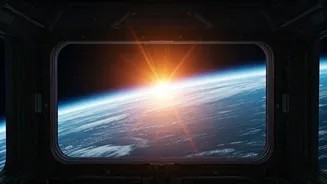
While it presents a biological challenge, the experience is also one of the most profound aspects of space travel. Astronauts like Sunita Williams have described the view as both beautiful and surreal. From the station's Cupola—a 360-degree observation module—crew members can watch weather patterns swirl across continents, cities light up at night, and the thin, glowing line of Earth's atmosphere during a sunrise that rushes towards them at 8 kilometres per second. It’s a powerful and constant reminder of their unique place in the cosmos, watching a spectacle that few humans will ever get to see firsthand.