





Our Daily Grind Creates a Challenge
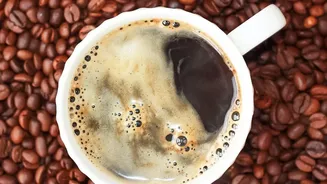
In cities across India, the cafe culture is thriving. From Mumbai to Bengaluru, the demand for cappuccinos, espressos, and filter coffee generates a staggering amount of spent coffee grounds (SCG). Globally, it's estimated that coffee consumption produces
millions of tonnes of this waste annually. When sent to landfills, this dense, organic material decomposes and releases methane, a potent greenhouse gas. For urban centres already grappling with waste management, it's a significant environmental burden. This daily ritual of enjoying a cup of coffee inadvertently contributes to a linear economic model of 'take-make-dispose' that our planet can no longer sustain.
Nature's Perfect Recycler
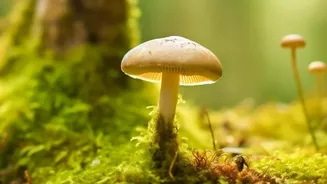
The solution, it turns out, lies with one of nature’s most efficient recyclers: the mushroom. Fungi are natural decomposers, breaking down organic matter. Spent coffee grounds are an unexpectedly perfect home for certain types of mushrooms, especially Oyster mushrooms (Pleurotus ostreatus). The grounds are rich in nitrogen, cellulose, and other essential minerals that mushrooms thrive on. Furthermore, the brewing process effectively pasteurises the grounds, killing off many competing moulds and bacteria, which simplifies the cultivation process. This means the waste from a coffee shop is already partially prepared to become a fertile substrate for a new food source.
From Cafe Waste to Gourmet Harvest
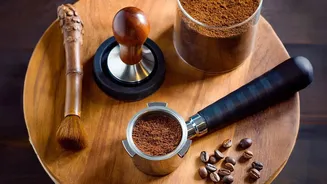
The process is a brilliant example of a circular economy in action. It begins with collecting fresh coffee grounds from local cafes, which are often happy to provide them for free. The grounds are then mixed with mushroom spawn—the 'seeds' of the mushroom, which is essentially the mycelium network. Sometimes, to improve aeration and prevent compaction, materials like straw or coffee chaff are blended in. This mixture is packed into special grow bags or buckets and kept in a dark, controlled environment for two to three weeks. During this incubation period, the white, thread-like mycelium colonises the coffee grounds, consuming the nutrients. Once fully colonised, the bags are moved to a humid, cooler space with fresh air, which triggers the 'fruiting' stage, and soon, clusters of fresh mushrooms emerge, ready for harvest.
Urban Innovators and the Circular Vision
This innovative approach has inspired a wave of urban farming startups and social enterprises around the world. Companies like GroCycle in the UK and PermaFungi in Brussels have demonstrated the viability of this model on a commercial scale, turning tonnes of coffee waste into fresh mushrooms and creating local jobs. Projects like Italy's Funghi Espresso have taken it a step further, using the post-harvest substrate for vermicomposting, creating a high-quality organic fertiliser and closing the loop entirely. These pioneers showcase a powerful vision for cities: a system where waste from one business becomes a valuable raw material for another, all within the same local area.
Benefits Beyond a Delicious Meal
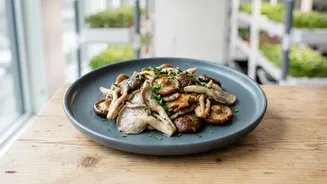
The impact of this innovation extends far beyond simply growing food. By diverting tonnes of organic waste from landfills, it directly reduces greenhouse gas emissions. It creates an ultra-local food source, cutting down on 'food miles' and the carbon footprint associated with transporting produce over long distances. For city dwellers, it means access to fresh, nutritious mushrooms that are grown sustainably just around the corner. This model also serves as an educational tool, raising awareness about urban agriculture and the principles of a circular economy. It proves that sustainable solutions can be both economically viable and environmentally restorative, transforming a problematic waste stream into a source of nutrition and opportunity.