




Sailing on Sunshine
The principle behind a solar sail is both elegant and simple. Light, though it has no mass, is made of particles called photons that carry momentum. When these photons strike a huge, reflective, and incredibly thin sail in the vacuum of space, they transfer
that momentum, giving the spacecraft a tiny, continuous push. Much like a sailboat harnessing the wind, a solar sail spacecraft harnesses the constant stream of photons from the sun. While the thrust is gentle—equivalent to the weight of a paperclip in your hand—it is relentless. Over weeks and months, this constant acceleration can propel a spacecraft to speeds that would require enormous amounts of fuel for a conventional rocket. This method eliminates the need for heavy, expensive propellant, opening up new possibilities for long-duration missions.
The Challenge of Steering
Propulsion is only half the battle; navigation is the other. Just as a captain must tack and jibe to steer a ship, a solar sail must be precisely angled relative to the sun to direct its course. By changing the sail's orientation, a spacecraft can speed up, slow down, or alter its trajectory to move toward or away from the sun. However, controlling a massive, gossamer-thin sheet of material that can be the size of several basketball courts is an immense engineering challenge. The sail needs to be deployed from a compact state, held stable, and angled with precision—all while being subjected to the harsh environment of space. Past missions have proven the concept, but achieving the high-fidelity control needed for complex missions, like visiting multiple asteroids, has remained a significant hurdle.
A Breakthrough in Control Systems
The latest breakthrough isn't just about making bigger sails, but smarter ones. Recent developments focus on advanced deployment systems and integrated controls that manage the sail's shape and stability. In April 2026, NASA awarded a contract to the company Opterus to engineer the deployment and control system for a massive 1,600-square-meter sail, twenty times larger than its recent ACS3 demonstrator. The key is the use of lightweight, stiff composite booms that unspool to support the sail. The true innovation lies in the system's ability to actively control the sail's shape and flatness, ensuring consistent propulsion and enabling precise maneuvering. This leap from passive deployment to active shape control is what transforms the sail from a simple engine into a nimble navigational tool.
Destination: Near-Earth Asteroids
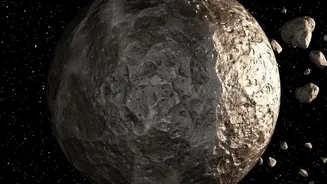
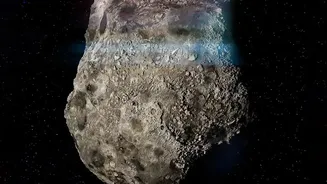
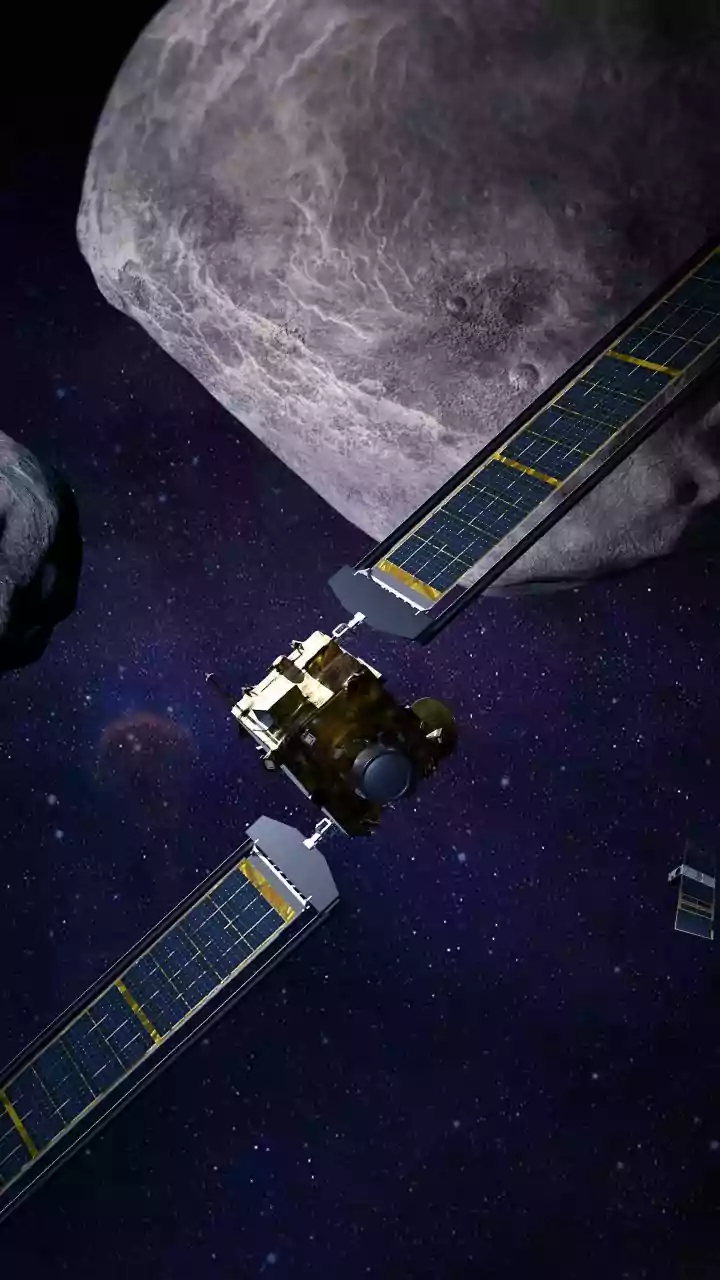
So, where will these advanced solar sails take us? A prime target is the population of Near-Earth Asteroids (NEAs). These space rocks are remnants from the formation of our solar system, holding vital clues about its history. They are also important to study for planetary defense purposes. Missions like NASA's planned Near-Earth Asteroid Scout aim to use solar sails to visit these objects. Because solar sail probes don't carry fuel, they are incredibly lightweight. This makes them perfect for sending out small, cost-effective probes, potentially in a fleet, to survey multiple asteroids in a single journey—a task that would be prohibitively expensive for larger, fuel-heavy spacecraft.
A New Era of Agile Exploration
The combination of propellant-less propulsion and precise navigation empowers a new class of mission. Lightweight probes can now be designed to be agile and responsive. Instead of a single, high-stakes trajectory, a solar sail craft could potentially alter its course mid-mission to visit a newly discovered object of interest or conduct extended observations. This technology isn't just for asteroids. Solar sails could be used for missions that require holding a stable position, such as providing early warnings for solar storms from a vantage point closer to the sun. Other proposed applications include monitoring space weather or even helping to de-orbit space debris. This breakthrough makes solar sails a versatile tool, enabling missions that were previously impossible or impractical with conventional propulsion.