







Breaking Down the Headline Figure
The gross GST revenue of Rs 2.11 lakh crore for July 2026 marks a significant 15.4% year-on-year growth from the Rs 1.83 lakh crore collected in July 2025. This impressive total is comprised of Rs 39,835 crore in Central GST (CGST), Rs 47,881 crore in State
GST (SGST), and Rs 1.23 lakh crore in Integrated GST (IGST). After accounting for refunds of nearly Rs 30,000 crore, the net GST revenue stands at a healthy Rs 1.81 lakh crore, which is a 15.8% increase over the same month last year. This is the second month in a row that collections have crossed the Rs 2 lakh crore mark, indicating sustained momentum.
What's Driving the Growth?
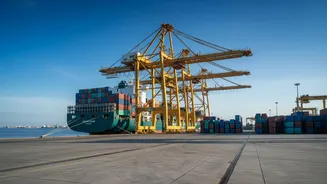
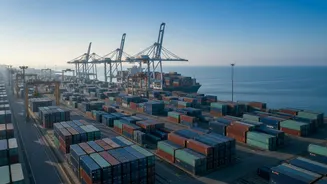
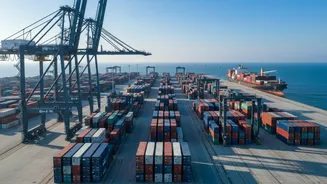
A key driver behind this surge is a sharp 28.8% jump in GST collected on imports, which brought in Rs 66,511 crore. This points to strong import demand, though some experts note it could reflect a weaker rupee as much as higher volumes. In comparison, domestic transactions saw a more modest, yet still solid, growth of 10.1%, contributing Rs 1.45 lakh crore. The consistent high collections are also a result of improved compliance, thanks to government measures like e-invoicing and AI-based monitoring which have helped curb tax evasion. This combination of robust domestic activity, strong import revenues, and better compliance paints a picture of a resilient economy.
Beyond the Big Number: Net Revenue and Trends
The gross figure is exciting, but the net revenue provides a clearer picture of the government's actual take-home. The Rs 1.81 lakh crore net figure for July, after paying out refunds, shows the true fiscal muscle. More important than a single month's performance is the overall trend. For the current fiscal year (April-July 2026), gross GST collections have grown by 10.1% to Rs 8.43 lakh crore. This consistent growth, even with some monthly fluctuations, suggests that the economic expansion is steady. At a state level, the performance is uneven, with states like Haryana (25% growth) and Gujarat (19% growth) showing strong momentum, while Maharashtra, the largest contributor, grew by 13%.
The Other Economic Vital Signs
GST is a powerful indicator of consumption, but it doesn't tell the whole story. To get a complete check-up of the economy's health, we must look at other metrics. The Purchasing Managers’ Index (PMI) is one such crucial indicator. For July 2026, the Manufacturing PMI moderated slightly to 53.5. While this is a slowdown from June's 54.2 and the weakest reading in nearly five years, any number above 50 signifies expansion, which the sector has now shown for 57 straight months. However, the slowdown was linked to softer domestic demand and a slower pace of job creation. Similarly, indicators like the Index of Industrial Production (IIP) and core sector growth provide insights into the production side of the economy, which complements the consumption story told by GST.
What It All Means for India
So, why should you care about these numbers? Strong and consistent GST collections mean the government has more funds for public spending on crucial areas like infrastructure, healthcare, and education. It signals a formalising economy where more businesses are coming into the tax net, leading to a more stable and predictable revenue stream for the country. While the Rs 2.11 lakh crore figure is a clear sign of economic resilience and strong consumer demand, the nuances are important. The heavy reliance on import GST and the slight moderation in manufacturing PMI are reminders that the economy is a complex machine. The headline number is a celebration-worthy milestone, but the real story lies in the trends and the broader economic context.