


The Great Moon Race
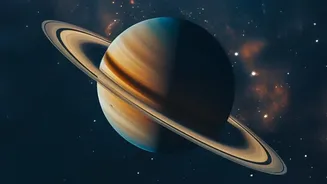
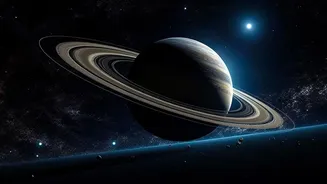
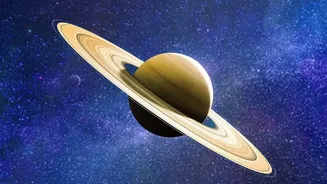
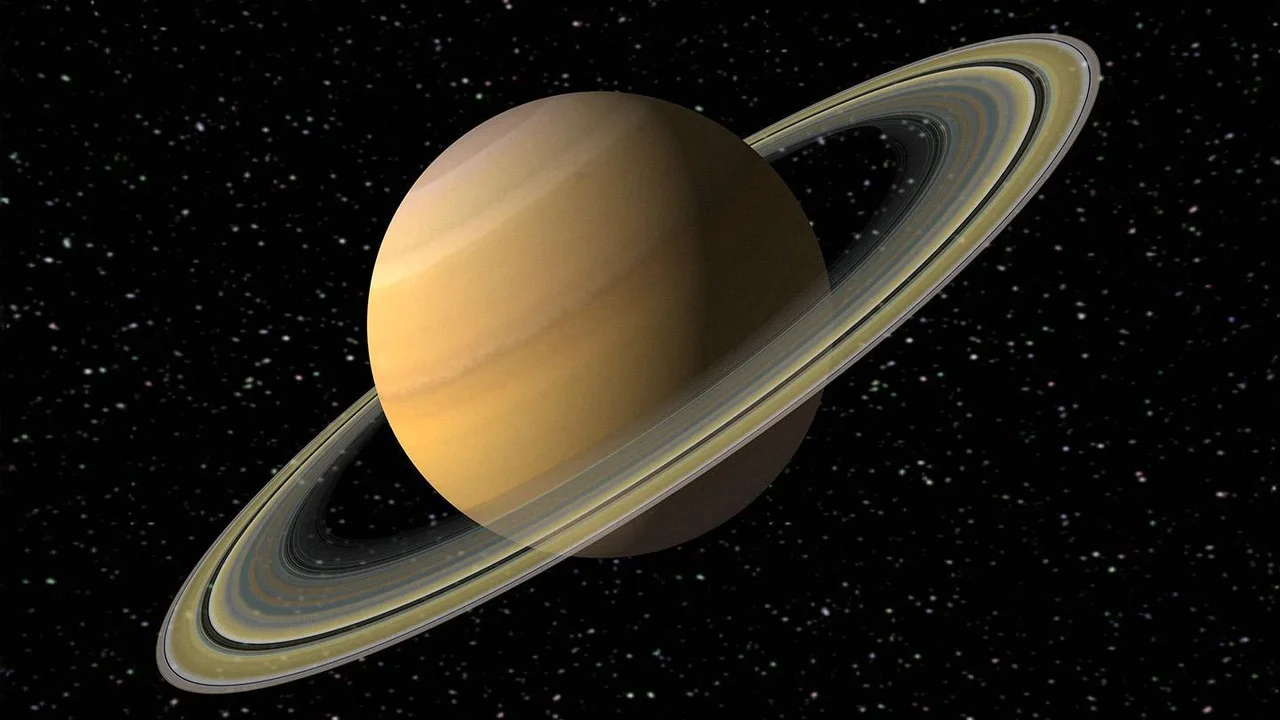
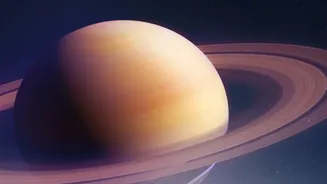
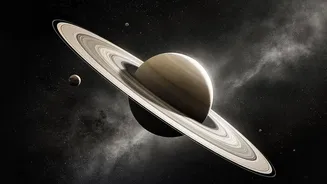
For years, Jupiter and Saturn have been cosmic rivals in a race for the title of "moon king" of our solar system. One year, Jupiter is in the lead; the next, a batch of new discoveries pushes Saturn to the top. As of early 2026, Saturn holds a commanding
lead with a confirmed count of 285 moons, compared to Jupiter's 101. This ever-changing number isn't because moons are spontaneously appearing. It’s because our ability to see them is getting exponentially better. Each new discovery helps astronomers piece together the violent and chaotic history of the outer solar system. These moons, especially the smaller, irregular ones, are like cosmic fossils, holding clues about ancient collisions and gravitational captures that shaped the planets we see today.
What Exactly Counts as a Moon?
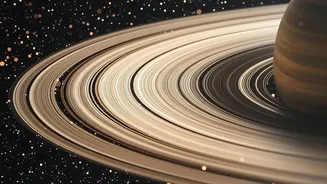
Part of the reason the count changes is that the definition of a "moon" is surprisingly flexible. The International Astronomical Union (IAU), which names and classifies celestial objects, has a strict definition for a planet but not for a moon. Generally, a moon is a natural satellite orbiting a planet or minor planet. But how small is too small? Saturn's rings are composed of countless icy particles ranging from dust specks to objects hundreds of metres across, sometimes called "moonlets". Astronomers generally draw a line, often around a kilometre or two in diameter, to distinguish a moon from a large ring particle. Even so, many of the newest discoveries are just a few kilometres wide—small, potato-shaped objects that were once asteroids or comets before being captured by Saturn's immense gravity.
How Astronomers Find Hidden Worlds
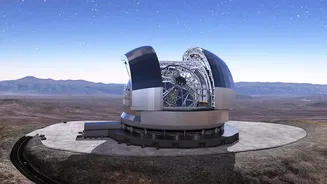
Discovering a tiny, dark object from over a billion kilometres away is a monumental task. Early discoveries, like Christiaan Huygens's sighting of Titan in 1655 and Giovanni Cassini's finds a few decades later, were made with early telescopes. Spacecraft like Voyager 1 and Cassini dramatically increased the count by getting an up-close view. Today, the game has changed again. Astronomers use powerful ground-based observatories, like the Canada-France-Hawaii Telescope, to take many sequential images of the sky around Saturn. They then use a technique called "shift and stack," where software layers these images, aligning them based on the predicted movement of a potential moon. This makes faint objects pop out from the background noise. After spotting a candidate, it must be tracked for months or even years to confirm its orbit is stable and truly around Saturn before it is officially declared a moon.
A Story of Cosmic Collisions
The vast majority of Saturn's moons are classified as "irregular." Unlike the large, spherical "regular" moons like Titan and Rhea that likely formed from the same disk of gas and dust as Saturn itself, irregular moons are captured drifters. They have distant, tilted, and eccentric orbits, and many even circle the planet backwards (retrograde). Astronomers believe most of these tiny moons are not just captured asteroids but fragments of larger moons that were shattered by violent collisions millions of years ago. By studying the orbits of these new moons, scientists can group them into families that likely came from the same parent body, revealing a history of cosmic pile-ups that took place long after the planets themselves had settled down.