




A New STRIDE for Mars
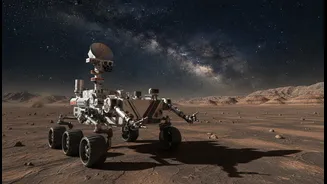
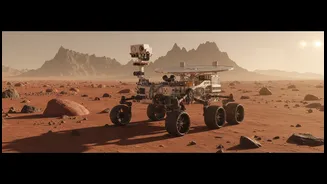
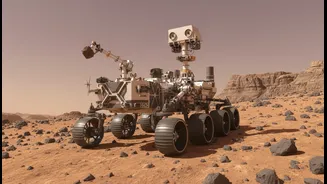
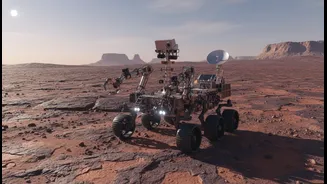
NASA has officially named seven companies for contract awards to develop the next generation of robotic mobility systems for the Red Planet. This initiative, dubbed STRIDE (Science Transport and Robotic Innovation for Deployment and Exploration), marks
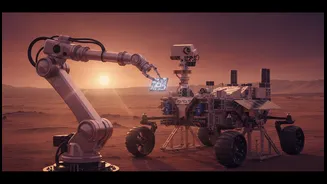
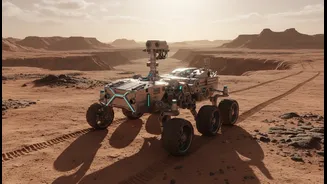
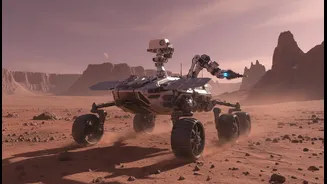
a significant strategic shift. Instead of relying solely on large, monolithic rovers like Curiosity and Perseverance, the agency is investing in a diverse portfolio of commercial partners to create more agile and capable robotic explorers. The awards, with a total potential value of around $17 million, will fund the development of innovative systems designed to travel greater distances and access scientifically valuable regions that are currently out of reach for today's rovers. Work is expected to get underway in the fall of 2026.
The Robotics Dream Team
The selected companies represent a blend of established aerospace giants and nimble newcomers, creating a powerful innovation ecosystem. The awardees include AeroVironment, Astrobotic, Venturi Astrolab, Ground Control Robotics, Honeybee Robotics, Intuitive Machines, and MEI Technologies. Many of these names are already familiar in space exploration circles. AeroVironment was a key partner on the groundbreaking Ingenuity Mars helicopter, while Honeybee Robotics has a long history of creating drills and sample collection tools for NASA. Astrobotic and Intuitive Machines are leaders in the commercial lunar landing sector, bringing invaluable experience in delivering payloads to other worlds. This diverse lineup ensures NASA can leverage a wide range of expertise to tackle Mars's toughest environmental and mobility challenges.
More Than Just Rovers
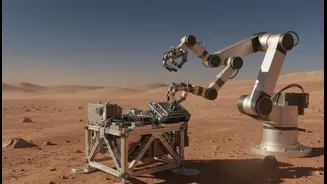
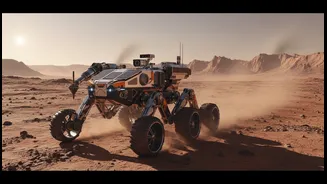
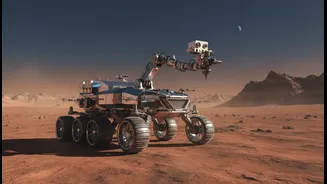
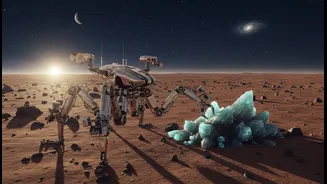
The STRIDE initiative isn't just about building better rovers; it's about fundamentally expanding what robots can do on another planet. The goal is to develop technologies that can conquer craters, steep slopes, and even take to the Martian skies. While some projects may focus on advanced wheeled mobility, others are exploring entirely new concepts. For example, projects like LASSIE (Legged Autonomous Surface Science in Analogue Environments) are experimenting with legged robots that can walk across treacherous terrain and use their own limbs as scientific instruments to 'feel' and analyze the ground beneath them. Another critical area is autonomous construction. Projects like MMPACT (Moon to Mars Planetary Autonomous Construction Technology) are developing robotic 3D printing systems that can use local Martian soil, or regolith, to build landing pads, habitats, and radiation shields, reducing the need to launch heavy materials from Earth.
Paving the Way for Artemis
These robotic missions are not just for scientific discovery; they are a crucial prerequisite for sending humans to Mars. The technologies developed under STRIDE and similar programs are essential components of NASA's broader Moon to Mars strategy, which includes the Artemis program. The Artemis missions aim to establish a sustainable human presence on the Moon as a stepping stone for the first human expeditions to Mars. Before astronauts can set foot on the Red Planet, an army of advanced robots will need to survey the landscape, identify resources like water ice, and build the basic infrastructure needed to support a human crew. These robotic trailblazers will act as scouts and construction workers, making future human missions safer and more effective. The lessons learned from these robotic systems will directly inform the design of rovers and habitats for astronauts on both the Moon and Mars.