



The Captain vs. The Taskmaster: Sourav Ganguly and Greg Chappell
Arguably the most infamous feud in Indian cricket history, the relationship between captain Sourav Ganguly and coach Greg Chappell started with promise and ended in turmoil. Ganguly himself had championed the Australian's appointment in 2005. However,
the partnership soured quickly. Chappell, a hardnosed disciplinarian, questioned Ganguly's form and fitness, leading to a major clash during the 2005 Zimbabwe tour. The conflict exploded into the public domain when an email from Chappell to the BCCI was leaked. In it, the coach claimed Ganguly was 'mentally and physically unfit' to lead the side. The fallout was seismic. Ganguly, one of India's most successful captains, was not only stripped of his captaincy but also dropped from the team entirely. While he eventually fought his way back into the squad before the 2007 World Cup, the disastrous campaign led to Chappell's resignation, closing one of Indian cricket's most turbulent chapters.
The Modern Power Struggle: Virat Kohli and Anil Kumble
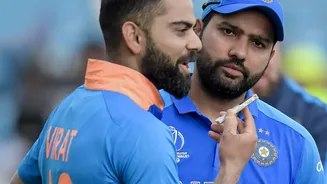
When two legends like Virat Kohli and Anil Kumble joined forces as captain and coach in 2016, expectations were sky-high. On paper, the team was incredibly successful. Behind the scenes, however, a different story was unfolding. The core of the issue stemmed from a clash of styles. Kohli reportedly felt Kumble's approach was 'intimidating' and that he created a 'tense atmosphere' in the dressing room. In contrast, Kumble saw his role as holding a 'mirror' to the team to drive improvement and believed in maintaining strict discipline. The relationship became 'untenable'. Despite the Cricket Advisory Committee, which included Sachin Tendulkar, Sourav Ganguly, and VVS Laxman, recommending Kumble's reappointment, the coach chose to step down after the 2017 Champions Trophy final. He released a public statement citing that the captain had reservations about his coaching style, making his position untenable. The episode starkly highlighted the shifting power dynamics in Indian cricket, where the captain's authority had become paramount.
A Disconnect Between Legends: Sachin Tendulkar and Kapil Dev
Not all conflicts are explosive public battles; some are a quiet story of unmet expectations. When Kapil Dev, one of India's greatest all-rounders, became the coach in 1999, then-captain Sachin Tendulkar had high hopes. Tendulkar, as detailed in his autobiography 'Playing It My Way', expected the legendary Kapil to be a key strategic partner, especially during a tough tour of Australia. However, Tendulkar found himself disappointed. He wrote that Kapil's coaching method was largely hands-off, leaving the running of the team entirely to the captain and not involving himself in strategic discussions. While Kapil respected Tendulkar's opinion when the book was released, stating everyone is entitled to their view, the revelation gave insight into a different kind of player-coach friction. It wasn't a clash of egos, but a fundamental difference in the perceived role of a coach, leaving one of the game's greatest thinkers feeling strategically isolated during his captaincy.
The Public Rebuke: Madan Lal and The Senior Players
The tenure of Madan Lal as coach during 1996-97 was cut short by a breakdown in trust with the team. The conflict ignited when Lal, a member of the 1983 World Cup-winning squad, publicly criticised the performance of several senior players by name in the media during a tour. This breach of dressing room confidentiality angered the team, leading to a complete communication breakdown. Reports suggest the players simply stopped talking to the coach. The atmosphere became so toxic that the BCCI had no choice but to intervene and remove Lal from his position. This incident served as a stark lesson in man-management, proving that technical knowledge must be paired with diplomacy and respect for the players, especially in a team of established stars.