




The Paradox of a Thirsty Mountain
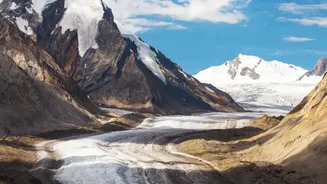
The Himalayas are often called the 'Third Pole' for their vast reserves of ice and snow. Yet, for the communities living in their shadow, this abundance can be deceptive. In regions like Ladakh, which receive very little rainfall, life has always revolved
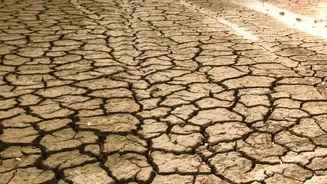
around the seasonal meltwater from glaciers. For generations, farmers have depended on this water to irrigate their crops, especially during the critical spring sowing season. However, climate change is disrupting this ancient rhythm. Glaciers are receding to higher altitudes where it remains colder for longer, meaning the meltwater arrives weeks or even months too late for planting. The result is a perilous water shortage precisely when it's needed most, threatening livelihoods and food security for a population that is roughly 80% farmers.
What Exactly Is an Ice Stupa?
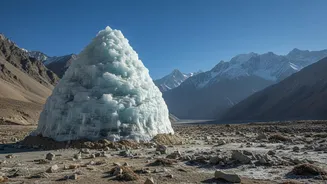
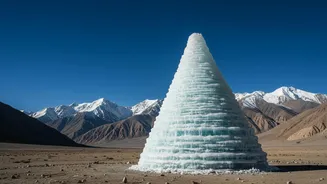
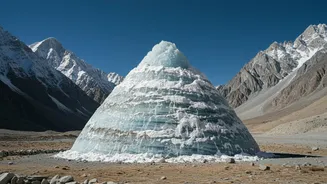
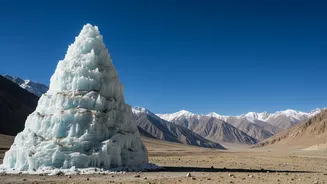
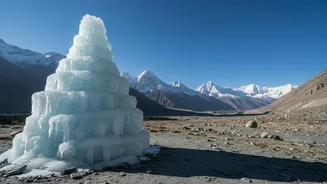
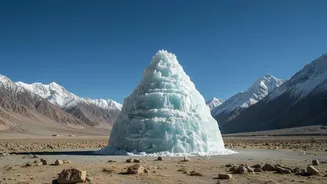
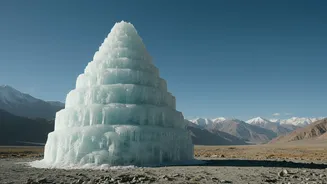
Enter the ice stupa, a deceptively simple and ingenious solution. The concept was pioneered in 2013 by Ladakhi engineer and innovator Sonam Wangchuk. An ice stupa is a man-made glacier, built not horizontally, but vertically into a cone of ice resembling the Buddhist monuments from which it gets its name. The process uses basic physics. Water is piped from a higher-altitude stream during the freezing winter months. Gravity forces the water down the pipe and up through a vertical sprinkler without any need for pumps or electricity. As this water is sprayed into the sub-zero air, it freezes and falls, gradually building a massive cone of ice that can be 30 to 50 metres high and store millions of litres of water.
A Cooler Shape for a Warming World
The conical shape is the key to the ice stupa's success. Wangchuk was inspired after noticing ice that had remained frozen under a bridge well into the warmer months, shielded from direct sunlight. A vertical cone exposes the minimum possible surface area to the sun's rays, meaning it melts much more slowly than a flat field of ice. While earlier attempts at artificial glaciers existed, they were often flat, needed to be at very high altitudes, and melted too quickly. The ice stupa, by contrast, can be built at lower altitudes closer to villages. The first prototype successfully provided water well into May, proving that the design could bridge the critical gap between the end of winter and the arrival of natural glacial meltwater in summer.
From Ladakh to the Wider Himalayas
The success in Ladakh has not gone unnoticed. The low-cost, community-driven nature of ice stupas makes them an attractive solution for other high-altitude regions facing similar water crises. The idea is spreading, with projects being replicated in other parts of the Himalayas, including in Himachal Pradesh and even internationally in countries like Switzerland, Chile, and Kyrgyzstan. This transfer of knowledge is powerful because it's a solution born from within the mountains, for the mountains. It doesn't rely on expensive, high-tech foreign equipment but on local materials, community labour, and a deep understanding of the environment. Annual competitions are even held in Ladakh to encourage villages to build their own stupas, fostering a sense of ownership and friendly rivalry.
More Than Just a Water Tower
The benefits of the ice stupa system extend beyond just providing irrigation for crops like barley and poplar trees. The slow-melting ice helps to recharge groundwater tables and revive natural springs, which are also vital sources of water for communities. These projects are often managed by the villagers themselves, empowering them to take direct action against the effects of climate change. By turning barren land green and reviving abandoned villages, ice stupas have become powerful symbols of hope and resilience. They demonstrate that local communities can be the source of their own innovative solutions, rather than simply victims of a global crisis.