








The Great Monsoon Myth
It's a common belief: grey skies and cloud cover mean you can skip the sunscreen. This is a dangerous myth. While thick clouds can reduce the intensity of UVB rays (the kind that cause immediate sunburn), they do very little to block UVA rays. In fact,
up to 80% of UVA radiation can penetrate cloud cover and reach your skin. These are the rays responsible for deep skin damage, premature ageing, fine lines, and pigmentation. In India, where the UV index remains in the 'High' to 'Very High' range for about nine months of the year, this exposure is significant even during the monsoon. The cool, breezy weather is deceptive; your skin is still accumulating damage.
The 'Lightweight' SPF Trap
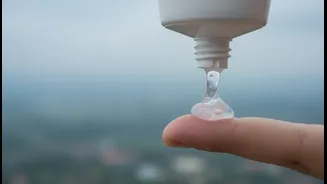
In response to the sticky, humid weather, many brands offer 'lightweight' sunscreens. These often come in gel, serum, or water-based formulas that absorb quickly and feel comfortable. While the texture is a win for daily use, 'lightweight' does not automatically equal robust protection. The effectiveness of a sunscreen lies in its ability to form a stable, even film on your skin. A very light formula can sometimes lead to under-application, as users may not apply the necessary amount (typically the 'two-finger' rule for face and neck) to achieve the advertised SPF level. Applying less than the required amount can drastically reduce your protection, leaving your skin vulnerable.
The Commuter’s Dilemma: Sweat, Rain, and Reapplication
For those commuting during the monsoon, the challenges are amplified. Exposure to rain, even a light drizzle, can wash away sunscreen. Add in the inevitable sweating from humidity, and the protective barrier of your SPF can break down quickly. This is where a simple lightweight formula might fail. Commuters need a sunscreen that is not just comfortable but also resilient. Furthermore, reapplication is crucial. Dermatologists recommend reapplying sunscreen every two to three hours when outdoors, and immediately after getting wet or sweating excessively. This is often impractical for someone on the move, making the initial application's durability even more critical.
Decoding Labels: Your Monsoon Protection Checklist
To ensure you're truly protected, you need to look beyond the word 'lightweight' and focus on the specifications. First, always choose a 'Broad Spectrum' sunscreen, which protects against both UVA and UVB rays. Second, an SPF of 30 to 50 is recommended for the Indian climate. While SPF 30 blocks about 97% of UVB rays, SPF 50 blocks 98%; the key is consistent application. Third, and perhaps most importantly for monsoon, is the PA rating. This Japanese system measures UVA protection. Look for a minimum of 'PA+++' (high protection) or, ideally, 'PA++++' (extremely high protection) to guard against ageing and pigmentation.
How to Choose Your Monsoon Shield
Instead of focusing solely on a light feel, shift your priority to formulas that offer durability. Look for sunscreens explicitly labelled 'water-resistant' or 'sweat-resistant'. These products are tested to maintain their SPF level for a specified duration (typically 40 or 80 minutes) in water, giving you a more reliable shield against rain and sweat. Thankfully, modern formulation technology means you don't have to choose between comfort and performance. Many brands now offer water-resistant gel, fluid, or matte-finish sunscreens that are specifically designed for humid conditions, providing strong protection without feeling heavy or greasy. These are the formulas that truly serve the needs of a monsoon commuter.