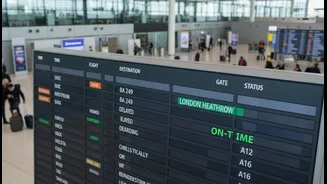









The New Reality of Air Travel
In recent years, the dream of seamless travel has often been met with the frustrating reality of delays and cancellations. This isn't just a string of bad luck; it's a systemic issue. The post-pandemic travel surge, persistent staffing shortages, air
traffic control congestion, and increasingly severe weather events have created a perfect storm for disruption. Airlines operate on tight schedules where a single late-arriving aircraft can create a domino effect, cascading through the day's network and impacting thousands of itineraries. For passengers, this means not just lost time but also unexpected costs for food and accommodation, highlighting the need for more proactive travel planning.
Decoding On-Time Performance
On-Time Performance, or OTP, is the industry's yardstick for punctuality. A flight is generally considered "on time" if it arrives at the gate within 15 minutes of its scheduled arrival time. Cancellations are counted as flights that were not on time. This data is meticulously tracked by aviation analytics firms like Cirium and OAG, which analyse millions of flights from global sources to provide a neutral, third-party assessment of airline and airport reliability. These monthly and annual reports have become the gold standard for measuring operational excellence in the aviation industry.
Who Are India's Punctuality Leaders?
For travellers in India, recent data offers valuable insights. According to a June 2026 report from Cirium, Air India was a standout performer, ranking as the world's fourth most punctual airline. The airline recorded an on-time arrival rate of 86.85% across more than 15,000 flights, a significant achievement given the operational complexities of major hubs like Delhi and Mumbai. Another OAG report from June 2026 highlighted IndiGo as a strong performer, securing the third spot globally among major airlines with an on-time performance of 86.64%. On the airport front, DGCA data from May 2026 showed Chennai International Airport (MAA) as India's most punctual major airport with a 92.2% OTP, outperforming busier hubs like Delhi and Mumbai.
How to Use OTP to Your Advantage
Checking an airline's OTP is easier than you might think. While you won't always find this data on third-party booking sites, many airlines display it directly on their own websites, often when you click on the flight number or a 'details' link during the booking process. For a broader view, you can consult the monthly reports published by OAG and Cirium, which are often covered by news outlets. When choosing a flight, use OTP as a filter. If you're deciding between two similarly priced options, the airline with a consistently higher punctuality score may be the smarter choice, especially if you have a tight connection or an important meeting to attend. It adds a layer of data-driven confidence to your decision-making process.
Beyond the Numbers: A Holistic Strategy
While OTP is a powerful filter, it shouldn't be the only factor you consider. A holistic approach to booking is still best. Pay attention to layover times; a 45-minute connection with an airline that has a 75% OTP is a significant risk. Whenever possible, opt for the first flight of the day, as these are least likely to suffer from cascading delays from earlier in the day. Also, consider the airport itself. Flying out of a more efficient airport, like Chennai, might offer a smoother experience. Punctuality data doesn't guarantee a perfect journey, but it empowers you to make an informed choice that minimises your risk of disruption and helps you navigate the complexities of modern air travel with greater peace of mind.