








The Green Heart of Harela
Harela, meaning 'Day of Green', is a festival deeply woven into the cultural and agricultural fabric of Uttarakhand, particularly the Kumaon region. Celebrated on July 16th to mark the onset of the monsoon, it's a time of profound connection to the land.
The core ritual is simple yet symbolic: ten days before the festival, families sow seven types of grains—like wheat, barley, and maize—in a basket. These germinated shoots, called Harela, represent germination, fertility, and a prayer for a bountiful harvest. On the festival day, these green shoots are placed on the foreheads of family members as a blessing for prosperity. Traditionally, Harela is also linked to the worship of Lord Shiva and Goddess Parvati, whose union symbolises the fertility the monsoon brings to the land. It’s a household-level celebration of nature's rhythm, a quiet act of gratitude for the region's ecological sustenance.
From Ritual to Mass Movement
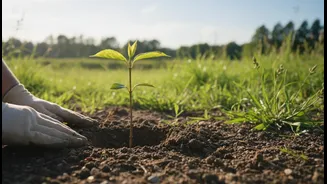
In recent years, the quiet tradition of Harela has been amplified into a large-scale, state-supported environmental campaign. The Uttarakhand government has officially embraced the festival, linking its symbolism of greenery to ambitious annual afforestation drives. What began as a personal or village-level practice of planting a few trees has morphed into a mass movement with headline-grabbing targets. For 2026, the state's forest department plans to plant a staggering 59 lakh saplings on Harela day alone. Districts set their own targets, with Almora aiming for 75,000 and Dehradun for over 15.5 lakh saplings throughout the festival month. These drives mobilise government departments, schools, NGOs, and the public, transforming the festival into a visible, statewide push for environmental action. The stated goal is to increase green cover and treat Harela as a mass movement for conservation, not just a routine exercise.
Beyond Just Planting Saplings
The enthusiasm for planting millions of trees is commendable, but experts caution against measuring success by numbers alone. The critical question is not how many saplings are planted, but how many survive to become trees. Numerous plantation drives across India suffer from a 'survival deficit', where the focus on one-day events overshadows the need for long-term care. The challenges are immense: ensuring adequate watering after the monsoon, protecting saplings from grazing animals, and preventing neglect once the initial event is over. Official survival rates can be optimistic, but independent assessments often reveal a more complex reality. Without a concrete plan for maintenance, monitoring, and accountability, even the most ambitious drives can result in wasted effort and resources. The shift in focus must be from the act of planting to the process of nurturing a forest.
The Right Tree in the Right Place
A crucial factor often overlooked in the rush to plant is ecological suitability. Planting non-native or inappropriate species can do more harm than good, disrupting local biodiversity and water tables. For example, studies in the Himalayas have shown that a preference for commercial species like conifers over local, broad-leaf varieties can make forests less useful to local communities who depend on them for fodder and fuel. Climate planners and forestry experts stress the principle of “right tree, right place”. This means selecting native species that are adapted to the local soil, climate, and altitude. This year, officials in Uttarakhand have directed departments to prioritise native and fruit-bearing species, a positive step towards ecological integrity. For these drives to genuinely contribute to climate resilience, they must move beyond monocultures and help restore the diverse, native ecosystems of the region.
A Lesson for Schools and Communities
Involving schools and communities is key to the Harela drives, but the education must go deeper than the physical act of planting a sapling. For students, the lesson shouldn't end when the photo is taken. It's an opportunity to teach the entire lifecycle of a tree, the importance of biodiversity, and the long-term responsibility of stewardship. For communities, genuine engagement means moving beyond being passive recipients of a government program. Successful conservation projects involve communities in the planning process, ensuring the planted trees meet local needs for fodder, fruit, or fuel. When local people have a stake in the outcome, they become the forest's long-term guardians. This transforms the drive from a top-down directive into a grassroots movement rooted in both cultural pride and ecological wisdom.