




Peeking Inside Cosmic Nurseries
Imagine a vast, dark cloud of gas and dust, so thick that no visible light can escape from within. For centuries, these regions, known as stellar nurseries, have kept their secrets well. They are the birthplaces of stars, but their dense, dusty nature
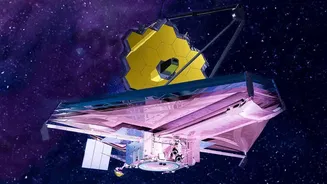
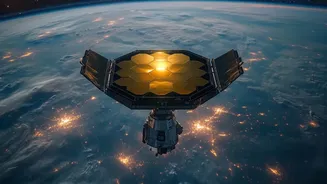
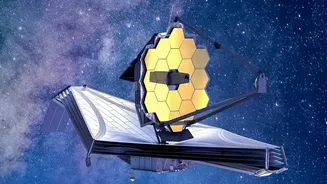
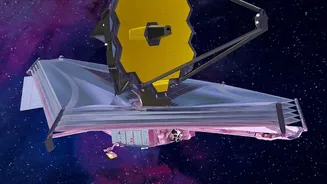
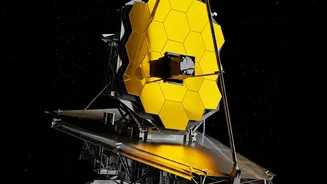
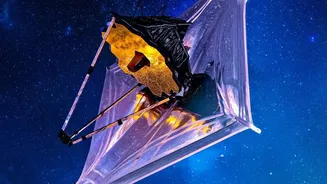
made them impossible to observe in detail. This is where the James Webb Space Telescope has become a true game-changer. Unlike its predecessors, which primarily observed in visible light, the JWST is an infrared powerhouse. Infrared light, with its longer wavelength, can penetrate these obscuring clouds of gas and dust, much like an X-ray allows doctors to see inside the human body. This capability is finally allowing astronomers to pull back the cosmic curtain and see the very earliest stages of star and planet formation with breathtaking clarity.
The Anatomy of a Newborn Star
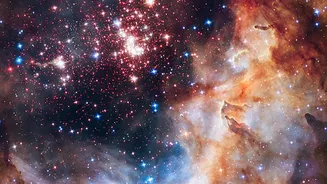
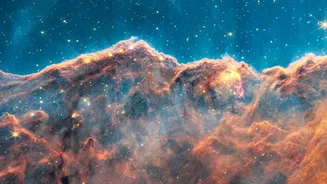
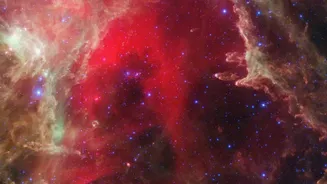
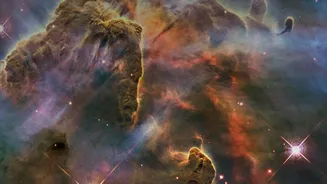
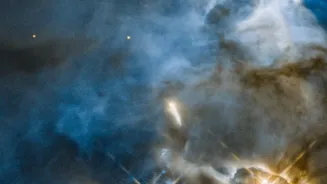
So what are we actually seeing in these phenomenal images? Recent JWST observations of regions like the Rho Ophiuchi cloud complex and Herbig-Haro 211 showcase the chaotic and beautiful process of stellar birth. We see dense cocoons of dust where protostars—infant stars—are still gathering mass. The most dramatic features are often the powerful jets of material blasting out from the young star's poles. As the star first bursts through its dusty envelope, it shoots out these opposing jets at supersonic speeds. These jets slam into the surrounding gas, creating luminous shockwaves that glow brightly in infrared light. In one image of Herbig-Haro 211, the detail is 5 to 10 times clearer than any previous image, revealing the outflow from an infantile version of our own Sun.
A Portrait of Solar Systems in the Making
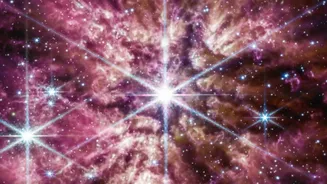
The JWST isn't just showing us the birth of stars; it’s providing the first detailed blueprints for how planetary systems form. The same clouds of gas and dust that feed the growing protostar also form a rotating disk around its equator. This protoplanetary disk is the raw material from which planets, moons, and asteroids are made. Webb's instruments are sensitive enough to study the composition of these disks, helping scientists understand the chemical ingredients available for building new worlds. By studying a variety of young stars, from small, sun-like stars in the Rho Ophiuchi complex to massive, brilliant stars in the Lobster Nebula, we can piece together the story of cosmic creation. One day, planets will emerge from these swirling disks, just as Earth did in our own solar system over 4.5 billion years ago.
Why These Images Matter
These images are more than just pretty pictures; they are a goldmine of scientific data that helps us answer some of the most fundamental questions about our place in the universe. By witnessing the birth of other stars, we are essentially looking back in time at our own Sun's origin story. This allows scientists to test and refine their theories about how solar systems evolve and what conditions are necessary for a planet to potentially support life. Each new image from the JWST seems to bring a new discovery, challenging old assumptions and opening up new avenues of research. The telescope has transformed humanity's view of the cosmos, allowing us to see light from the farthest corners of the universe and witness the beginnings of other star stories with newfound clarity.