








The Great Luggage Shuffle
It’s a scene played out thousands of times a day across the nation's railway network. Passengers board their coach, and a chaotic Tetris game ensues. Suitcases are shoved under lower berths, bags are piled in the narrow aisles, and sometimes, luggage
even blocks the doorways and vestibules. This isn't just a matter of passenger inconvenience; it's a systemic issue. The space under the lower berth has become the default, and often only, space for everyone's bags, leading to arguments, frustration, and a compromised travel experience. This scramble for space isn't a result of passengers being difficult; it's the outcome of a system that confirms a berth for a person but leaves their belongings to fend for themselves.
Official Rules Versus On-Ground Reality
Indian Railways has clear rules for luggage allowance. Depending on the class, a passenger can carry anywhere from 40 kg to 70 kg of luggage for free. For instance, a passenger in AC 3-Tier or Sleeper Class is permitted 40 kg. While these weight limits are generous, the rules are largely silent on a crucial aspect: dedicated volume. The designated space—primarily under the lowermost berth—is often insufficient to accommodate the permitted luggage of all passengers in a bay, especially if bags are not within specific dimensions. This mismatch between generous weight allowances and limited, poorly defined physical space is the root of the problem. Passengers are technically following the rules on weight but are forced to innovate when it comes to placement, leading to cluttered and unsafe coaches.
A Fundamental Flaw in Coach Design
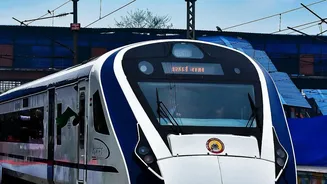
For decades, the design of Indian train coaches has prioritised maximising the number of berths. Luggage has been treated as an afterthought. While newer trains like the Vande Bharat Sleeper are experimenting with designated luggage zones near coach entrances for larger bags, the bulk of the fleet relies on the under-berth area. This is a fundamental design flaw. It pits passengers against each other for a shared, inadequate resource. The passenger on the lower berth feels a sense of ownership over the space beneath them, while upper and middle berth passengers are left with no designated spot. This isn't just about comfort; it's a safety hazard. Bags in the aisle can obstruct movement during an emergency and make it difficult for staff, vendors, and other passengers to move through the coach.
Why Luggage Planning is a Safety Issue
The issue extends beyond mere convenience. Luggage piled in walkways can hinder a swift evacuation in an emergency. It also poses a security risk, as bags left in open areas are more susceptible to theft. While Railways advises passengers to chain their bags, this is a reactive solution to a problem that could be addressed through proactive design and planning. Furthermore, the current system is disadvantageous for the elderly and persons with disabilities, who may find it physically challenging to lift heavy bags or negotiate a cluttered aisle. A journey's comfort and safety are intertwined, and by neglecting formal luggage planning, the system compromises both.
Imagining a Smarter System
What if booking a train ticket was more like booking a flight, where your luggage needs are also considered? The solution lies in integrating luggage planning directly into the ticketing process. When booking a berth, what if a passenger could also reserve a designated luggage space? This could be a numbered slot in a dedicated luggage compartment within the coach or a specific, marked area. Newer coach designs could incorporate vertical luggage racks or modular storage units, freeing up floor space. Some new-generation trains like Amrit Bharat expresses are already being built with larger luggage-cum-Divyangjan coaches, which is a step in the right direction. The ultimate goal should be to move from a system of informal, chaotic storage to one of planned, guaranteed space.