

The Enigma of a Runaway World
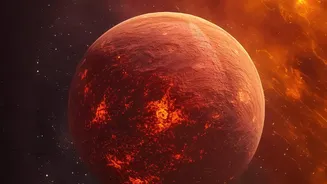
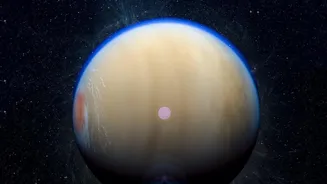
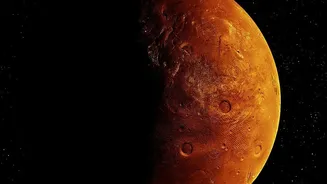
Venus may be similar in size to Earth, but its planetary path diverged dramatically. Today, it stands as a cautionary tale, with surface temperatures hot enough to melt lead and a dense atmosphere more than 90 times the pressure of Earth's. This toxic
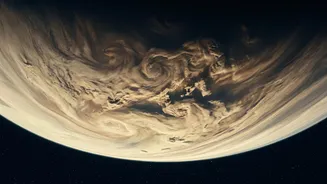
blanket is primarily carbon dioxide, which has triggered a runaway greenhouse effect, trapping heat and making the planet utterly inhospitable. The planet is cloaked in thick clouds of sulfuric acid, which race around the planet at incredible speeds, a phenomenon that has puzzled scientists for decades. Understanding why and how Venus became this hellish landscape is a primary goal for planetary science, offering vital clues about planetary evolution and the delicate balance that makes a world habitable.
India's Ambitious Venusian Quest
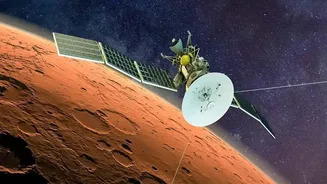
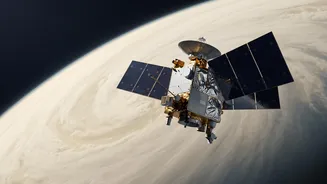
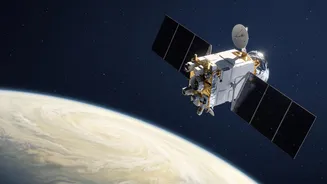
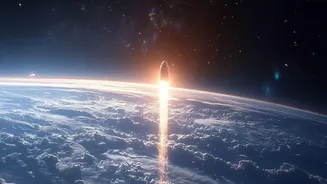
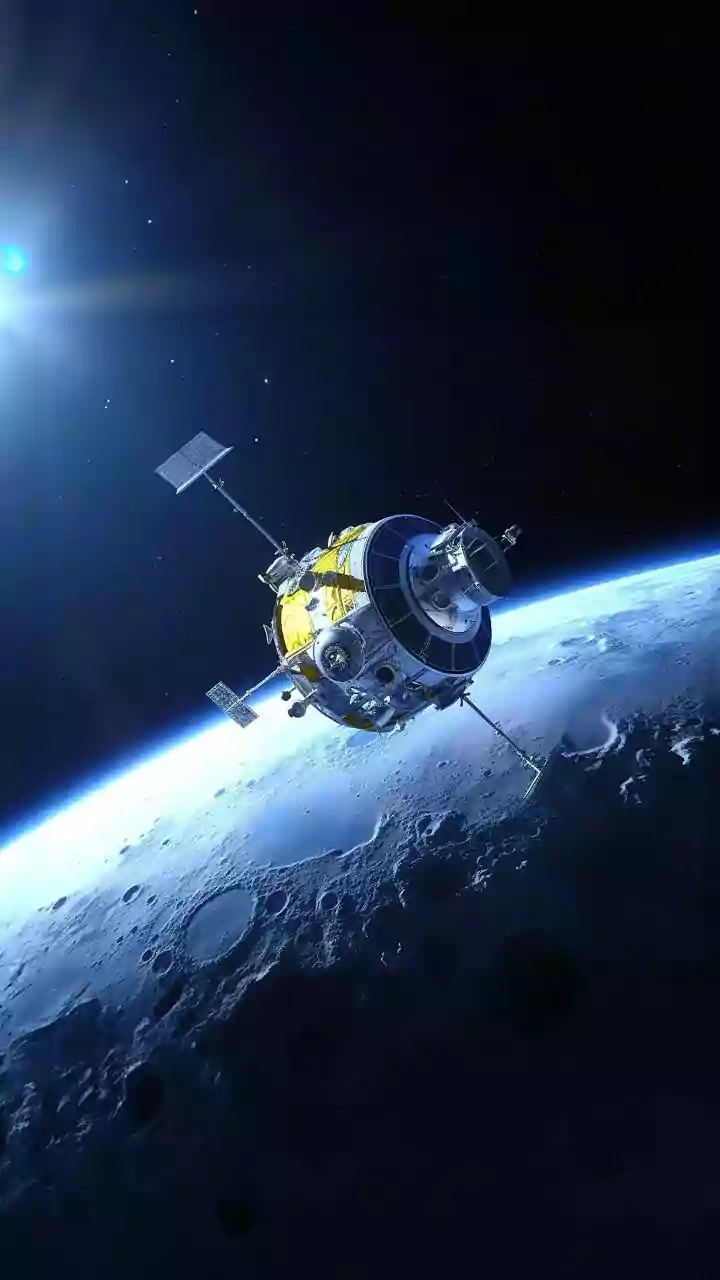
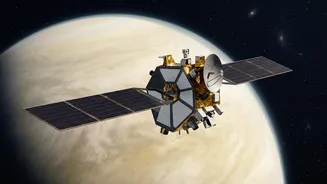
Enter Shukrayaan-1, the Indian Space Research Organisation's (ISRO) first dedicated mission to Venus. Following the success of its missions to the Moon and Mars, ISRO is setting its sights on our other planetary neighbour. Formally approved in September 2024, the mission is scheduled for a March 2028 launch aboard the powerful LVM-3 rocket. After a 112-day journey, the orbiter will settle into a highly elliptical orbit around Venus, beginning a multi-year investigation. Its core objective is to conduct a comprehensive study of the planet, from its mysterious surface, hidden beneath the clouds, to the complex dynamics of its upper atmosphere and its interaction with the sun.
Solving the Super-Rotation Puzzle
One of the greatest atmospheric mysteries of Venus is its 'super-rotation'. While the planet itself rotates incredibly slowly (a day on Venus is 243 Earth days), its atmosphere whips around the planet in just four Earth days, with winds reaching hurricane-force speeds. To understand the forces driving this phenomenon, Shukrayaan will carry instruments designed to map wind speeds and track cloud movements. Scientists suspect that 'thermal tides'—atmospheric waves created by the sun's intense heat—are responsible for transferring momentum to the atmosphere, but the complete picture is still missing. By creating detailed maps of atmospheric circulation, Shukrayaan will provide the data needed to test these theories and build more accurate climate models for Venus.
A Toolkit to See the Unseen
To achieve its ambitious goals, Shukrayaan is equipped with a payload of highly specialized instruments, including international collaborations. A high-resolution Synthetic Aperture Radar (SAR) will be one of the mission's star performers. Unlike optical cameras, radar can pierce through Venus's dense cloud cover to map the surface in unprecedented detail, with a resolution expected to be up to four times better than NASA’s Magellan mission from the 1990s. This will allow scientists to look for active volcanoes, lava flows, and other geological features that could be pumping gases into the atmosphere. For the first time ever on a Venus mission, a Ground-Penetrating Radar will probe beneath the surface, offering clues about the planet’s geological history.
Analysing the Chemical Cocktail
Other instruments will focus on the atmospheric chemistry itself. The Venus Infrared Atmospheric Gases Linker (VIRAL), a collaborative instrument from France and Russia, is designed to analyse the composition of the atmosphere in fine detail. This will help scientists understand the chemical cycles that sustain the sulfuric acid clouds. It may also investigate disputed claims of phosphine in the clouds, a gas that on Earth is associated with biological processes. Complementing this will be instruments like the Venusian Neutrals Analyzer (VNA), a contribution from Sweden, which will study how the solar wind strips away atmospheric particles—a key process on a planet that lacks a protective magnetic field. This holistic approach, combining geological and atmospheric sensors, is what makes Shukrayaan a uniquely powerful mission.