
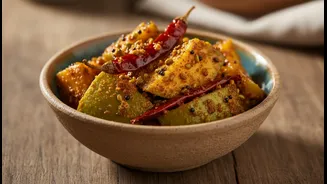


A Season Steeped in Tradition
For generations, the arrival of the monsoon has signaled the beginning of pickle-making season in India. This annual practice, known as 'achaar' making, is rooted in both practicality and culture. Before the age of refrigeration, pickling was a vital
method for preserving vegetables and fruits, ensuring a steady supply of food through the wet months when fresh produce could be scarce. The process uses salt, oil, and a masterful blend of spices to transform seasonal ingredients into flavourful condiments that can last for a year or more. It’s a technique that not only prevents spoilage but also enhances nutrition, as many traditional pickles are fermented, providing gut-friendly probiotics that are especially welcome during a season known for a general slowdown in digestion.
The Sweet and Spicy Star of Gujarat
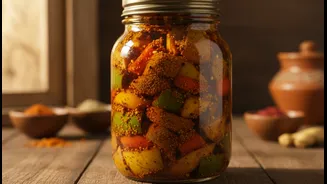
Among the most beloved monsoon pickles is Gujarat’s Gor Keri. The name itself, meaning 'jaggery-mango', hints at its delightful flavour profile. This pickle is a beautiful balancing act of sweet, spicy, and tangy notes. Typically made with the last of the season's raw mangoes, it combines chunks of the fruit with jaggery or sugar, which slowly melts into a thick, luscious syrup. Aromatic spices like cumin, coriander, and a touch of red chilli powder are added to the mix, creating a condiment that is more than just a side dish; it’s a star accompaniment to theplas, rotis, and khakhras. Making Gor Keri is often a family affair, with large glass jars left to mature in the intermittent monsoon sun.
Tiny Mangoes and Coastal Rains
Travel south along the coast, and you'll find another monsoon specialty tied to the mango, albeit a much smaller version. In Kerala and Karnataka, the rains bring forth tiny, marble-sized baby mangoes. These are used to make Kanni Manga Achar in Kerala and Maavina Midi Uppinakayi in Karnataka. Unlike other mango pickles, these use the mangoes whole, complete with their stems. The tiny fruits are brined and then mixed with a fiery blend of red chillies, mustard seeds, and asafoetida. The result is a pickle that is intensely sour and spicy, with a satisfying crunch. For many, the flavour of this pickle is pure nostalgia, evoking memories of rainy days and comforting meals of rice gruel.
Beyond the Mango
While mangoes may be the king of pickles, the monsoon tradition showcases incredible regional diversity and resourcefulness. In the arid lands of Rajasthan, where fresh vegetables are precious, the monsoon is a time for making Baingan ka Achaar, a unique pickle made from eggplant. In the lush hills of the Northeast, particularly Nagaland, the rains signal the time to forage for fresh bamboo shoots, which are then fermented and pickled to create a delicacy with a potent, umami-rich flavour. In Bihar, the tangy Karonda berry, which ripens in July, is mixed with green chillies and ginger to create a crunchy, zesty condiment. Each recipe tells a story of local ingredients and a climate-conscious culinary wisdom.
More Than Just a Condiment
Ultimately, the return of the 'timeless pickle' every July is about more than just food. It is a shared cultural experience that connects generations. The sight of grandmothers carefully selecting ingredients, the smell of spices roasting, and the communal effort of chopping, mixing, and bottling are woven into the fabric of many Indian families. It is a process of passing down knowledge, recipes, and stories. Each jar contains not just preserved fruit or vegetables, but also a taste of home, a dash of history, and the love of the people who made it. It’s a delicious reminder that some of the best traditions are the ones you can taste.